
CyTech AQUILA - Virtual Penetration Testing (Module)
Overview:
Virtual penetration testing is a controlled, authorized simulated attack on an organization’s systems that’s performed remotely (often against virtualized, cloud, or networked environments) to discover security weaknesses before malicious actors do.
Key Features:
- Dashboard - shows overall asset status, recurring vulnerabilities, trends, and recent scan results.
- Scan - lets users run different penetration tests, set scope, schedule, and monitor progress.
- Reports - provide summarized findings with severity, remediation guidance, compliance mapping, and export options.
Step 1: Log in to CyTech – AQUILA. https://usdc.cytechint.io/
Step 2: In the left side panel, you can see the list of six (6) domains, kindly choose and click the Risk Management (Domain) -> Virtual Penetration Testing (Module) -> Dashboard (Sub Module)
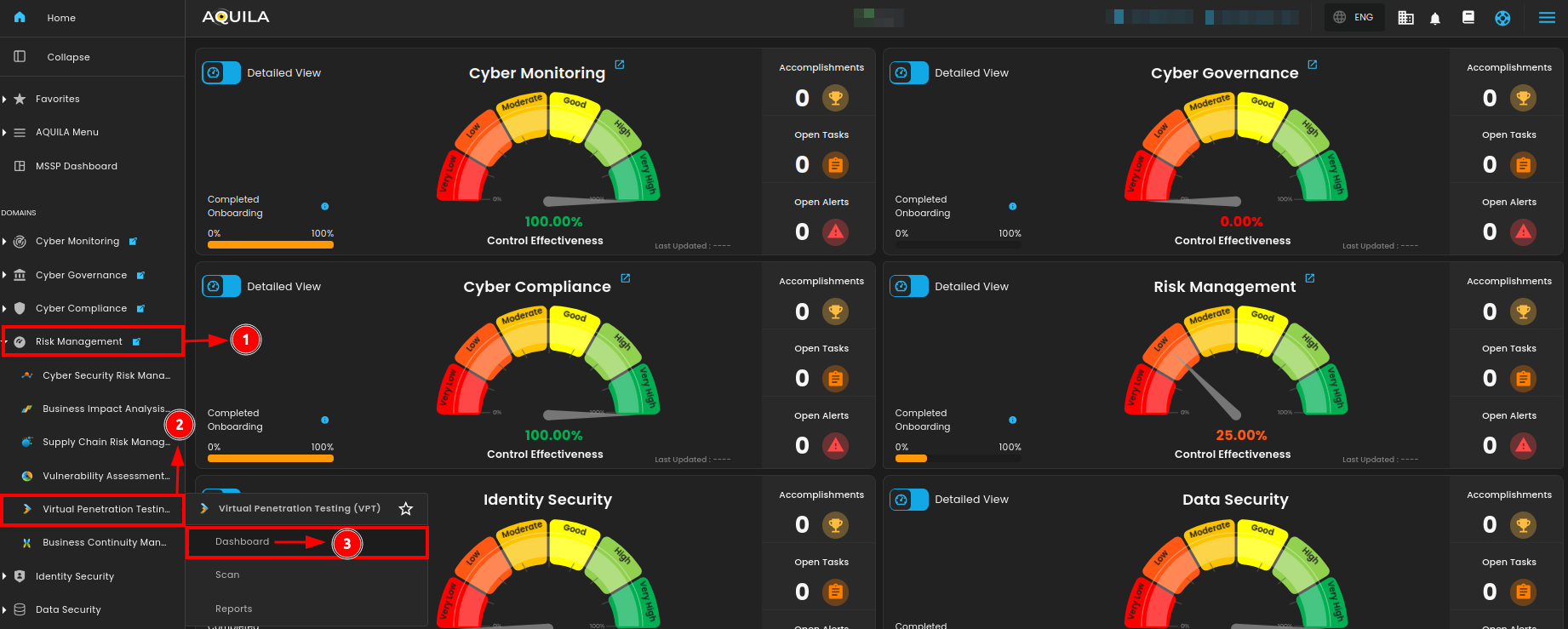
"Dashboard (Sub-module)" - Virtual Penetration Testing (Module)
The Virtual Penetration Testing Dashboard provides an overview of asset status, highlights top recurring vulnerabilities, shows trends of detected and open vulnerabilities over time, and lists recent scans with their progress and completion status.
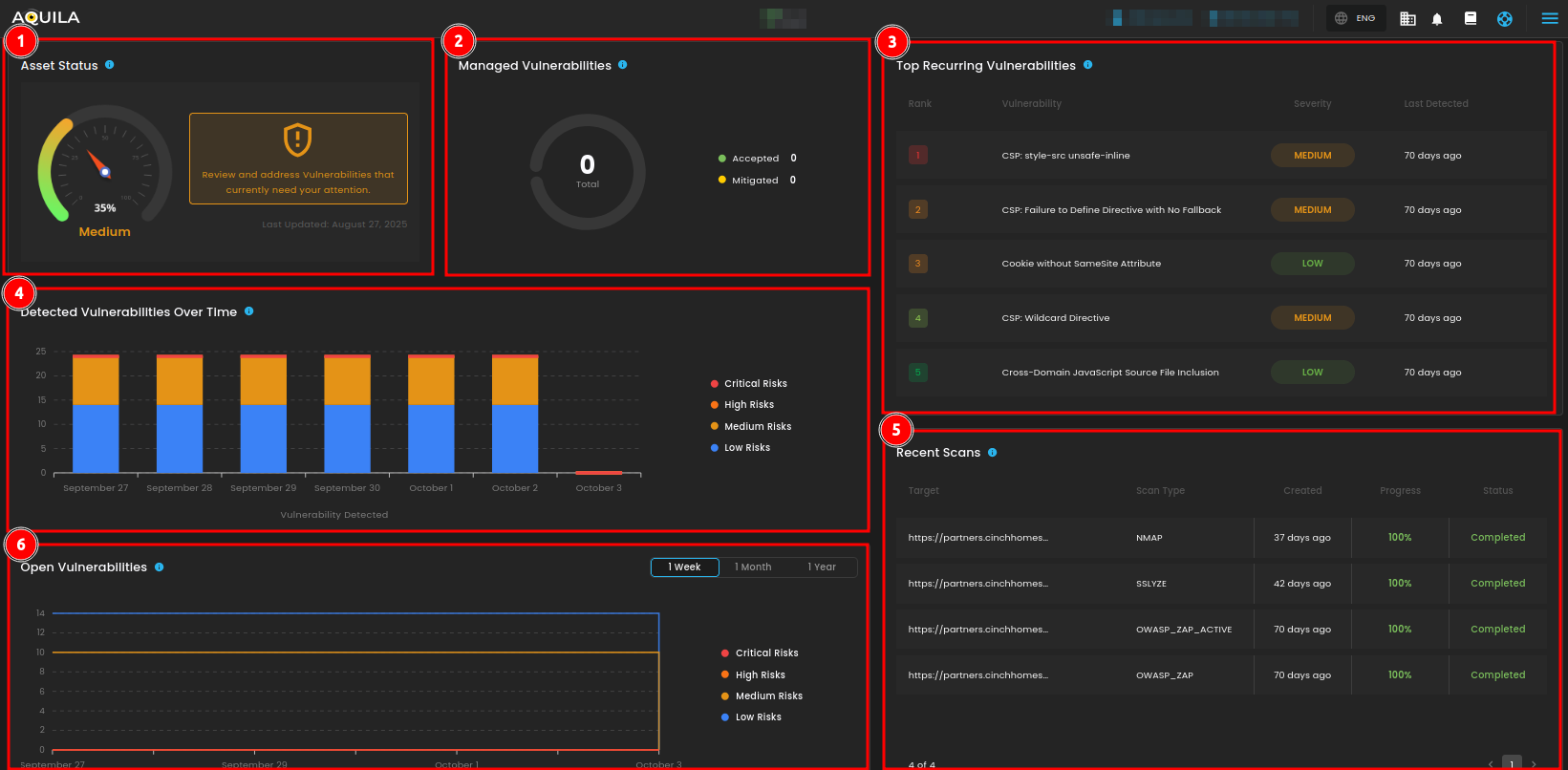
- Asset Status - shows the overall security health at 35% Medium, with a reminder to review and address vulnerabilities.
- Managed Vulnerabilities - currently shows 0 accepted or mitigated issues, meaning no vulnerabilities have been marked as resolved yet.
- Top Recurring Vulnerabilities - lists repeated issues such as CSP misconfigurations and missing cookie attributes, categorized by severity (Medium/Low) and last detected 70 days ago.
- Detected Vulnerabilities Over Time - graph tracks vulnerabilities across recent days, broken down by severity levels (Critical, High, Medium, Low).
- Recent Scans - table shows the last tests performed (e.g., NMAP, SSLyze, OWASP ZAP), along with their targets, progress (100%), and status (Completed).
- Open Vulnerabilities - chart provides a line trend of unresolved risks over a selected timeframe (1 week, 1 month, 1 year).