Cyber Security Risk Management (CSRM)
Overview:
Cyber Security Risk Management (CSRM) is a structured process organizations use to identify, assess, mitigate, and monitor cyber threats and vulnerabilities that could impact their assets, operations, or reputation. It integrates cybersecurity into broader enterprise risk management, treating cyber risks like financial or operational ones. CSRM helps prioritize resources, comply with regulations, and build resilience against evolving threats like ransomware, data breaches, and supply chain attacks.
Key Features:
- Dashboard
-
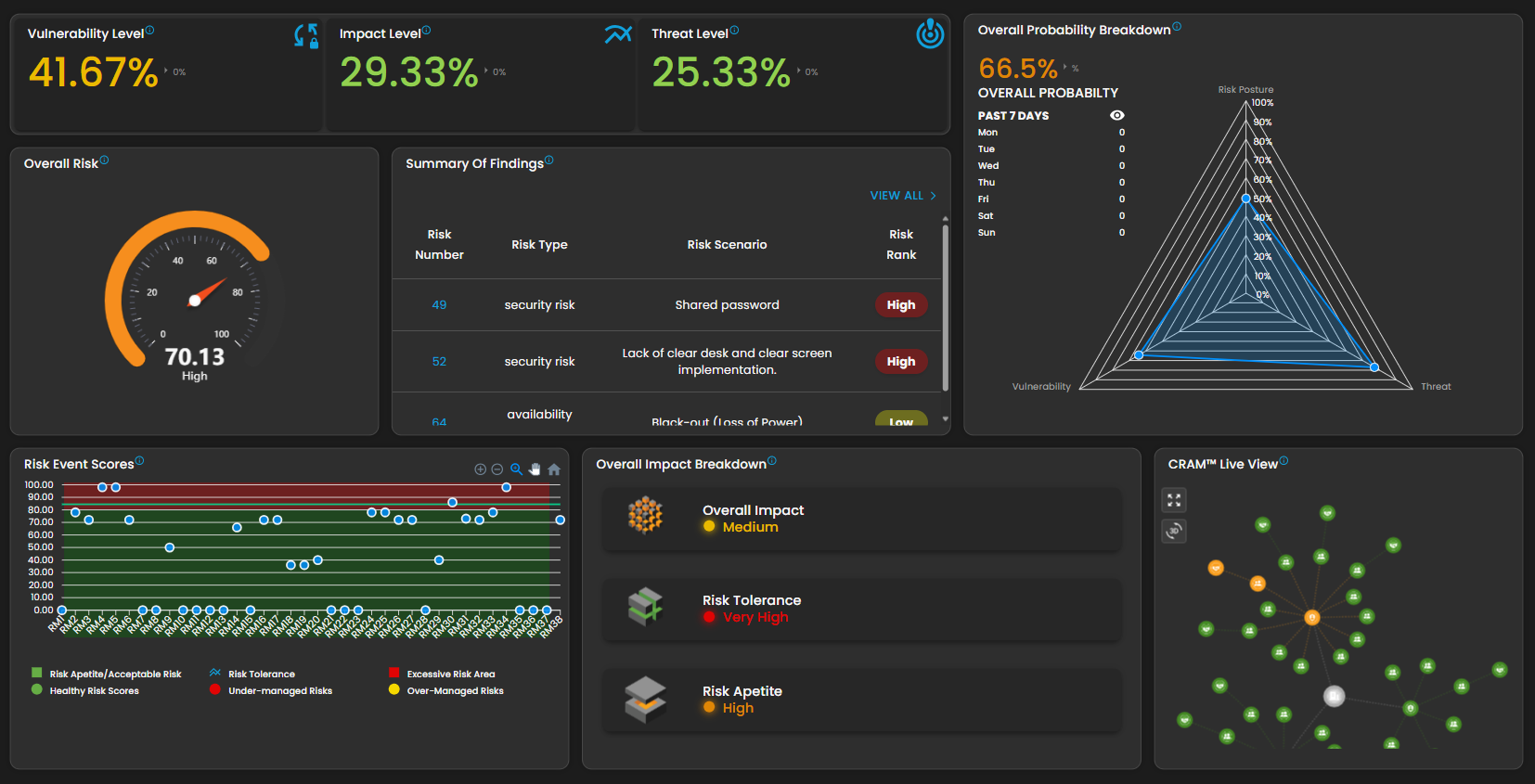
Delivers a centralized, real-time view of critical risk metrics and statuses, providing a comprehensive overview of ongoing risks, a concise summary of findings, and a detailed impact breakdown (pending integration into CRAM™). This empowers security teams with the insights needed for swift, informed decision-making.
-
- Asset Identification
-
Experience your tailored Cyber Risk Assessment and Management™ (CRAM™), where this module meticulously maps out the assets requiring safeguarding, establishing a robust foundation for risk assessment by laying the essential groundwork for your CRAM™ building blocks.
-
- Asset Inventory
- Maintains a comprehensive, up-to-date catalog of all assets, including hardware, software, and data. It tracks ownership, location, and vulnerabilities, ensuring nothing is overlooked during risk evaluations.
- Assessed Asset
- Focuses on evaluating the security posture of identified assets. This module assesses vulnerabilities, threats, and potential impacts, providing data to prioritize risk mitigation efforts.
- Risk Register
- Serves as a repository for documenting identified risks, including their likelihood, impact, and status. It acts as a single source of truth for tracking and reporting risks across the organization.
- Risk Management
- Enables the development and implementation of strategies to address risks (e.g., avoidance, mitigation, transfer, acceptance). This module supports planning, executing, and monitoring risk treatment plans.
- Task Management
- Assigns, tracks, and manages tasks related to risk mitigation, such as patch updates or employee training. It ensures accountability and timely completion of security actions.
- Geo Location
- Tracks the geographic distribution of assets and risks, identifying location-specific threats (e.g., market cyber resiliency or market vulnerability level). This aids in tailoring security measures to specific areas.
Pre-requisites:
- Access to CyTech - AQUILA
-
Only users assigned the "Owner" or "Admin" role can access the Log Collector installation resources within the platform.
-
Step 1: Log in to CyTech - AQUILA. click here --> AQUILACYBER.ai
Step 2: In the left column click Risk Management -> Cyber Security Risk Management (CSRM) -> Dashboard
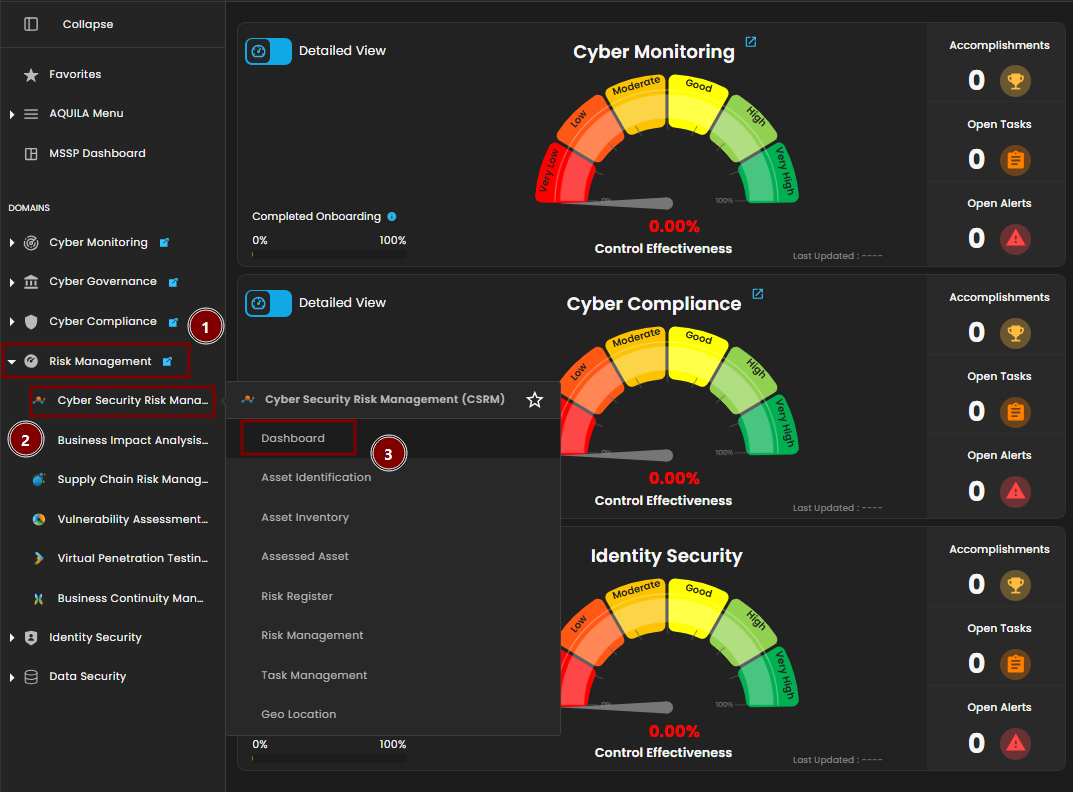
Cyber Security Risk Management (CSRM): Dashboard
The Dashboard page serves as the central hub for visualizing cybersecurity risk metrics and insights within a Cyber Risk Assessment and Management (CRAM™) system. It provides real-time overviews of risk levels, breakdowns, and trends through interactive widgets, charts, and summaries. This interface appears tailored for security teams to monitor risks, identify issues, and facilitate quick decision-making.
Vulnerability Level
-
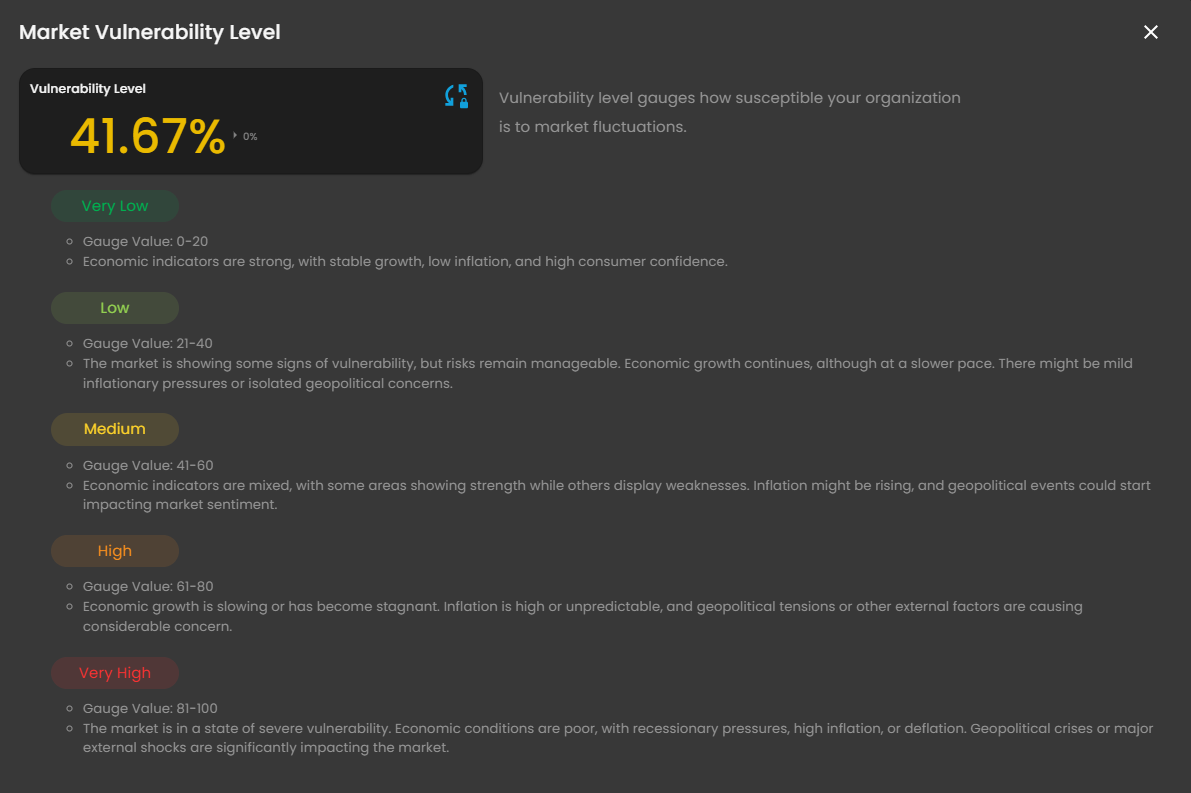
Represents the overall vulnerability exposure, meticulously calculated from asset scans and assessments. This metric elegantly gauges the susceptibility of your organization to market fluctuations, providing a refined understanding of potential risks.
- Clicking it will open the Market Vulnerability Level pop up box that emphasizes economic factors like growth, inflation, consumer confidence, and geopolitical risks, rather than cybersecurity specifics, indicating a holistic risk management perspective.
Impact Level
-
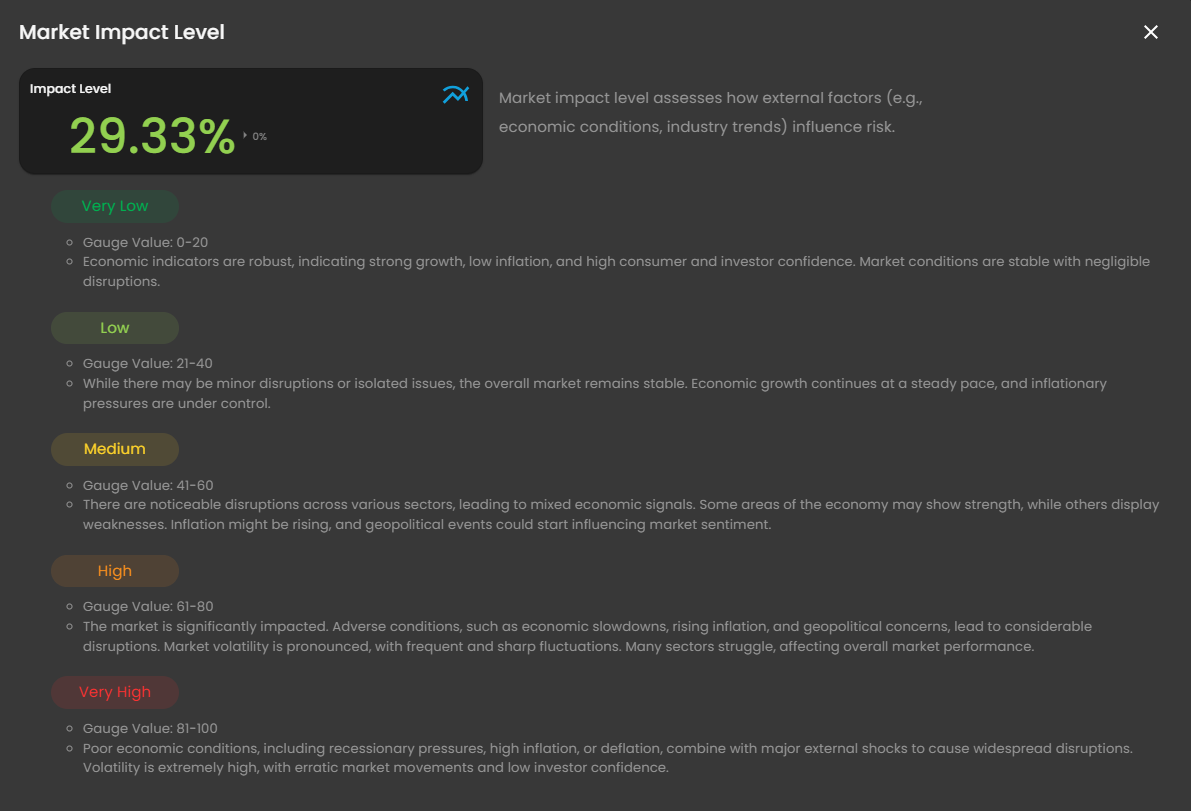
Measures the potential business or operational impact of identified risks. This metric elegantly assesses how external factors, such as economic conditions and industry trends, influence the overall risk landscape.
- Clicking it will open the Market Impact Level pop up box that focuses on external economic and market influences, including growth, inflation, geopolitical events, and investor confidence, rather than cybersecurity-specific risks.
Threat Level
-
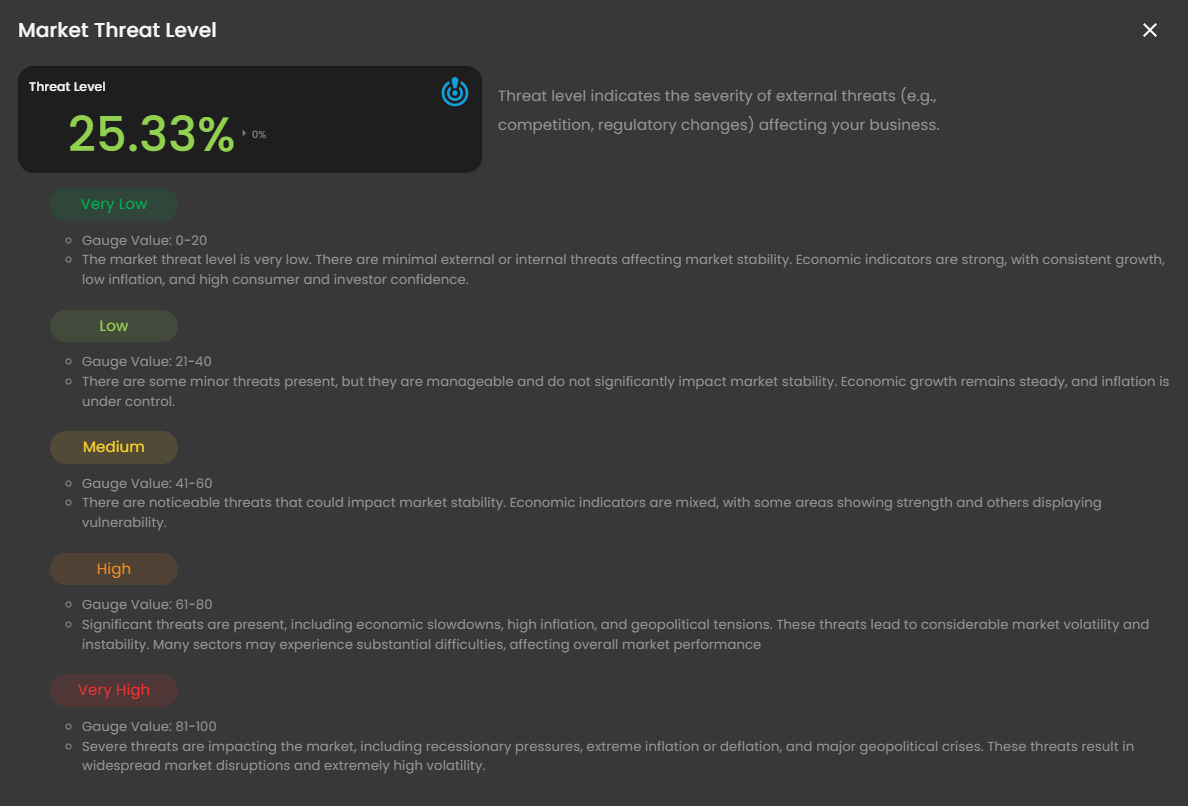
Indicates the severity or likelihood of external threats. This metric elegantly assesses the intensity of external threats, including competition and regulatory changes, that may impact your business.
- Clicking it will open the Market Threat Level pop up box that centers on assessing the severity of external threats affecting market stability, incorporating economic indicators such as growth, inflation, consumer/investor confidence, and geopolitical factors.
Overall Probability Breakdown
-
This component, integral to a risk management dashboard such as the CRAM™ system, focuses on probabilistic risk metrics over time. The probability breakdown elegantly illustrates the likelihood of a risk event occurring, empowering stakeholders to prioritize mitigation efforts effectively.
Overall Risk
-
Provides a holistic score aggregating vulnerability, impact, and threat levels. This metric formally represents the combined impact and probability of a risk event, offering a comprehensive assessment of the organization's overall risk exposure.
-
Clicking this element unveils a popup window, a pivotal component of a risk management dashboard such as the CRAM™ system, meticulously crafted to provide a comprehensive assessment of an organization's risk posture. It delivers a holistic score that elegantly aggregates vulnerability, impact, and threat levels, empowering security teams and decision-makers to monitor and prioritize risk mitigation efforts with precision.
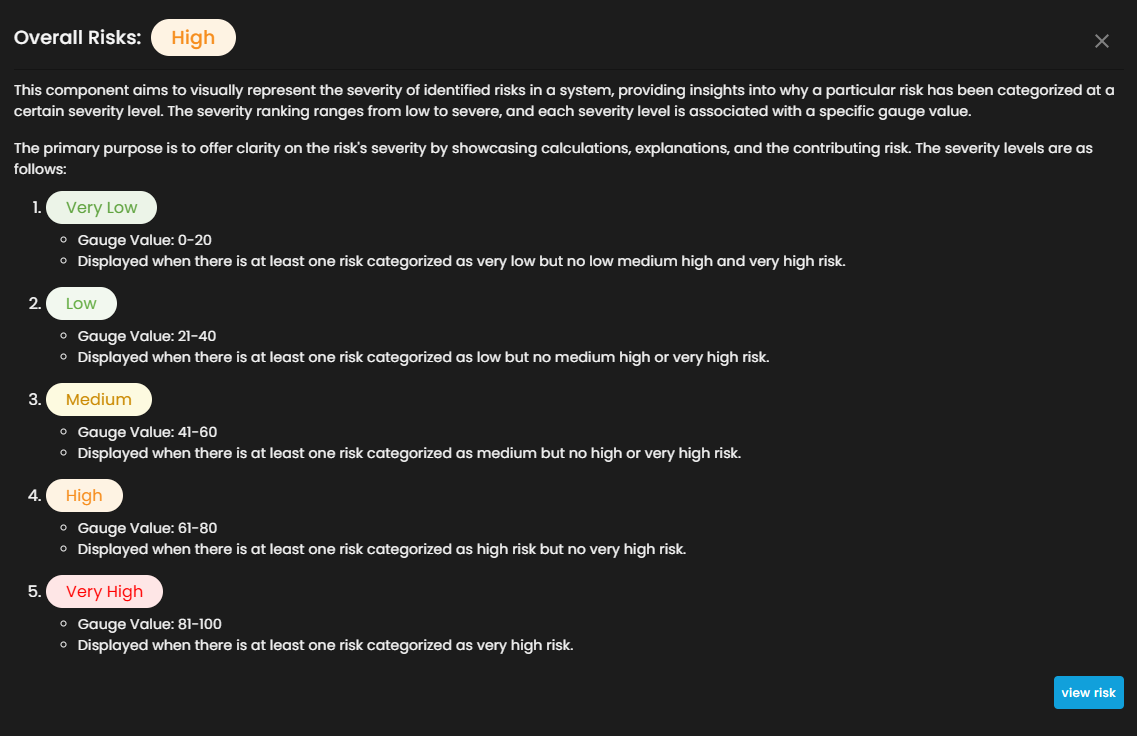
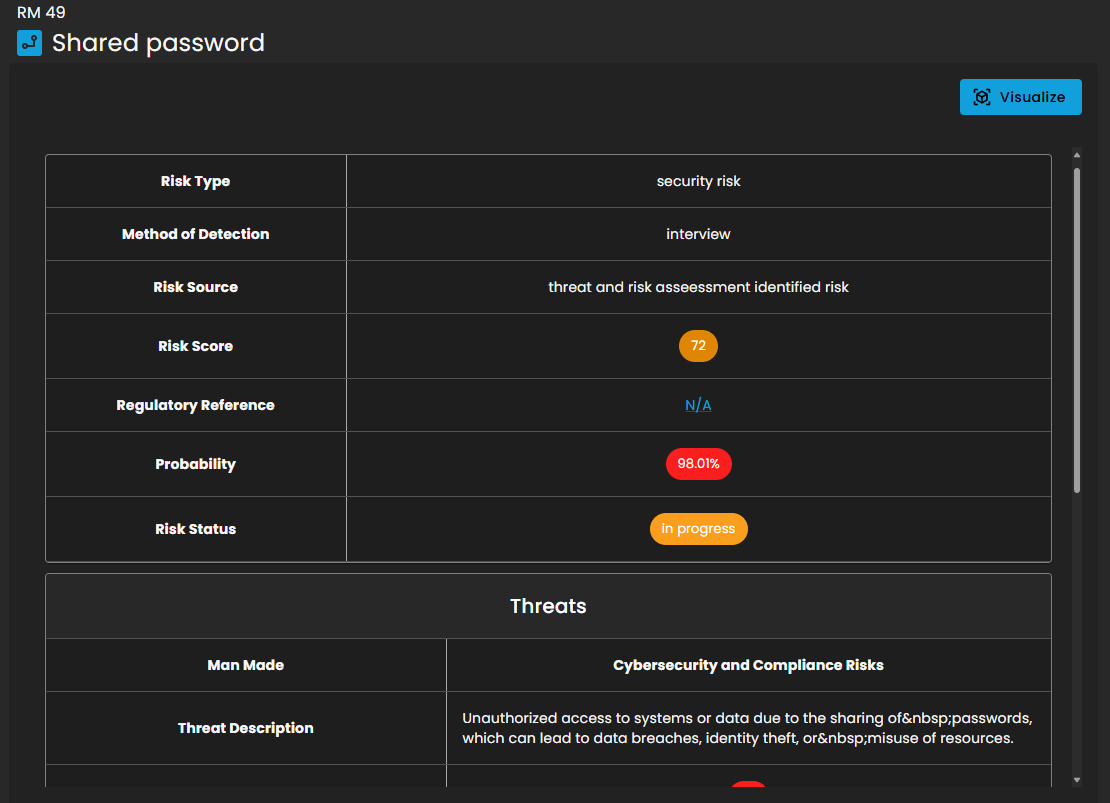
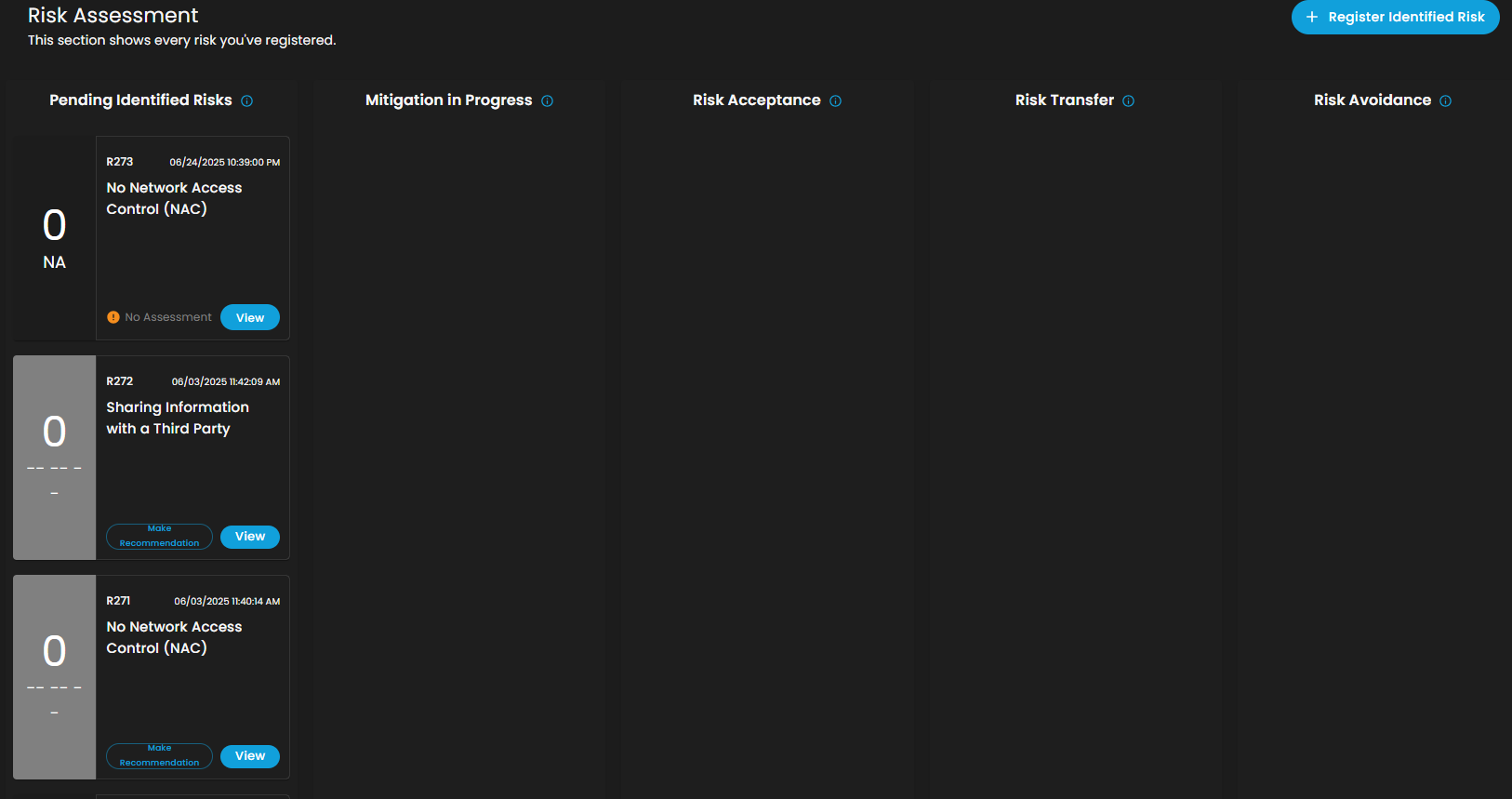
- Clicking the view risk button will redirect you to its risk assessment.
-
This page offers comprehensive visibility into pending identified risks, ongoing mitigation efforts, risk acceptance, risk transfer, and risk avoidance strategies. Additionally, it enables client to seamlessly register newly identified risks with ease.
Summary of Findings
- The summary of findings provides a concise overview of identified risk and their implications.
-
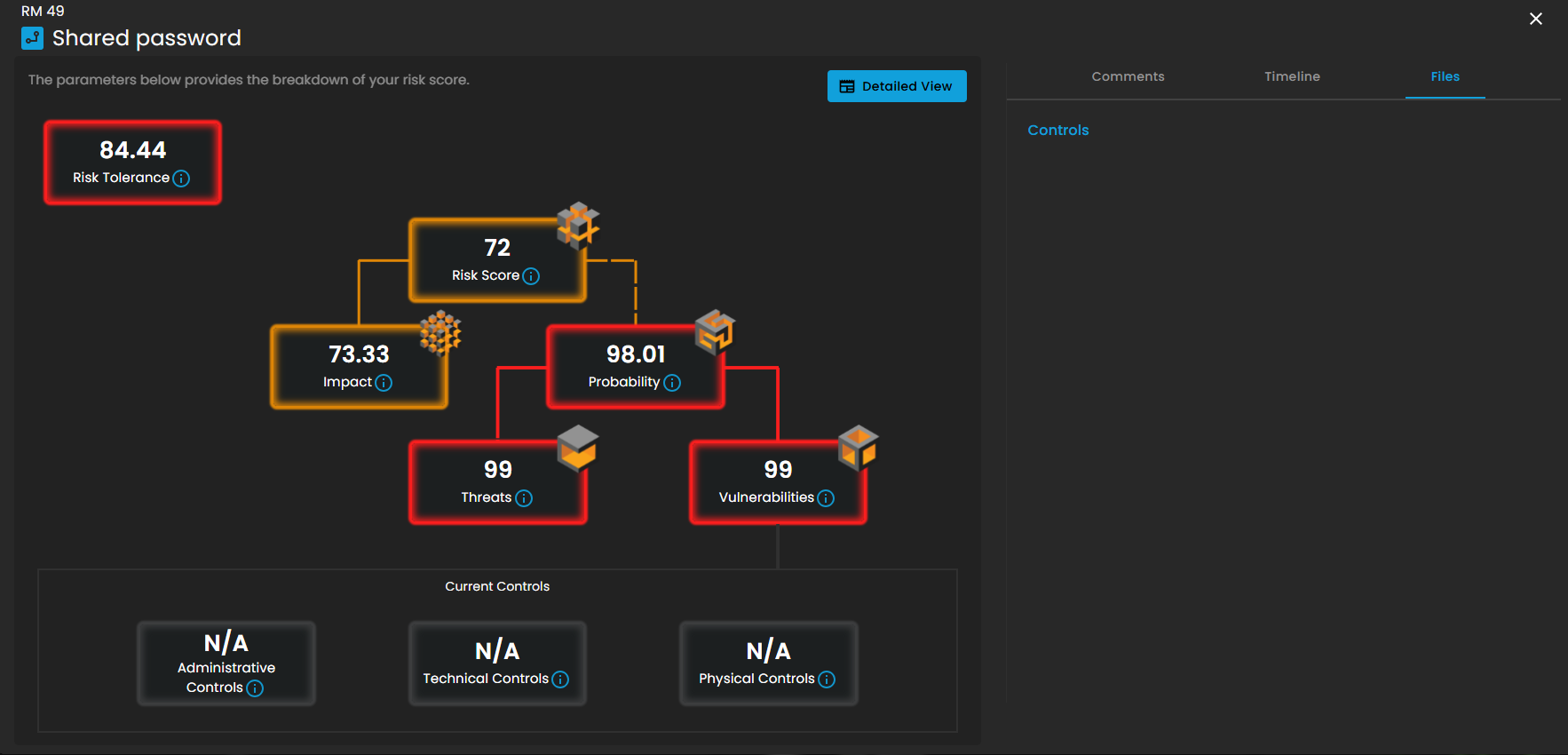
Selecting a risk scenario will unveil a sophisticated Risk Breakdown popup, an integral visualization component within a risk management dashboard such as the CRAM™ system, meticulously crafted to dissect a specific identified risk for comprehensive in-depth analysis. This feature is thoughtfully designed for security teams and risk managers, providing profound insights into the composition of a risk event and empowering informed mitigation strategies with precision.
-
Upon clicking the Detailed View button, you will be presented with an intricate and comprehensive breakdown of information, encompassing Threats, Vulnerabilities, and additional critical factors.