# Cyber Talent & Culture
Cyber Talent & Culture focuses on building a skilled, security-aware workforce while fostering a culture that prioritizes cybersecurity across the organization.
# Cyber Training, Culture, and Awareness
##### **Overview:**
The **Cyber Training, Culture, and Awareness** provides a centralized view of phishing simulations, user awareness campaigns, and email security reports. It allows administrators to track user engagement, identify high-risk individuals, and measure the effectiveness of awareness initiatives. The dashboard combines performance metrics, reporting data, and campaign insights to strengthen organizational resilience against social engineering threats.
##### **Key Features:**
- **Accomplishment Overview:** Shows user interactions across unopened, opened, visited, and compromised stages with percentage breakdowns.
- **Simulation Metrics:** Summarizes total users, simulations, open rate, and click rate to measure campaign effectiveness.
- **Sniff & Detect Email Reports:** Tracks user-reported emails and categorizes them as malicious, suspicious, or unrated.
- **Cyber User Awareness Campaigns:** Lists ongoing campaigns with details on recipients, timelines, and response outcomes.
- **Top 10 Highest Risk Recipients:** Identifies users with the highest click-prone rates for targeted training.
**To navigate to Cyber Training, Culture, and Awareness please follow the instructions below:**
**Step 1: Log in to CyTech - AQUILA.** *click here -->* **[usdc.cytechint.io](https://usdc.cytechint.io/)**
**Step 2: Click on Cyber Talent & Culture.**
[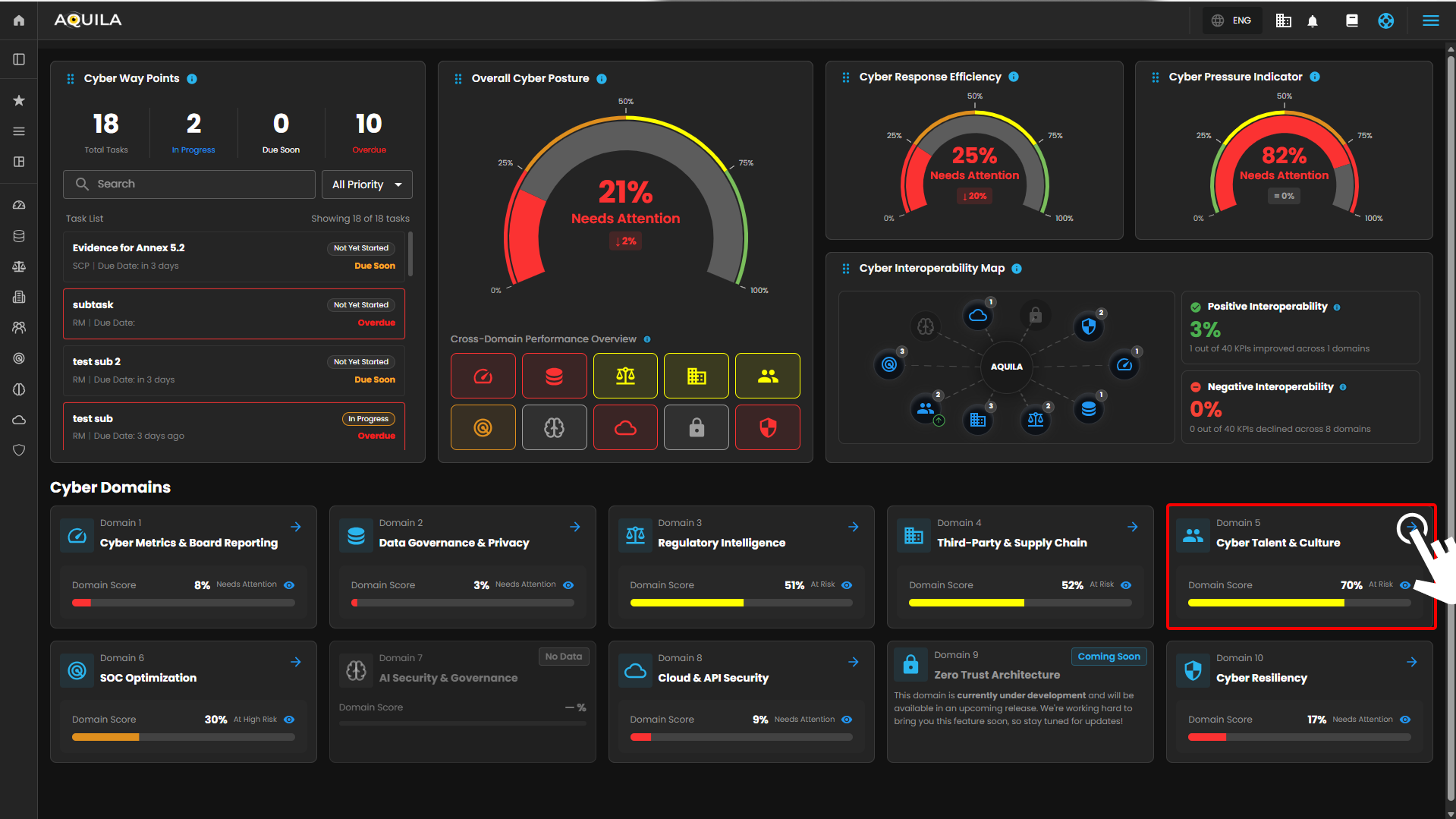](https://cytechint-docs-bookstack.s3.amazonaws.com/uploads/images/gallery/2026-04/JkHug4YG0iEORvFL-hehe-2-5.png)
*Figure 1. Overview*
**Step 3: Choose Cyber Training Culture and Awareness.**
[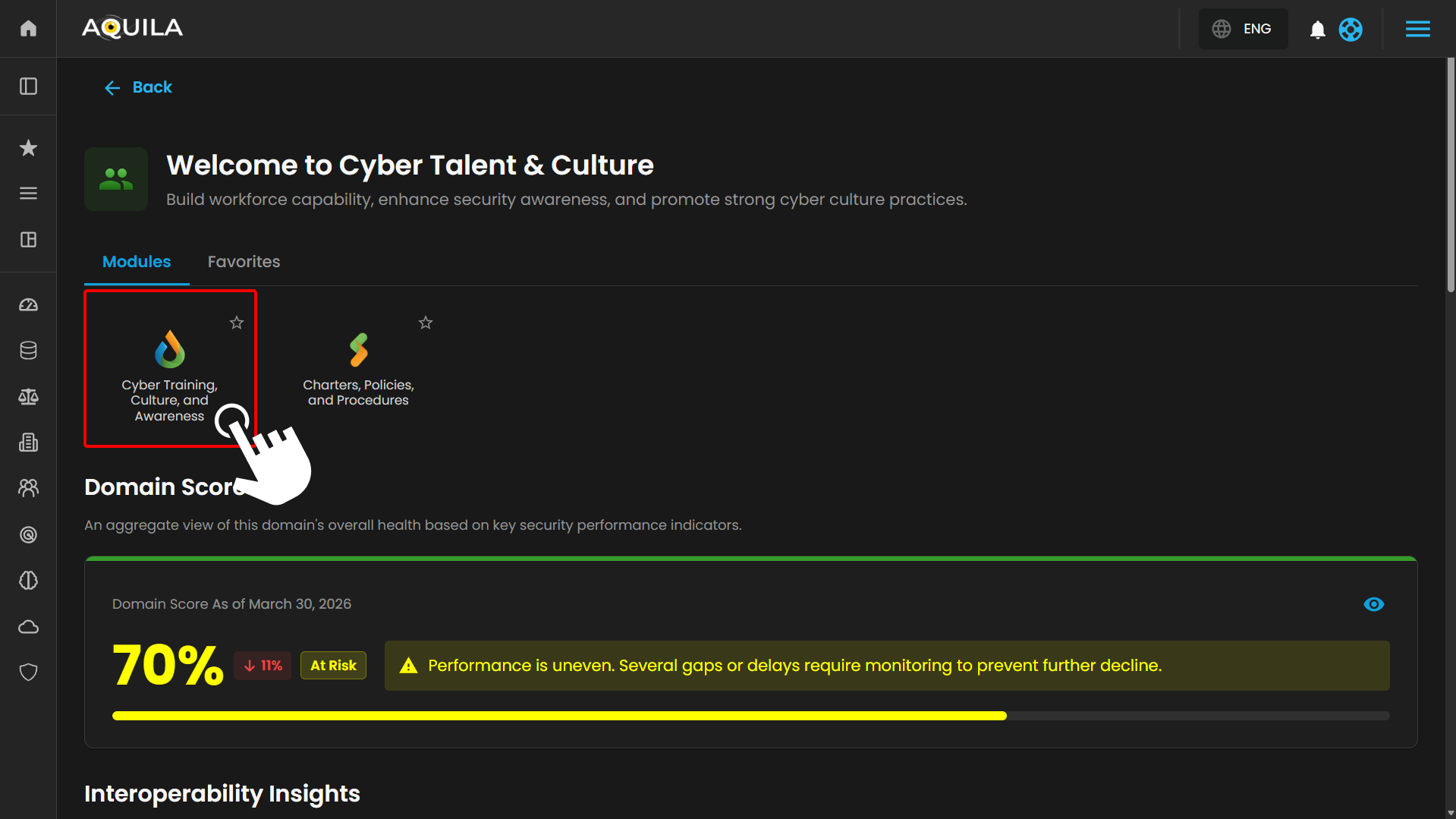](https://cytechint-docs-bookstack.s3.amazonaws.com/uploads/images/gallery/2026-04/prD0mcp9hylyzHMe-hehe-18.png)
*Figure 1.1 Cyber Governance Dashboard*
**Step 4: Hover into leftmost panel to view all the Cyber Talent & Culture sections. This Process is applicable in all navigating into a Module.**
[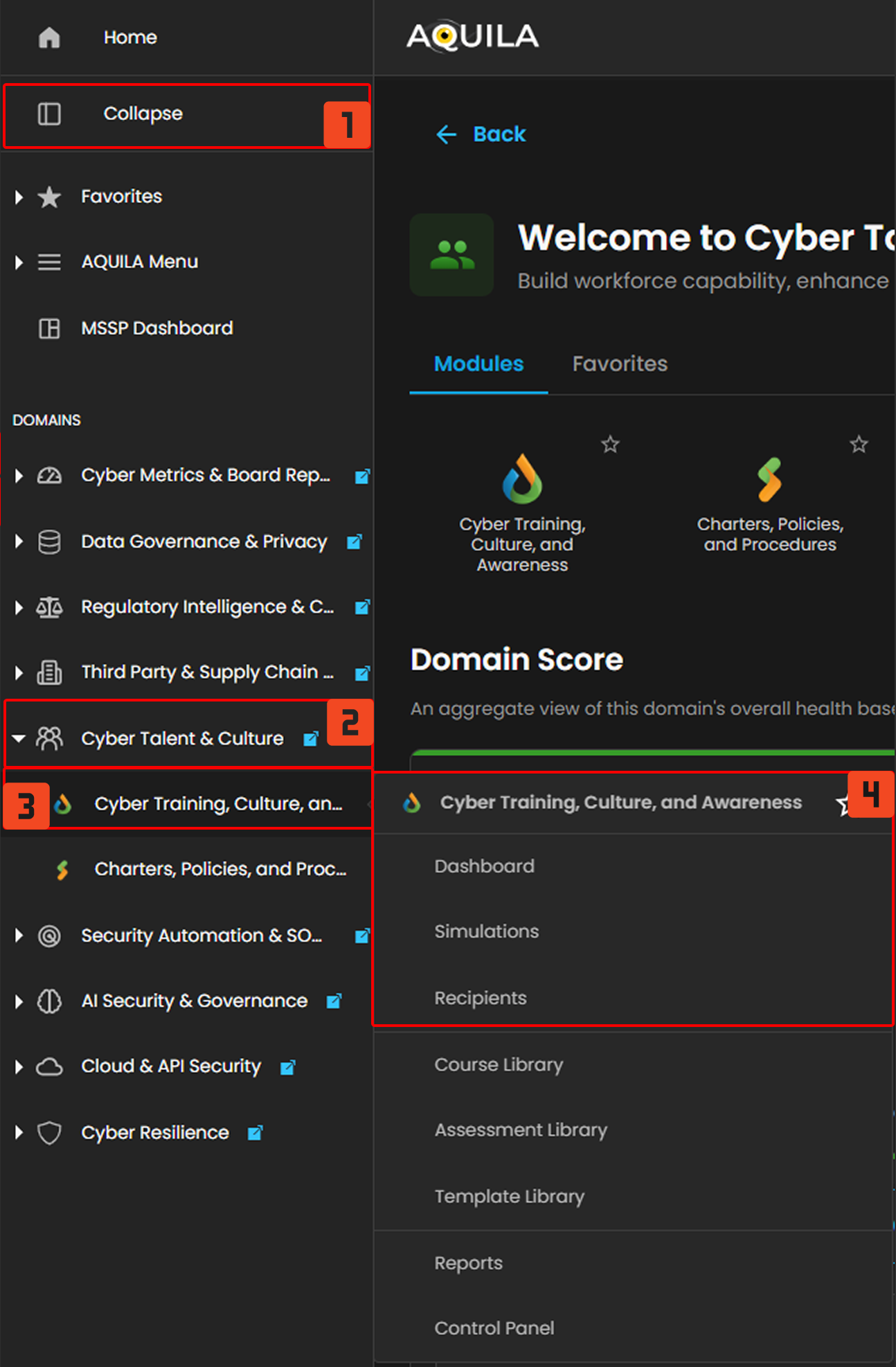](https://cytechint-docs-bookstack.s3.amazonaws.com/uploads/images/gallery/2026-04/0bFrA5uD1kqM7Oc7-hello-8.png)
*Figure 1.2 Cyber Governance Navigation*
#### **Cyber Training, Culture, and Awareness**
The Cyber Training, Culture, and Awareness dashboard provides an **overall view of employee cybersecurity awareness and behavior** by tracking how users interact with simulated phishing campaigns, their reporting activity, and overall risk levels. It combines campaign performance metrics, user actions, and high-risk recipient insights into a single interface, allowing organizations to quickly understand their security awareness posture and identify areas where additional training or attention is needed.
#### **Dashboard**
[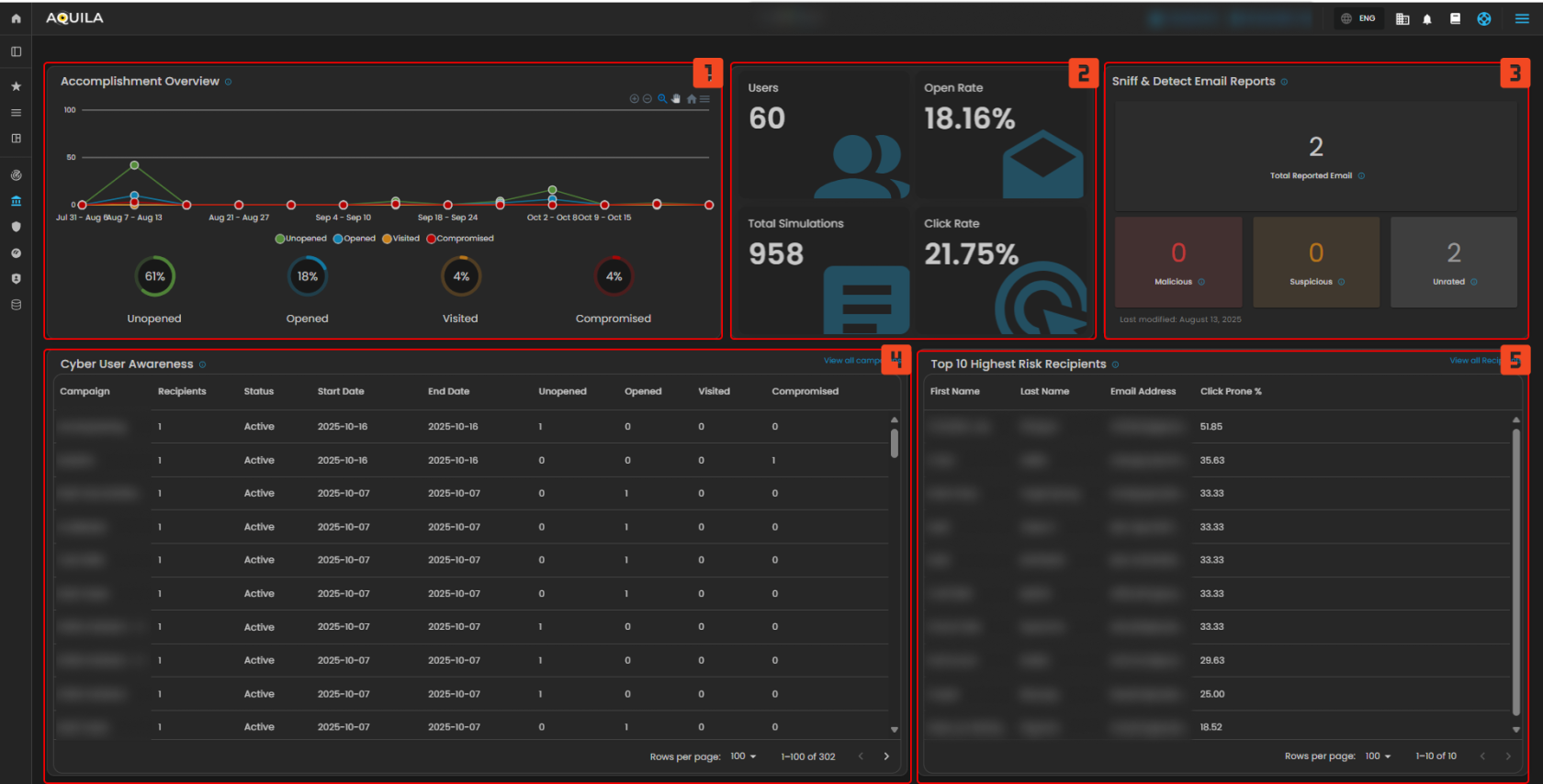](https://cytechint-docs-bookstack.s3.amazonaws.com/uploads/images/gallery/2025-10/rmlJma2vckpzKg0o-test-4.png)
*Figure 2 Cyber Governance Navigation*
**1. Accomplishment Overview**
- This widget tracks how employees interact with awareness emails over time, showing whether they leave emails unopened, open them, click links, or fall for the simulation, helping measure overall engagement and risk behavior trends.
**2. Campaign Metrics**
- This provides a quick snapshot of campaign performance, summarizing the number of users involved, how often emails are opened, how many links are clicked, and the total simulations conducted, giving an at-a-glance view of effectiveness.
**3. Sniff & Detect Email Reports**
- This tracks the emails that users report as suspicious and classifies them into categories such as malicious, suspicious, or untagged, allowing organizations to monitor employee vigilance and reporting habits.
**4. Cyber User Awareness**
- This lists all active and past training campaigns with details like how many users were included, when the campaign started and ended, and how those users responded, providing transparency into training coverage and outcomes.
**5. Top 10 Highest Risk Recipients**
- This highlights the employees who are most likely to click on phishing links, ranking them by click-prone percentage, which helps identify individuals needing extra training or support.
#### **Simulations**
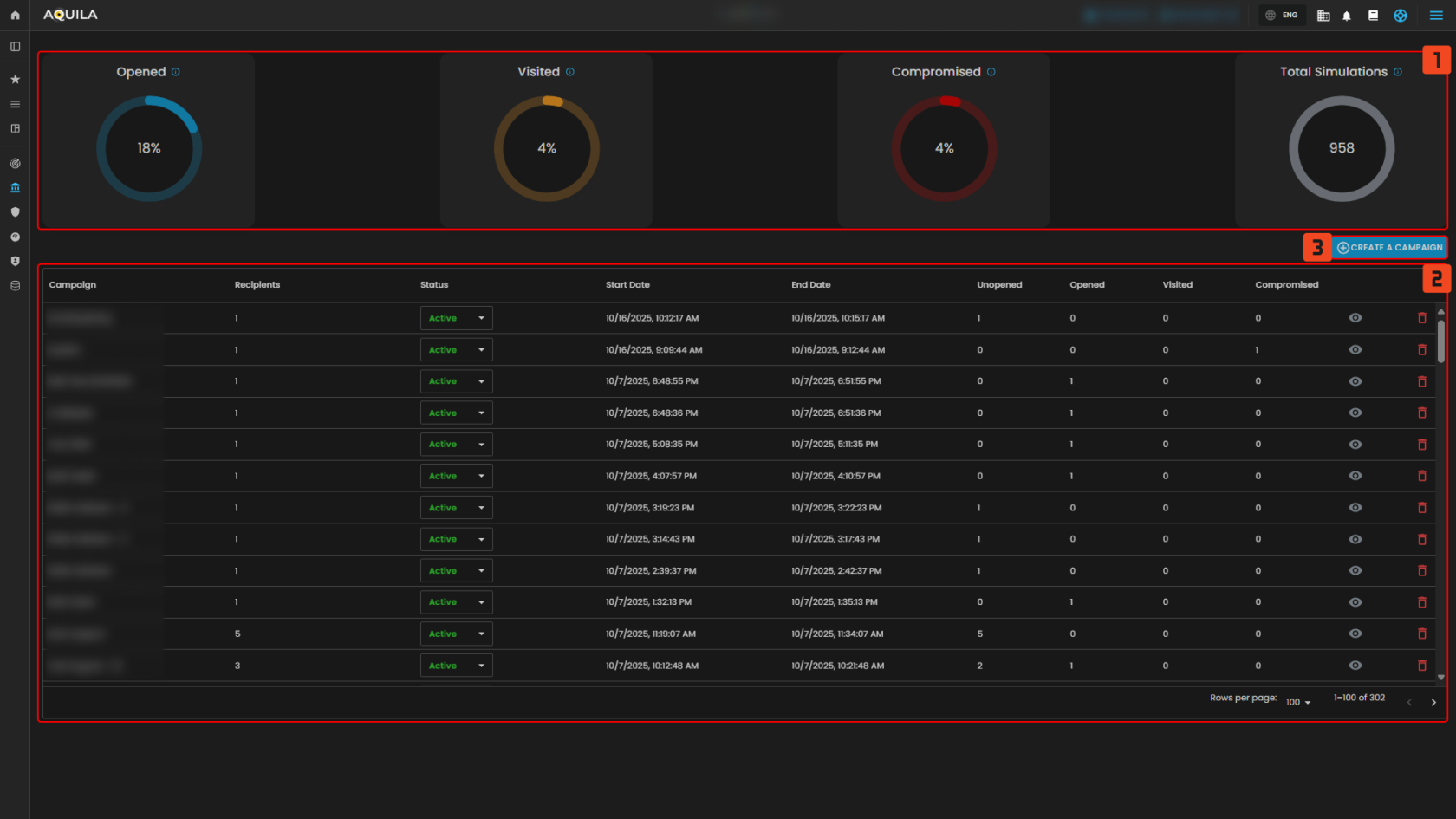
The **Simulations Overall dashboard** gives a unified view of all phishing simulations, showing key metrics like opens, clicks, and compromises. Its function is to measure employee susceptibility, track training effectiveness, and highlight where additional awareness is needed. It also helps organizations monitor trends over time and ensure their phishing awareness program is continuously improving.
[](https://cytechint-docs-bookstack.s3.amazonaws.com/uploads/images/gallery/2025-10/yLKc7iqMhwCezqBj-test-5.png)
*Figure 3 Simulation*
**1. Overall Campaign Results**
- Continuously aggregates data from all phishing awareness campaigns to calculate performance metrics. It works as a real**-**time tracker that lets security teams measure user behavior trends and overall risk exposure without going into each campaign individually. Helps in benchmarking progress over time and in identifying whether training is improving employee caution.
**2. Create a Campaign**
- Serves as the main entry point to design and launch new phishing simulations. Clicking it opens a **campaign builder**, where administrators can, Choose or customize phishing templates. Define recipients. Configure campaign settings like duration, sending time, and difficulty. Its function is to initiate controlled phishing tests that assess and improve employee security awareness.
**3. Campaign List**
- Acts as a **management dashboard** for all phishing awareness campaigns. It organizes each campaign’s details such as recipients, current status, start/end dates, and user results. Its purpose is to give full oversight and control over all running and past simulations in one place.
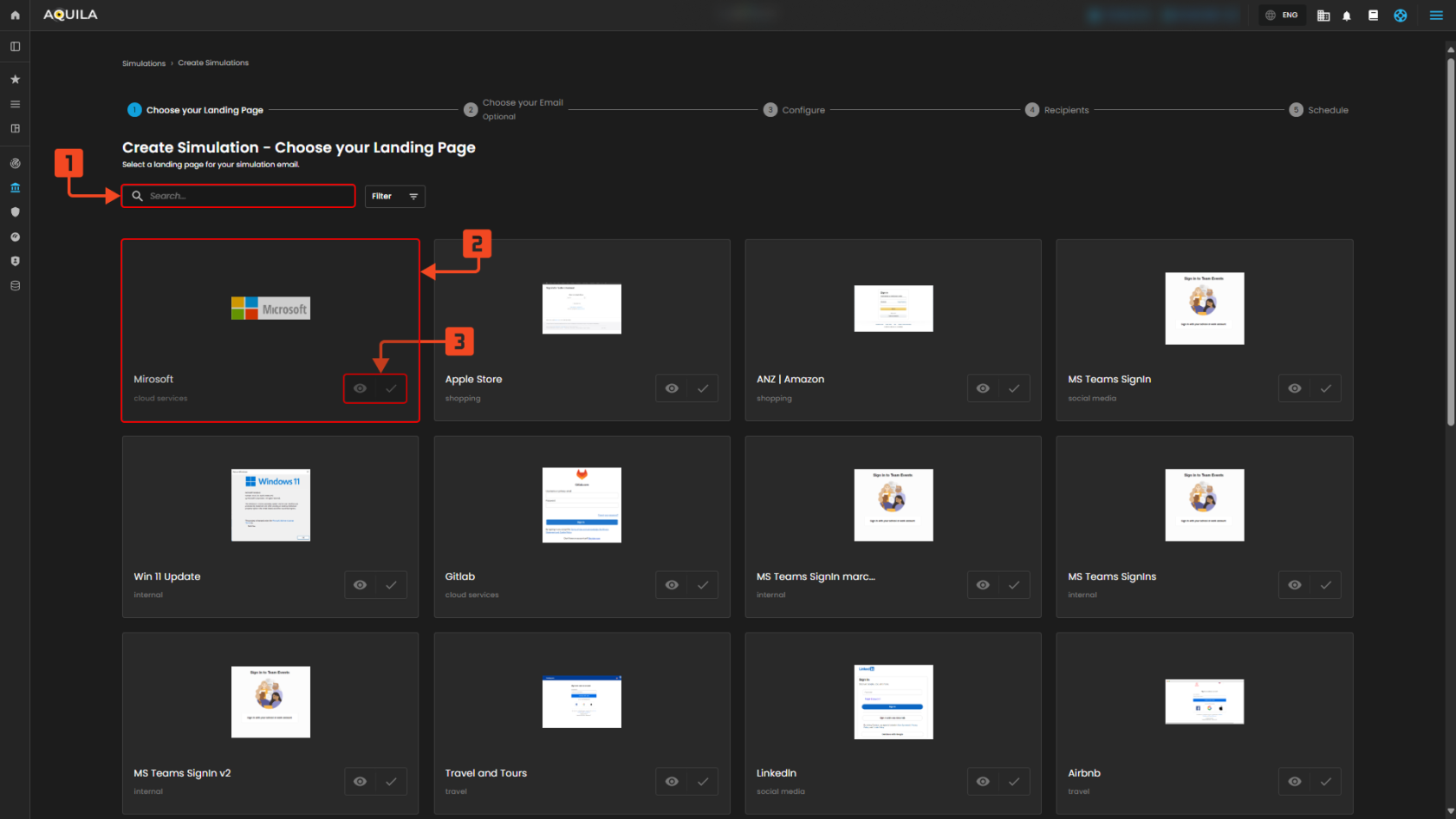
**Create a Campaign (Choose Landing Page)**
[](https://cytechint-docs-bookstack.s3.amazonaws.com/uploads/images/gallery/2025-10/CXz6IiYPyrgRIhZ9-test-6.png)
*Figure 3.1 Create a Campaign (Choose landing Page)*
**1. Search landing pages**
- Use the search box to quickly find a landing page by name or tag (e.g., “Microsoft”, “internal”); this saves time when you have many templates and lets you narrow options to ones that match the campaign theme.
**2. Choose a landing-page**
- Choose a landing page card to focus that page; the card shows a small preview and the page’s category so you can pick a page that looks and reads like the real target site.
**3.** Use the **eye** icon
- Open a full preview and the **check** control to mark that page as the chosen landing page for the simulation.
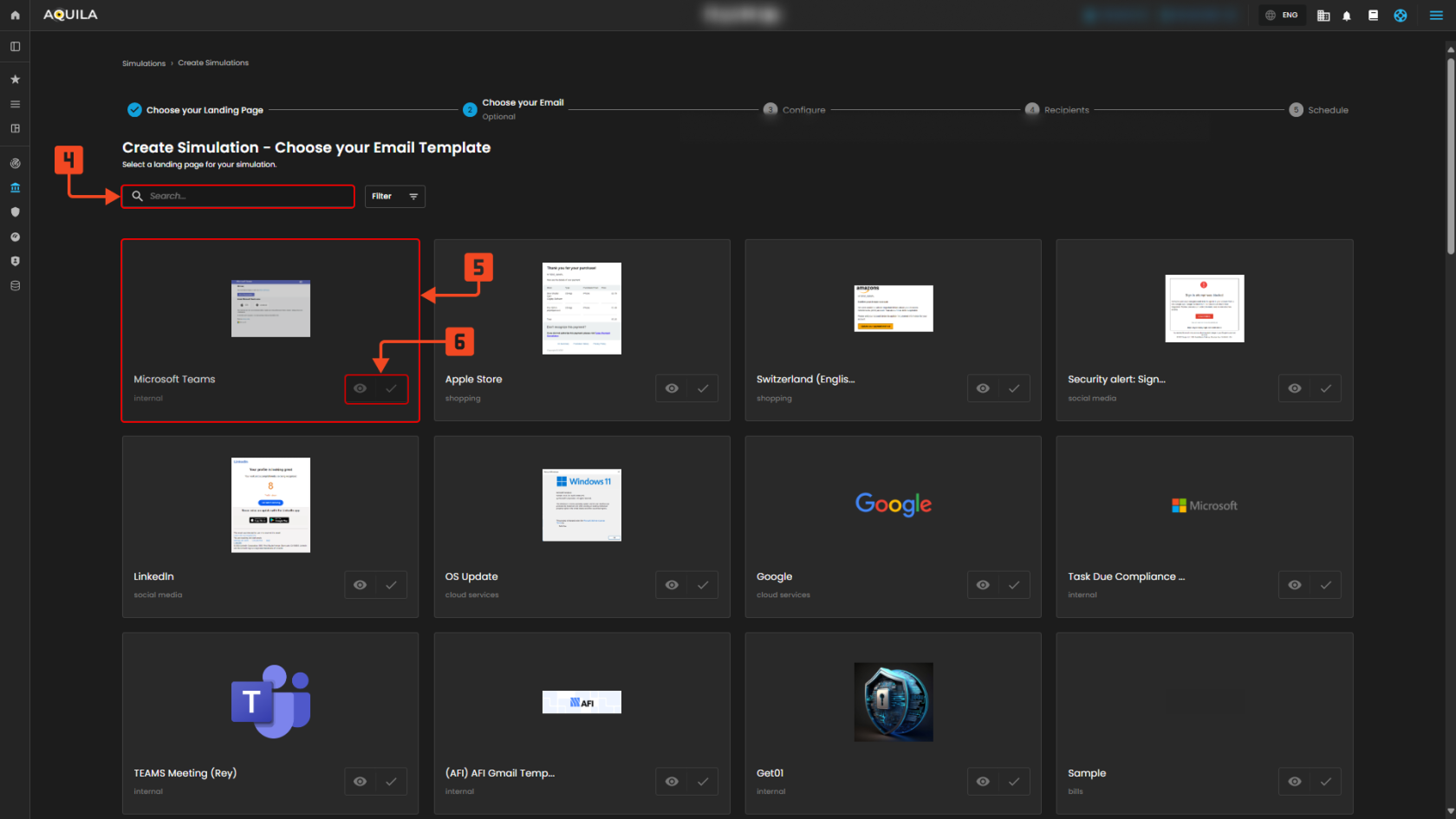
**Choose Email Template**
[](https://cytechint-docs-bookstack.s3.amazonaws.com/uploads/images/gallery/2025-10/JHSzL6Lm0oHpgLWE-test-9.png)
*Figure 3.2 Choose Email Template*
**4. Search email templates**
- Use the email-template search field to filter the available email designs by name or category so you can quickly match an email that pairs with your chosen landing page.
**5. Email template tile**
- Click an email template card to view its thumbnail and basic info (category/label); choose a template that fits the scenario you want to simulate (brand style, tone, or ask).
**6. Preview / Select controls for email**
- Use the **eye** icon to preview the full email content and the **check** control to select that template as the message that will be sent in the simulation.
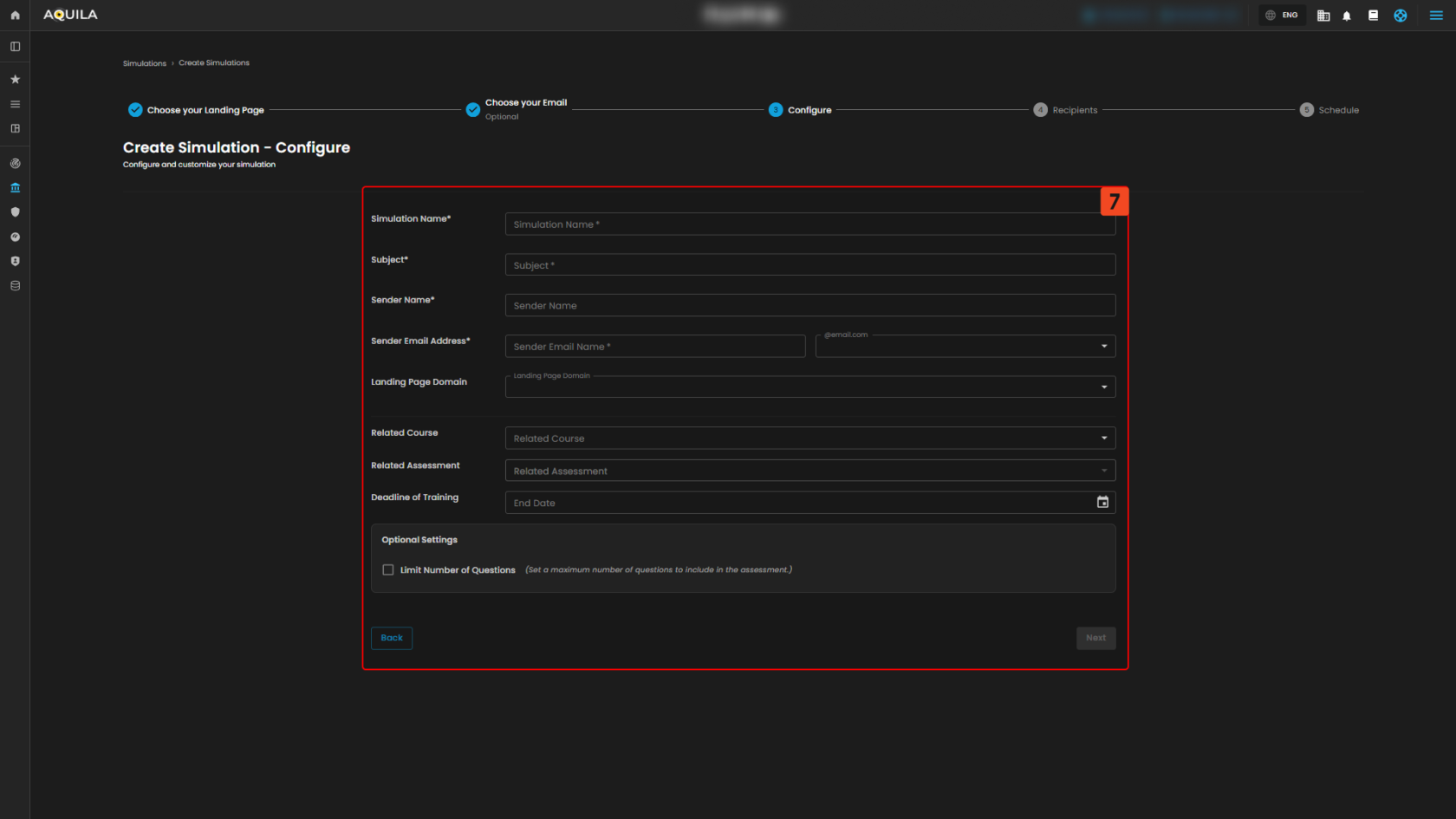
**Configure**
[](https://cytechint-docs-bookstack.s3.amazonaws.com/uploads/images/gallery/2025-10/eWWCraa0ZvTgitCD-test-10.png)
*Figure 3.3 Configure*
**7. Configure simulation details**
- Fill the configuration form (Simulation Name, Subject, Sender Name/Email, Landing Page Domain, related course, training deadline, optional assessment limits); required fields are marked, and you should confirm the sender domain and landing-page domain are set appropriately so the simulation behaves as expected and reporting links map correctly.
- After filling the configuration, choose recipients then Next.
**Schedule**
[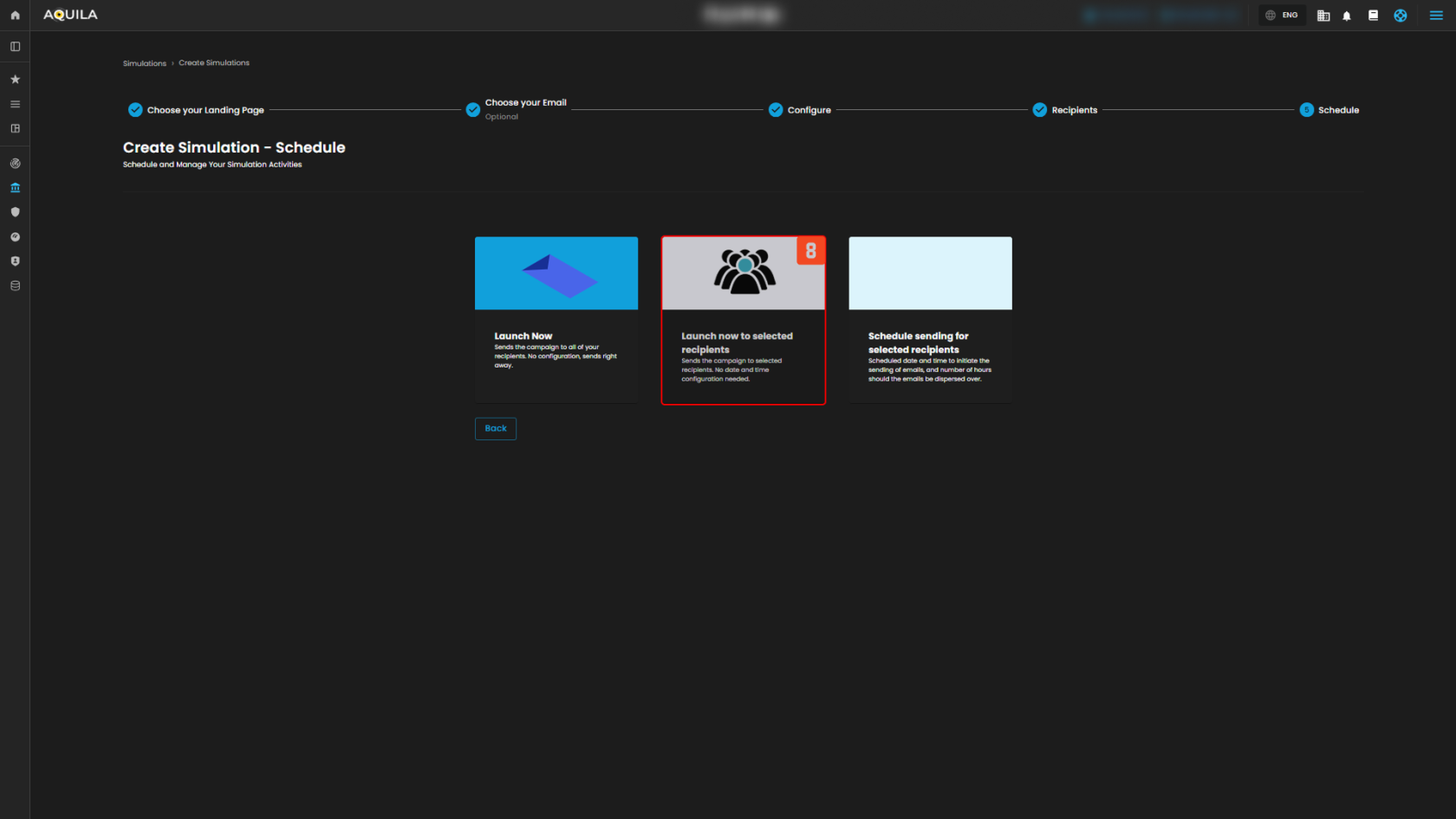](https://cytechint-docs-bookstack.s3.amazonaws.com/uploads/images/gallery/2025-10/o9DyGPxJrPO4lpR4-test-11.png)
*Figure 3.4 Schedule*
**8. Schedule / Launch options**
- Choose how to send: **Launch Now** (all recipients immediately), **Launch now to selected recipients** (immediately but only the subset you pick), or **Schedule** (pick a date/time and dispersion window); pick the card that matches whether you want an immediate broad send, a targeted immediate send, or a planned rollout.
#### **Recipients**
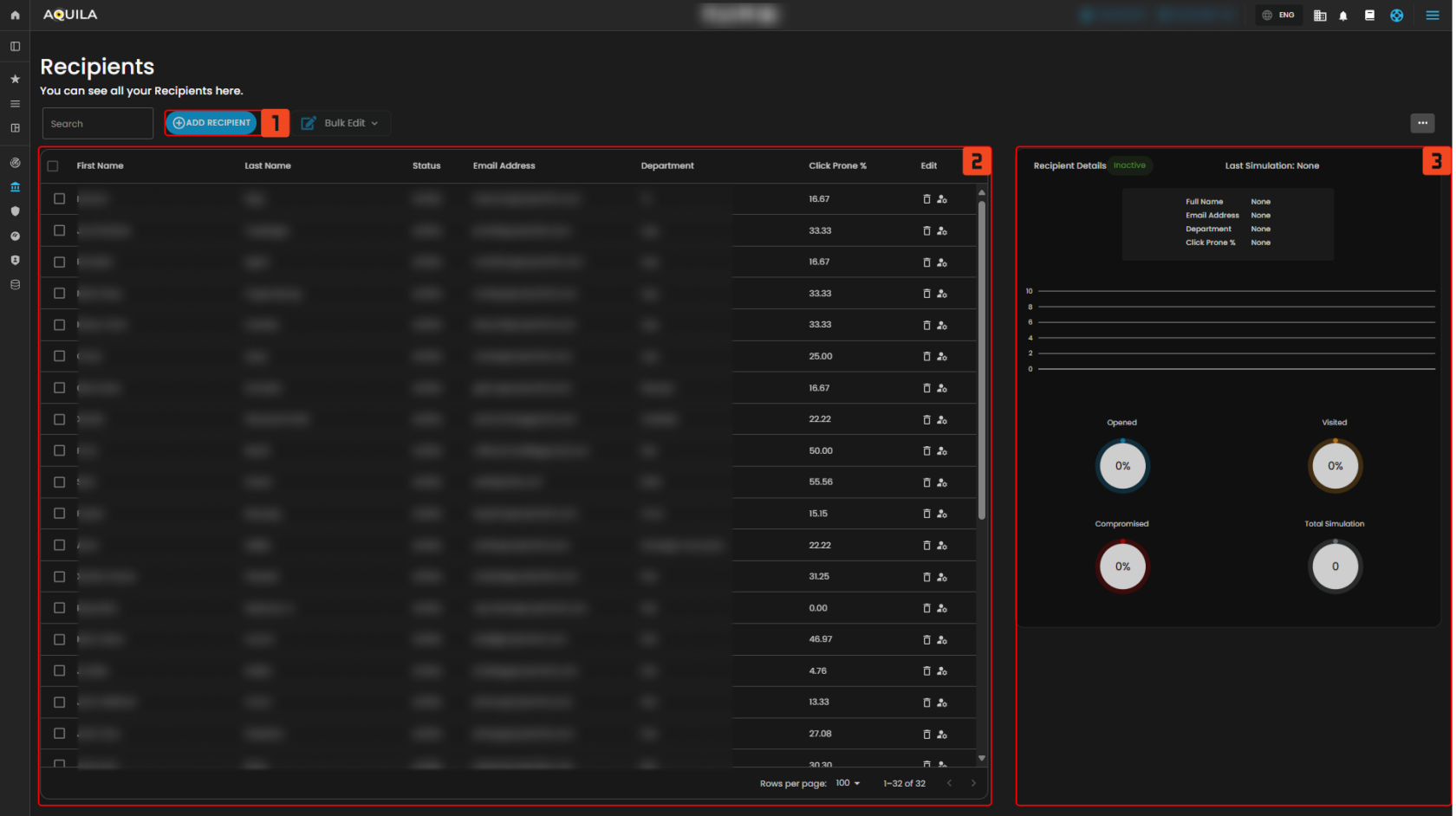
The **Recipients** provides an overview of all users or groups included in phishing simulations. It helps organizations track recipient activity, click-prone behavior, and simulation results to identify who may need additional training.
[](https://cytechint-docs-bookstack.s3.amazonaws.com/uploads/images/gallery/2025-10/9672edGB8fYBJ5lV-test-13.png)
*Figure 4 Recipients*
**1. Add Recipient** – Lets you manually add a new user or group into the simulations list.
**2. Recipient List** – Displays all recipients with their status, department, and click-prone percentage.
**3. Recipient Details Panel** – Shows detailed metrics and simulation history for a selected recipient.
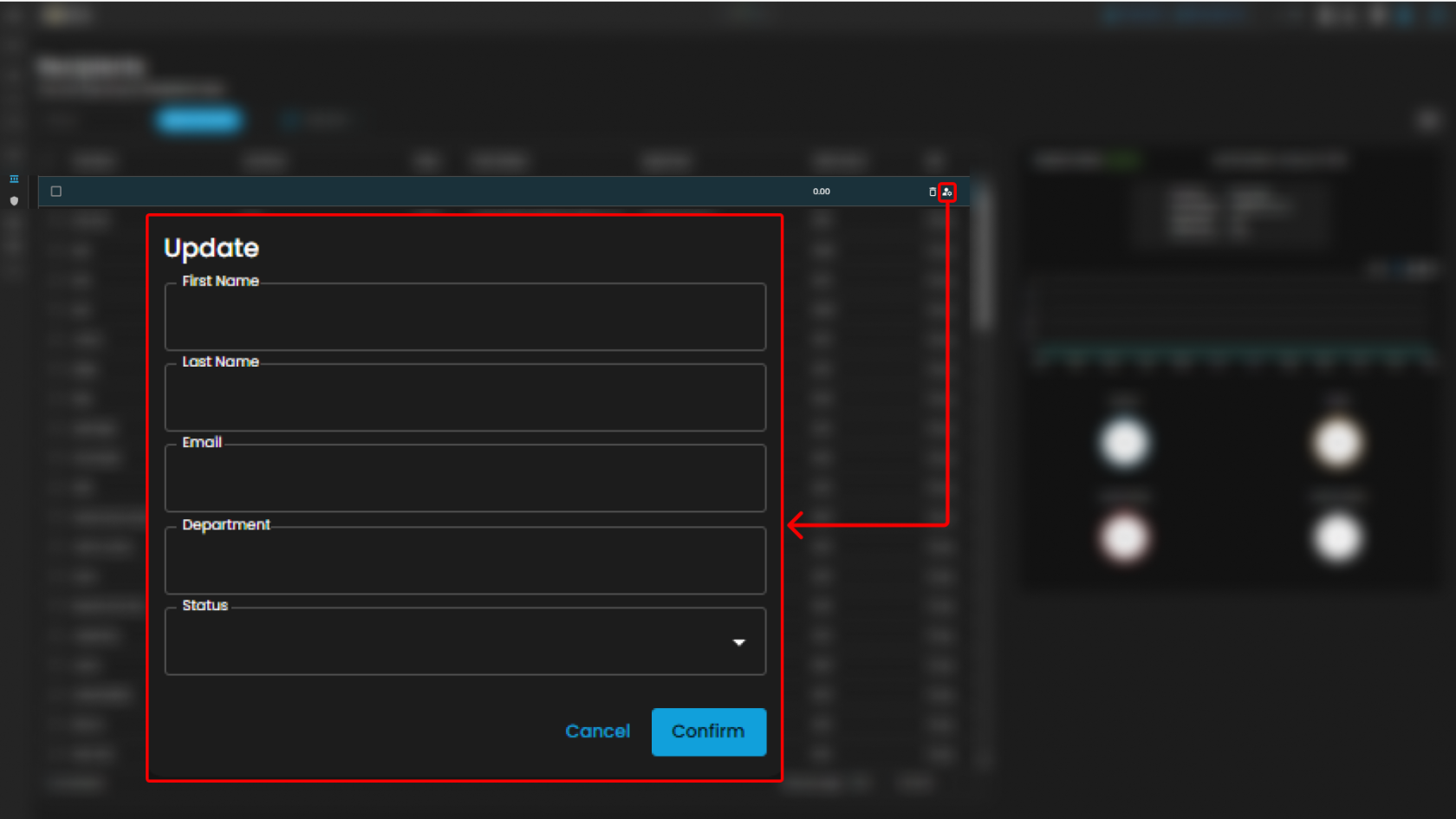
Clients can also edit a user's information by clicking the button beside the trash icon
[](https://cytechint-docs-bookstack.s3.amazonaws.com/uploads/images/gallery/2026-03/Dk22StSxdacsluDc-hehe-13.png)
*Figure 4.1 Update Info*
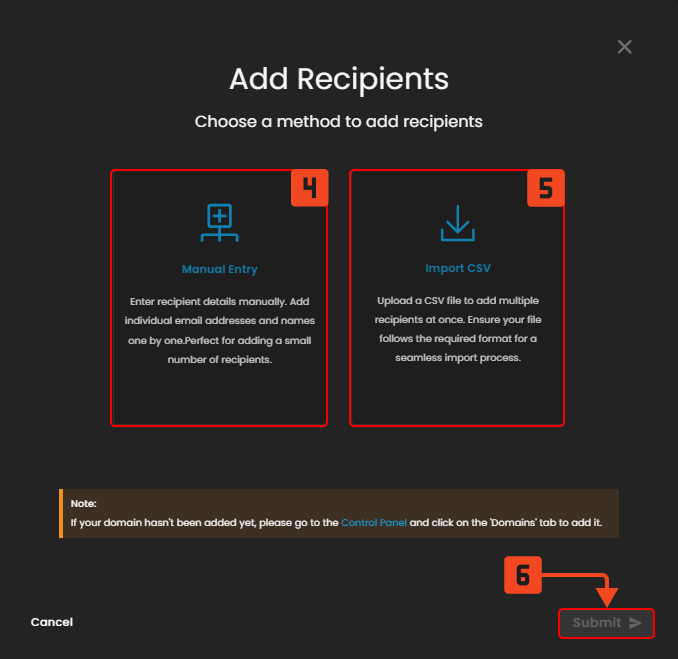
**Add Recipients**
[](https://cytechint-docs-bookstack.s3.amazonaws.com/uploads/images/gallery/2025-10/BD3YGCpteRrYudik-test-14.png)
*Figure 4.2 Add Recipients*
**4. Manual Entry** – Add recipients individually by typing in their names and email addresses.
**5. Import CSV** – Upload a CSV file to add multiple recipients at once.
**6. Submit** – Confirms the chosen method and completes adding the recipients.
#### **Course Library**
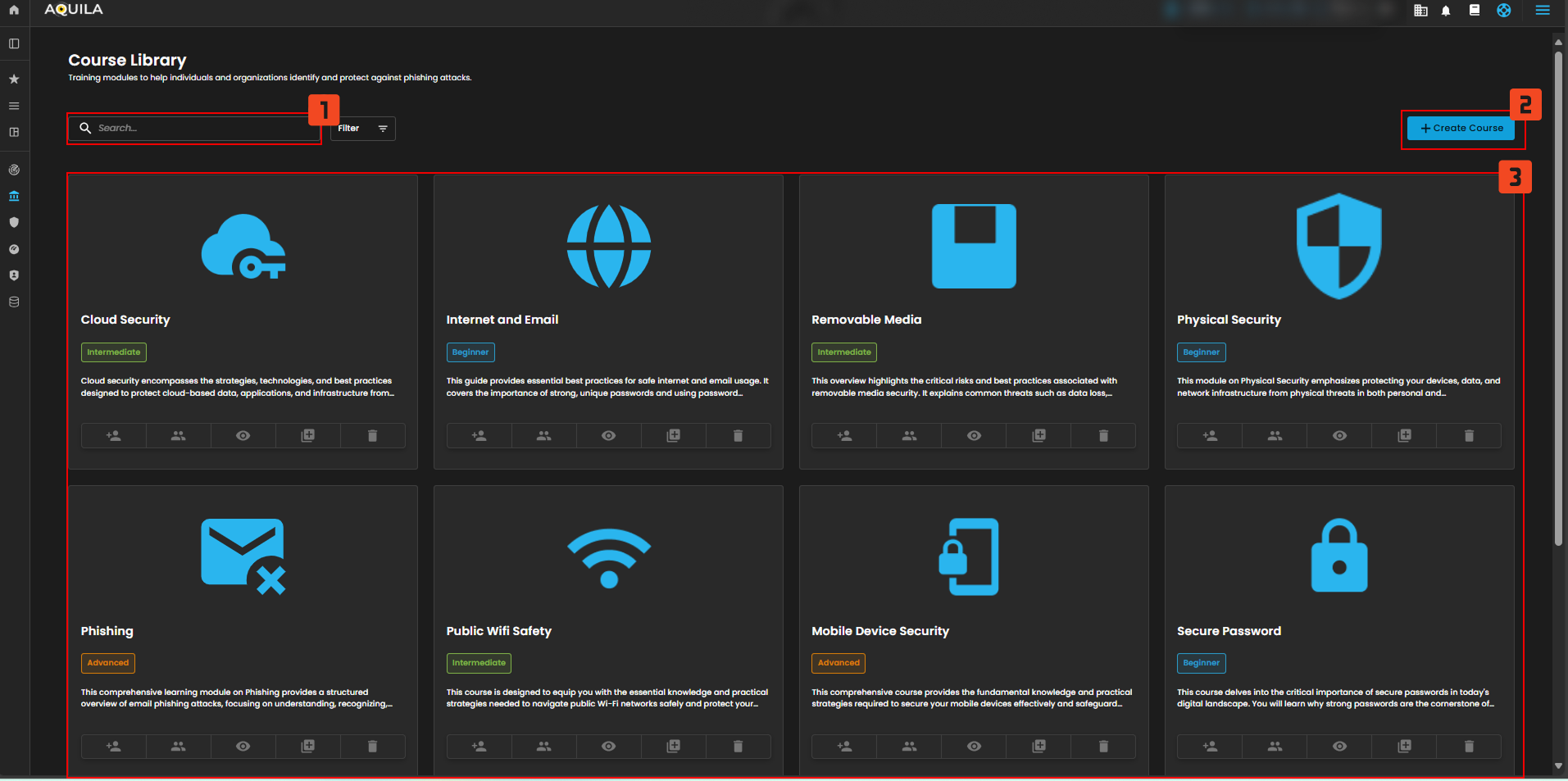
The ****Course Library dashboard**** provides access to training modules on different security topics. It helps organizations assign courses, track learning progress, and strengthen employee awareness.
**Course Library**
[](https://cytechint-docs-bookstack.s3.amazonaws.com/uploads/images/gallery/2025-10/ww6BBksuJTRiKe6D-test-15.png)
*Figure 5 Add Course Library*
**1. Search Bar** – Lets you type in keywords to quickly locate a specific course. This makes it easy to filter through many modules without scrolling.
**2. Create Course** – Allows administrators to build and add a custom course to the library. This is useful for tailoring training content to company-specific needs.
**3. Course List** – Shows all available courses grouped by topic and difficulty level. Each card provides details and actions like assigning, previewing, or deleting a course.
**Create Course Modules**
[](https://cytechint-docs-bookstack.s3.amazonaws.com/uploads/images/gallery/2025-10/NRB4XhFnVFrPKBdb-test-16.png)
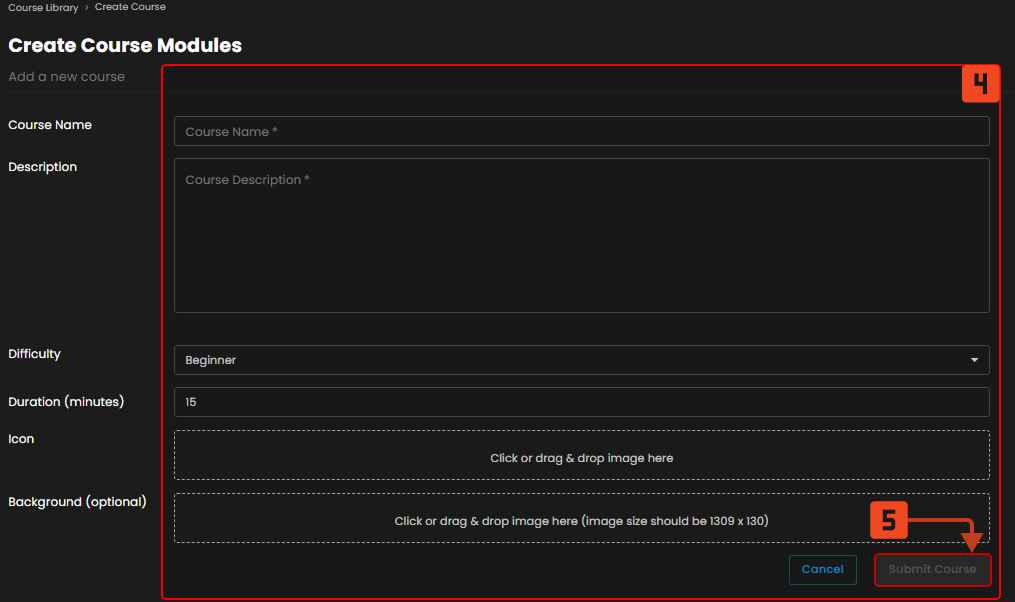
*Figure 5.1 Create Course Modules*
#### **Assessment Library**
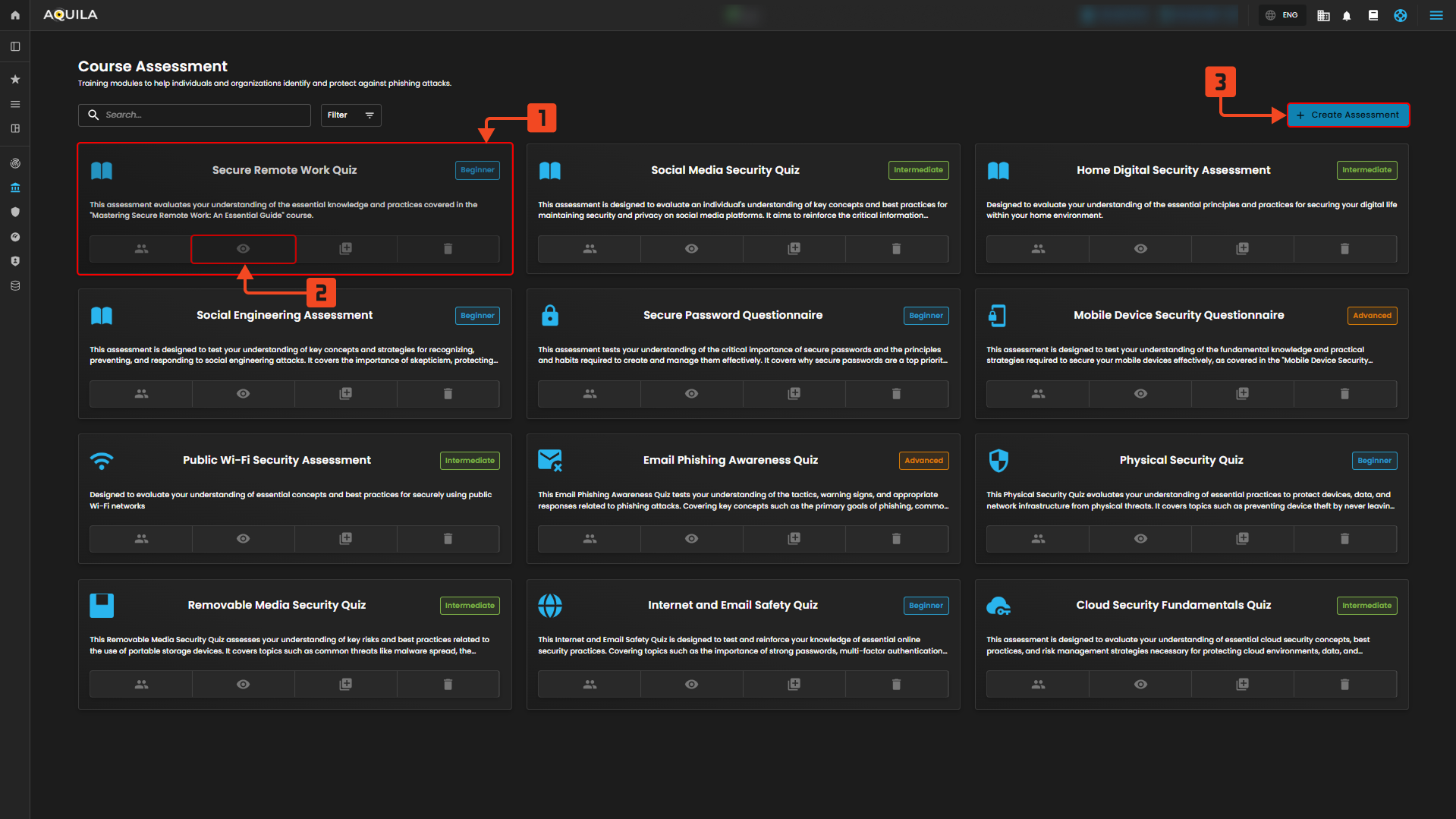
Training modules to help individuals or organizations identify and protect against phishing attacks.
**Course Assessment**
[](https://cytechint-docs-bookstack.s3.amazonaws.com/uploads/images/gallery/2025-10/oXjK1iBLLtDpzvAd-test-17.png)
*Figure 6 Course Assessment*
**4. Course Details Section** – This is where you enter the course name, description, difficulty, duration, and upload images or icons. It provides all the information learners will see when selecting the course.
**5.** **Submit Course** – Finalizes and saves the new course into the system. Once submitted, the course becomes available in the Course Library for assignment to users.
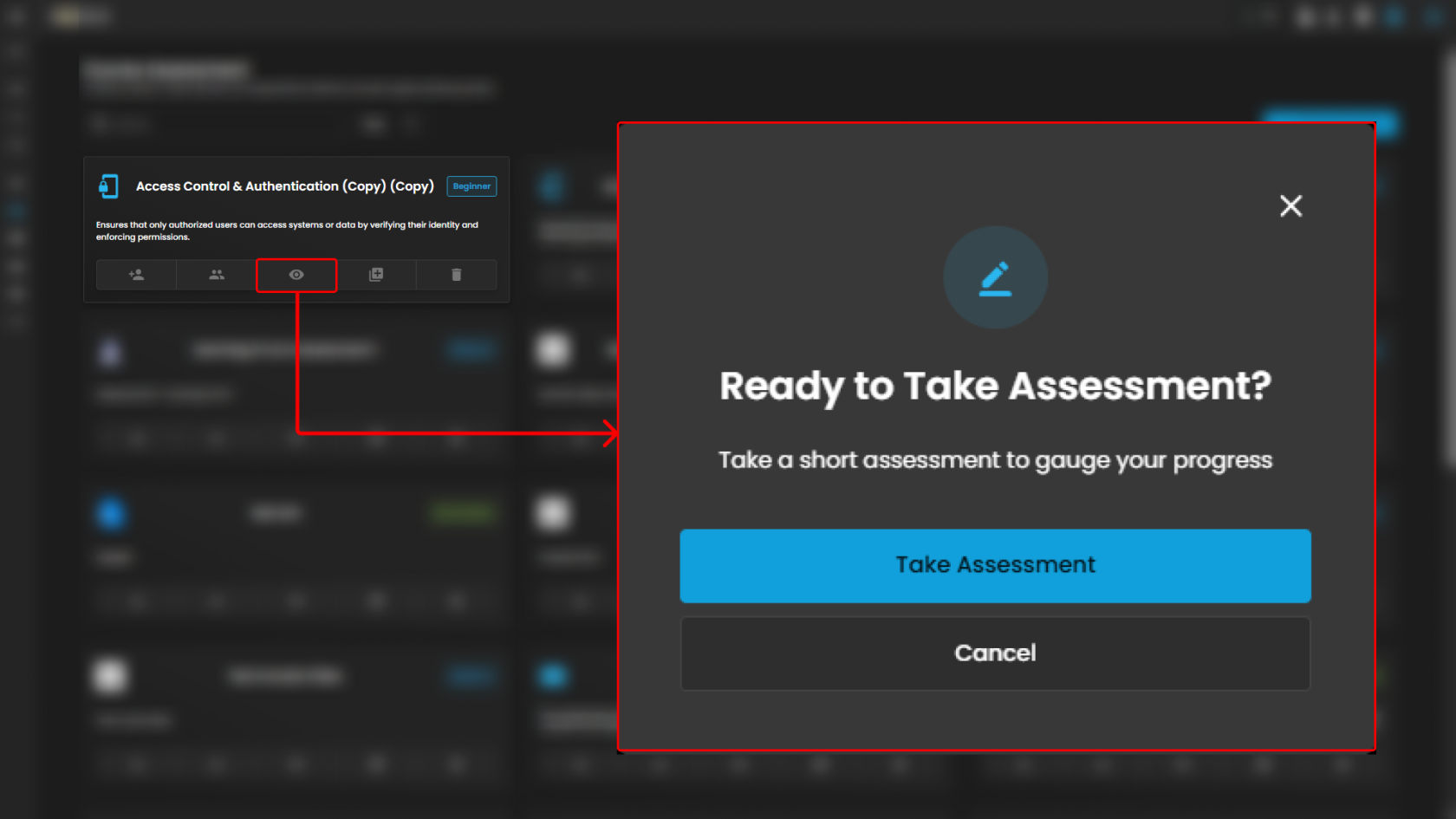
**Take Assessment**
**Take Assessment Button** – This blue button starts the assessment immediately. Clicking it means you are ready to move forward and begin gauging your progress.
**Cancel Button** – This black button closes the pop-up without starting the assessment. It lets you exit the prompt and continue without taking the test right now.
[](https://cytechint-docs-bookstack.s3.amazonaws.com/uploads/images/gallery/2026-02/kpa7CkdMOWkvMcj8-hehe-64.png)
*Figure 6.1 Create Course Modules*
**Create Course**
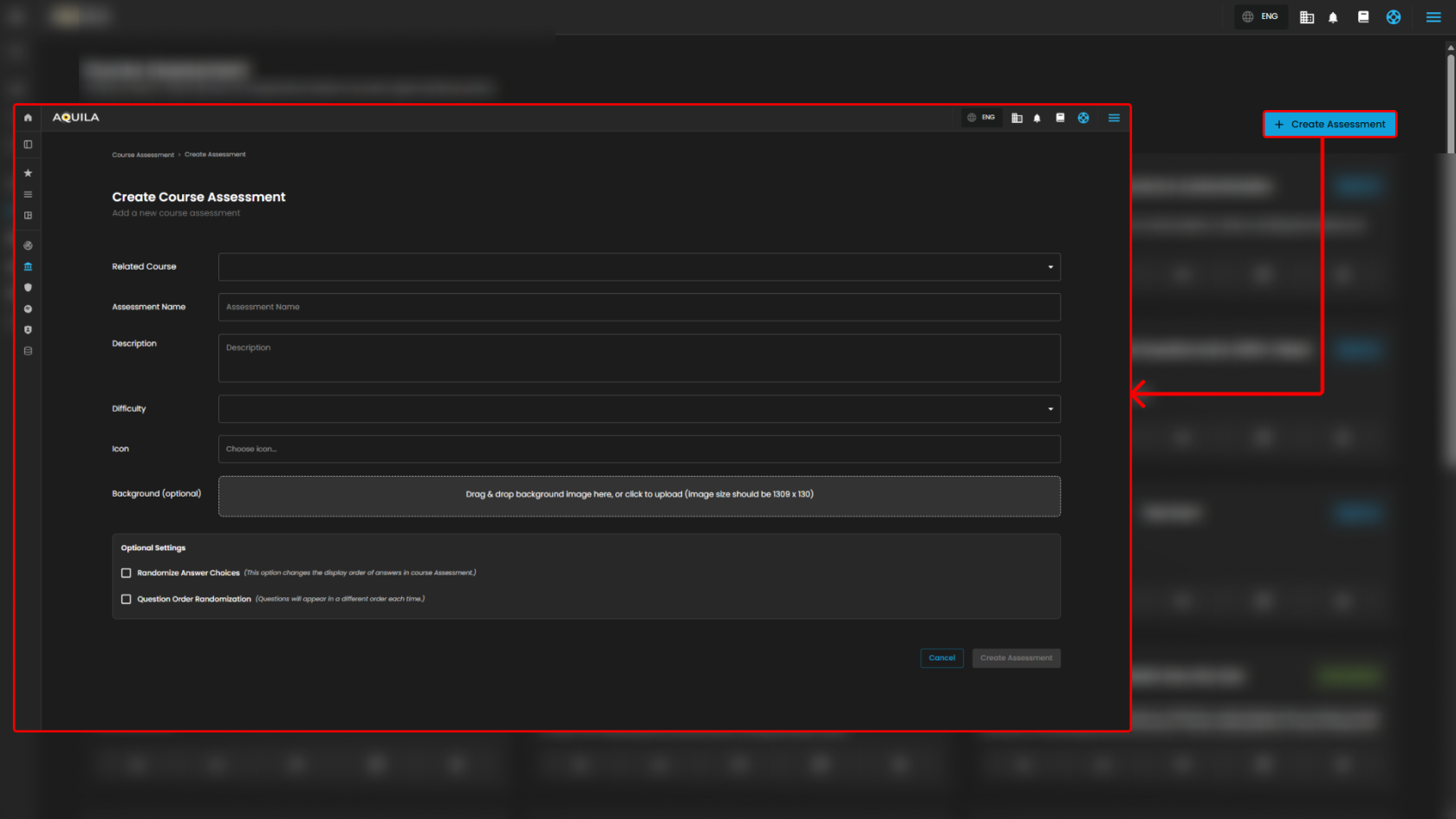
**Create Assessment Button -** This button saves all the information you’ve entered and creates the assessment. It will only become active after you fill in the required fields.
[](https://cytechint-docs-bookstack.s3.amazonaws.com/uploads/images/gallery/2026-02/wBlSlqxHyWvPRNWB-hehe-65.png)
*Figure 6.2 Create Course Assessment*
#### **Template Library**
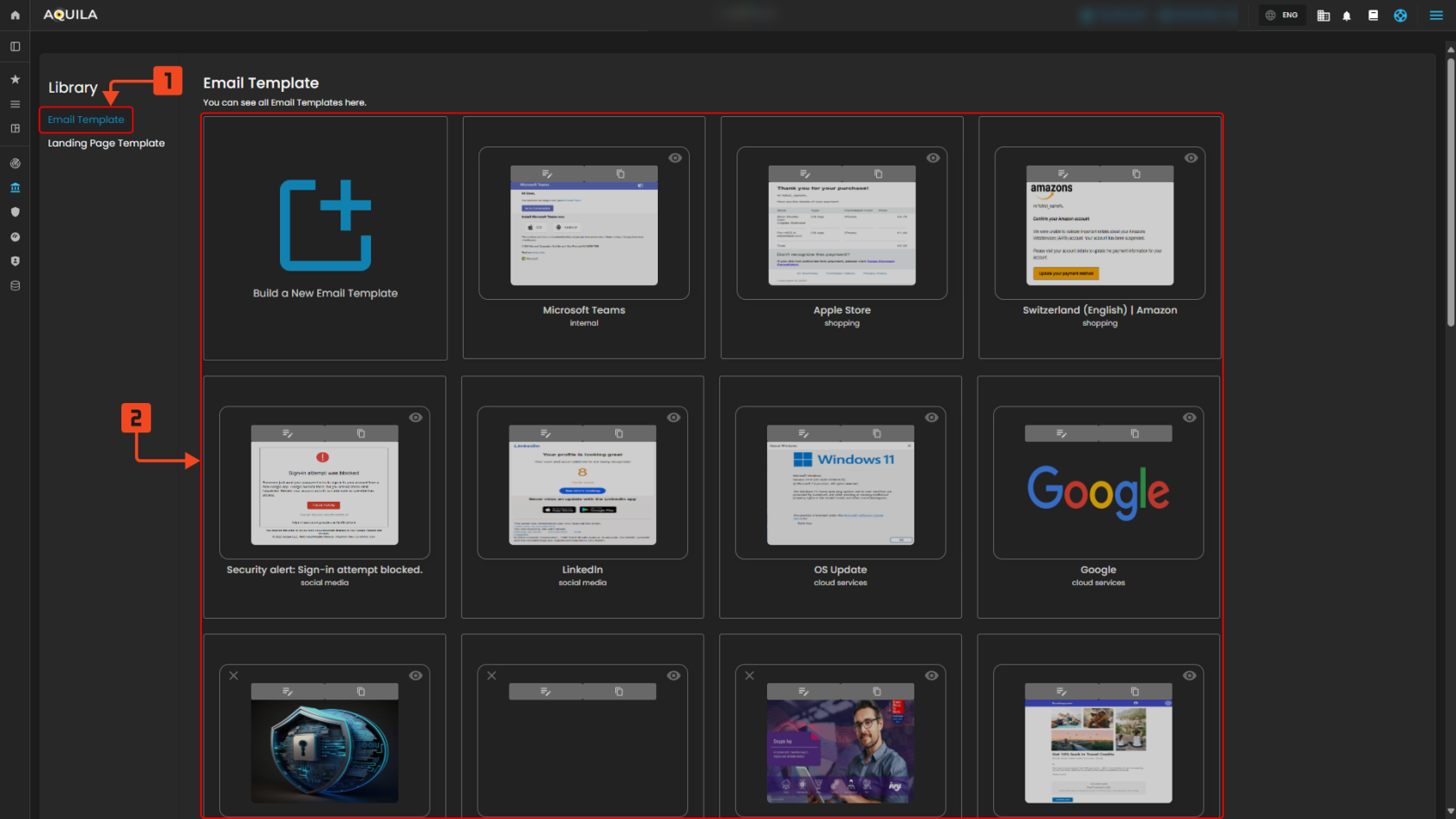
This page displays the available **email templates** in the library. You can either create a new template or select one of the pre-made options to use.
**Email Template**
**1. Email Template Tab** – This tab shows you that you are currently viewing email templates. Clicking it always brings you back to this section of the library.
**2. Template Selection Area** – This area displays all the available email templates. You can browse, preview, and choose the template you want to use or edit.
[](https://cytechint-docs-bookstack.s3.amazonaws.com/uploads/images/gallery/2025-10/dUcMCOHhxXYwvYhG-test-20.png)
*Figure 7 Email Template*
**Landing Page Template**
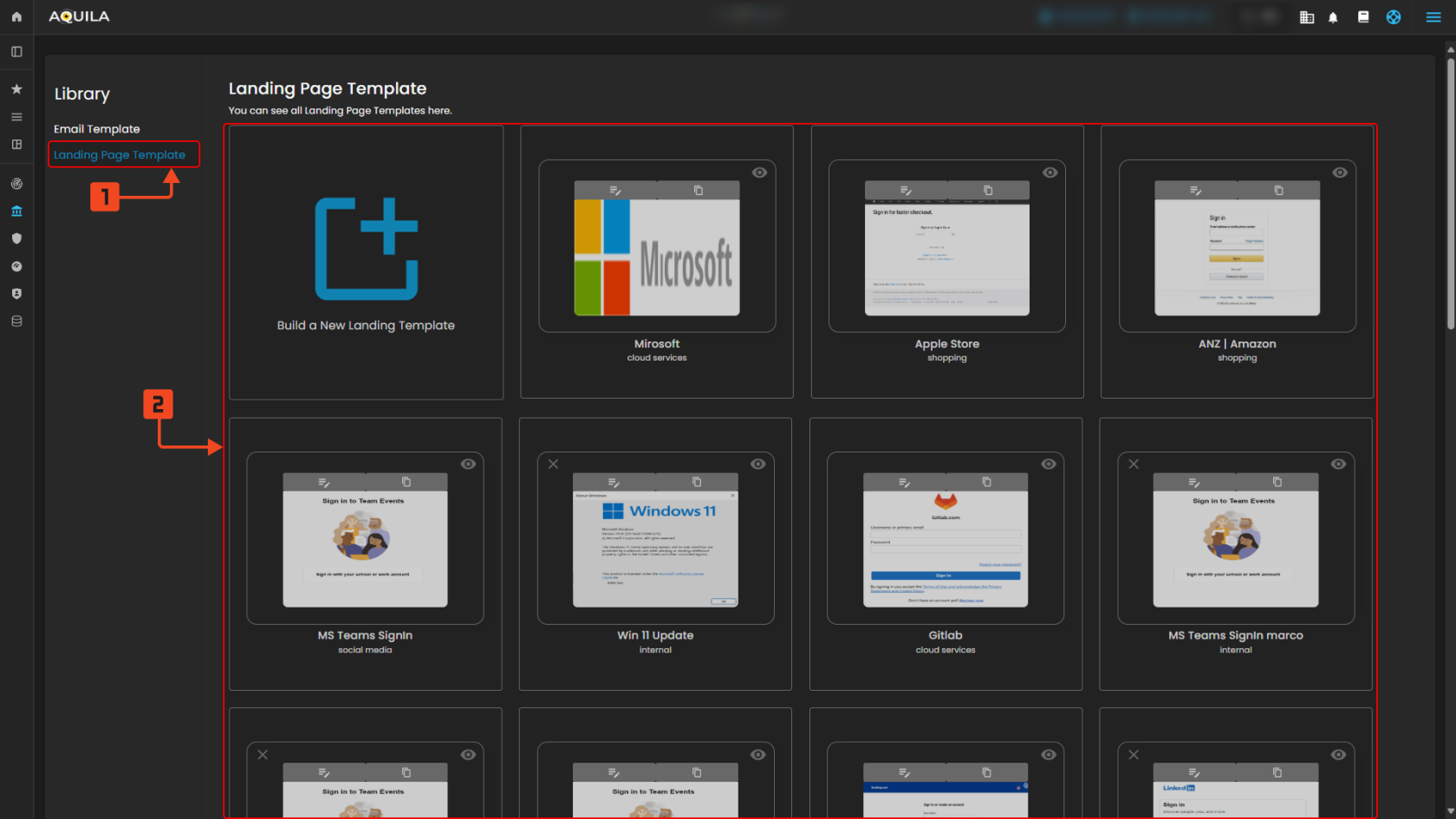
**1. Landing Page Template Tab** – This tab confirms you’re currently viewing landing page templates. Selecting it will always open this section of the library.
**2. Template Selection Area** – This area contains all the available landing page templates. You can scroll, preview, and pick the template that suits your needs.
[](https://cytechint-docs-bookstack.s3.amazonaws.com/uploads/images/gallery/2025-10/PbSJWq3FJXUj1arq-test.png)
*Figure 7.1 Landing Page Template*
#### **Reports**
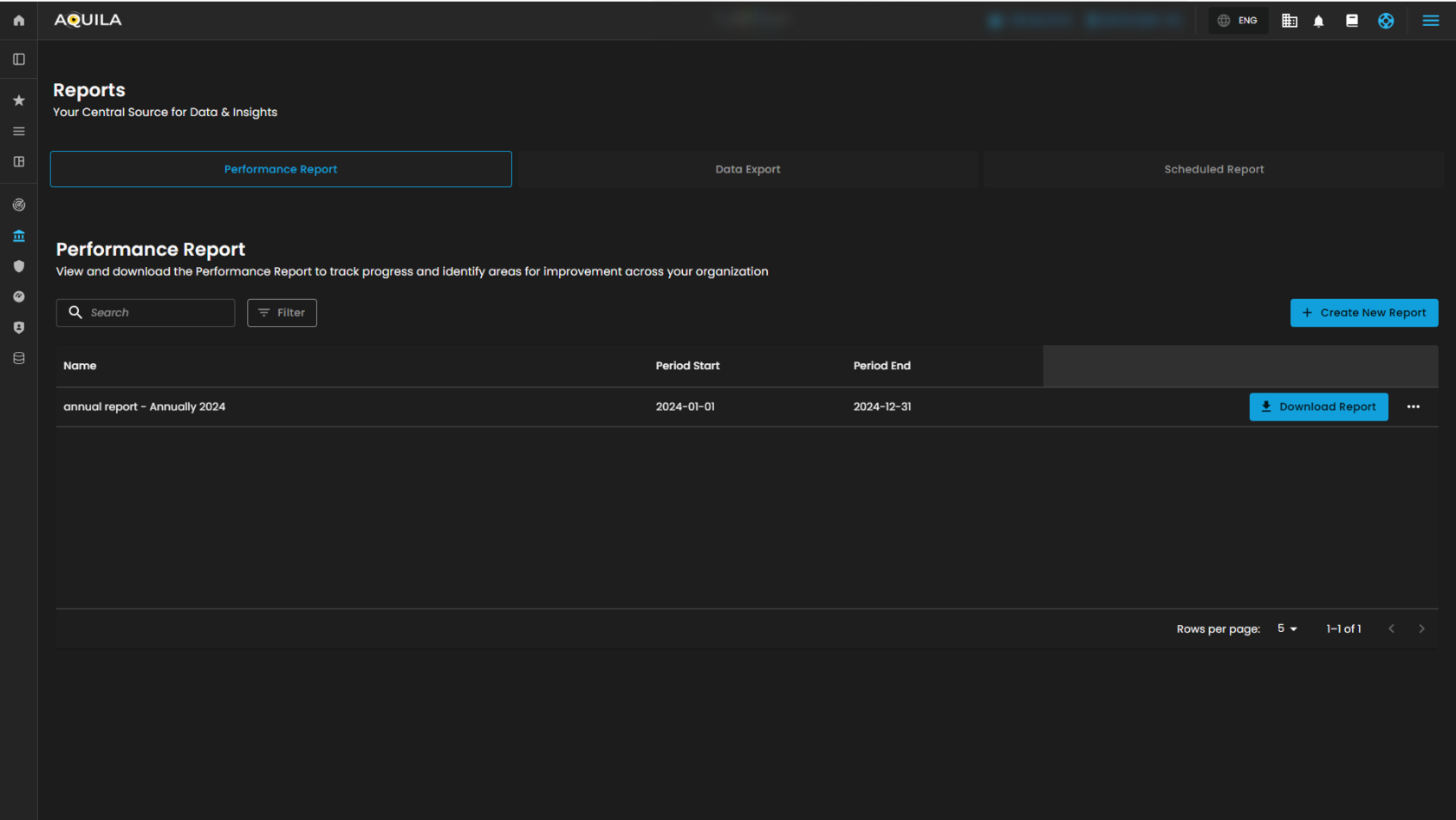
The **Reports** serves as the central hub for managing all performance reports within the system. From here, you can easily view existing reports, generate new ones, or download completed results for further analysis. It provides a quick and organized way to track performance data without navigating through multiple sections.
[](https://cytechint-docs-bookstack.s3.amazonaws.com/uploads/images/gallery/2025-10/hgnTSGbrVsSUCjv6-test.png)
*Figure 8. Reports*
**Performance Report Tab**
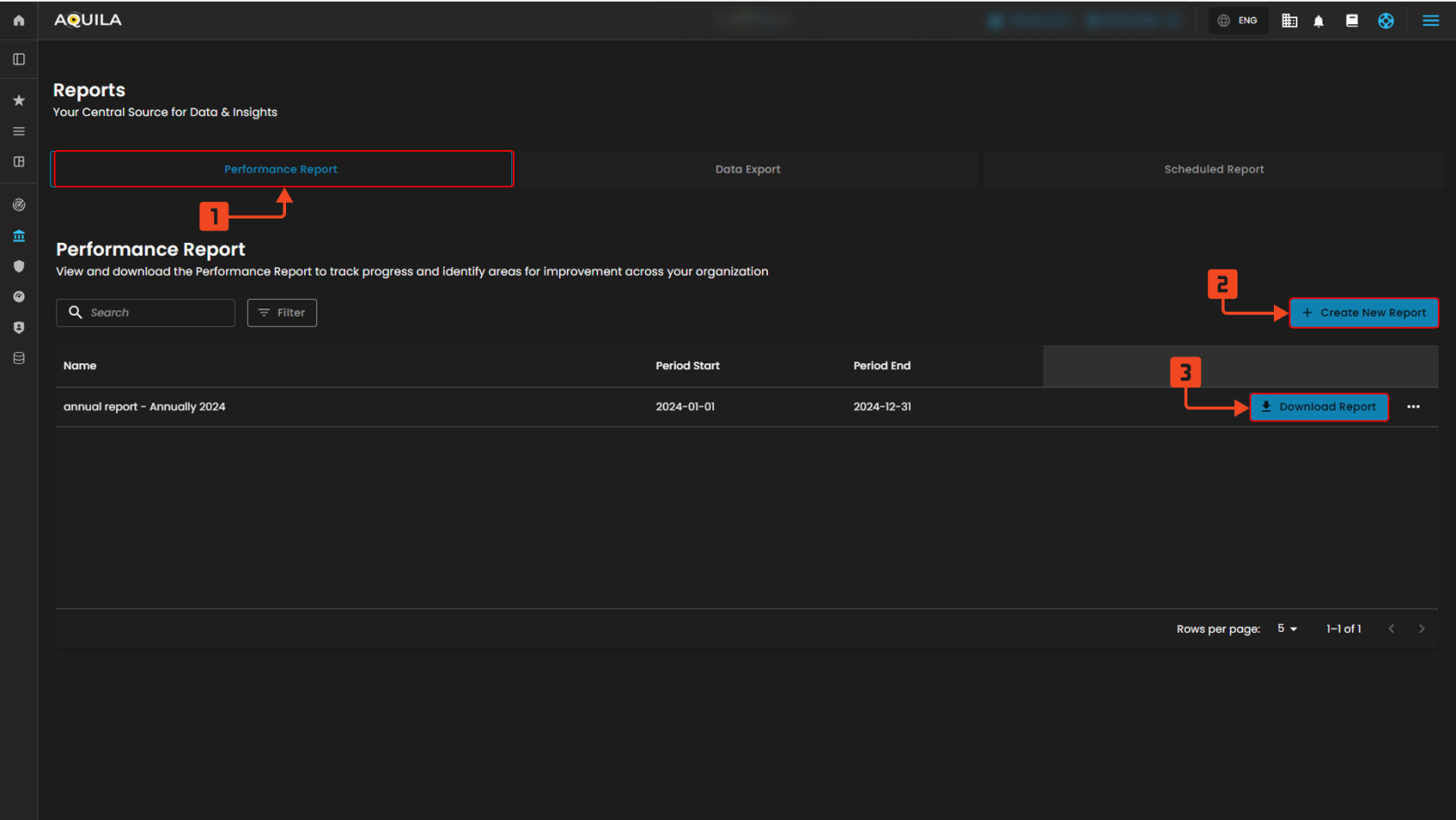
- **Performance Report Tab** – This is the active section where you can view and manage all performance reports.
- **Create New Report** – Click here to set up a new performance report.
- **Download Report** – Allows you to download the generated report in the list.
[](https://cytechint-docs-bookstack.s3.amazonaws.com/uploads/images/gallery/2025-10/ze4MgJqqc2V3eAO2-test-1.png)
*Figure 8.1 Performance Report Tab*
**Set-up Reports**
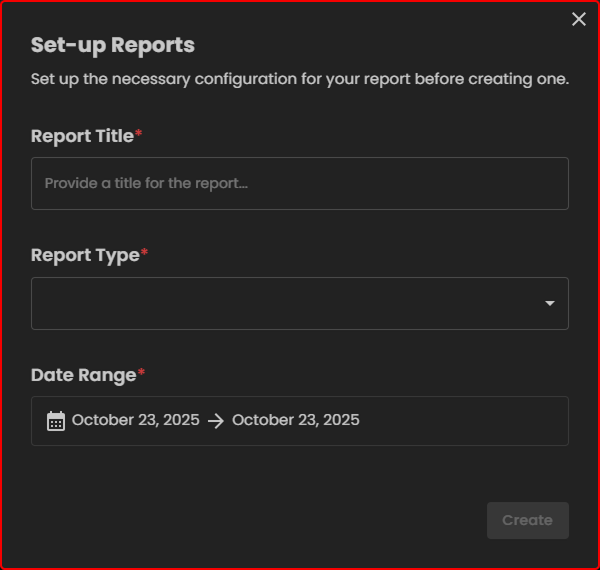
- **Report Title** – Enter a name for your report.
- **Report Type** – Choose the type of report you want.
- **Date Range** – Select the start and end dates for the report data.
[](https://cytechint-docs-bookstack.s3.amazonaws.com/uploads/images/gallery/2025-10/0v8TOaeI7ULNrpQO-test-2.png)
*Figure 8.1.1 Set-up Reports*
**Scheduled Report Tab**
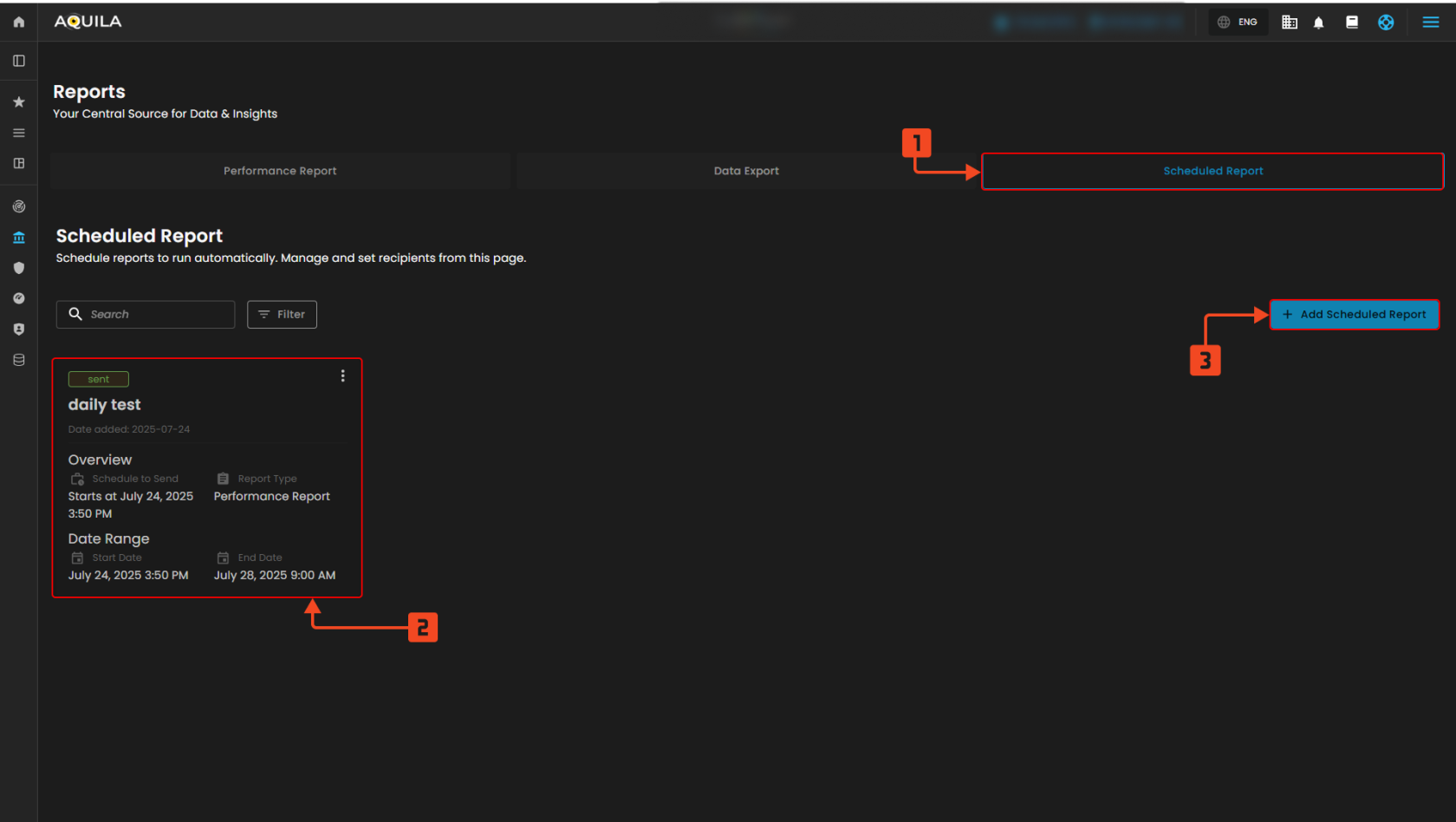
- **Scheduled Report Tab** – Shows all scheduled reports that are set to run automatically.
- **Add Scheduled Report** – Click here to set up a new scheduled report.
- **Scheduled Report Card** – Displays details of an existing scheduled report.
[](https://cytechint-docs-bookstack.s3.amazonaws.com/uploads/images/gallery/2025-10/hqWKKwVFDwHmLvE9-test-4.png)
*Figure 8.2 Set-up Reports*
**Add Scheduled Report**
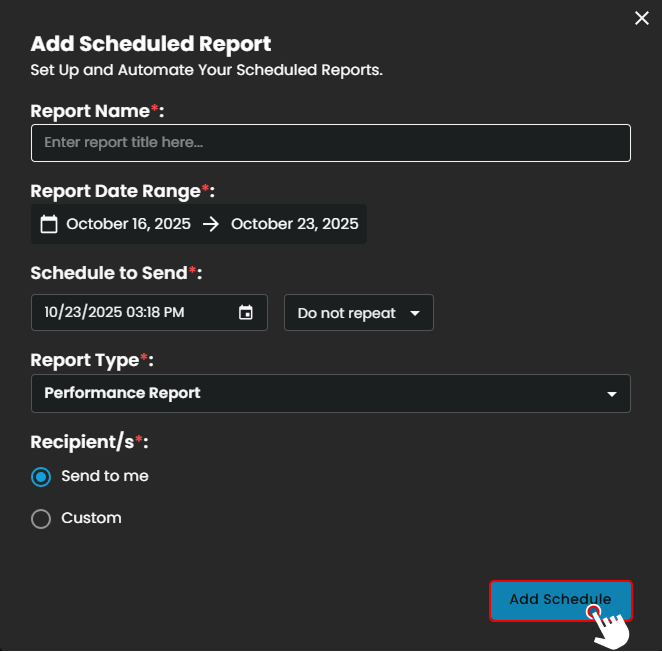
- **Report Name** – Provide a title for the scheduled report.
- **Report Date Range** – Select the reporting period.
- **Schedule to Send** – Choose when and how often the report should be sent.
- **Report Type** – Pick the type of report to schedule.
- **Recipient/s** – Decide who will receive the report (yourself or custom recipients).
- **Add Schedule Button** – Finalize and save the scheduled report.
[](https://cytechint-docs-bookstack.s3.amazonaws.com/uploads/images/gallery/2025-10/YxLOXoywRlRktW2g-test-5.png)
*Figure 8.2.1 Add Scheduled Reports*
#### **Control Panel**
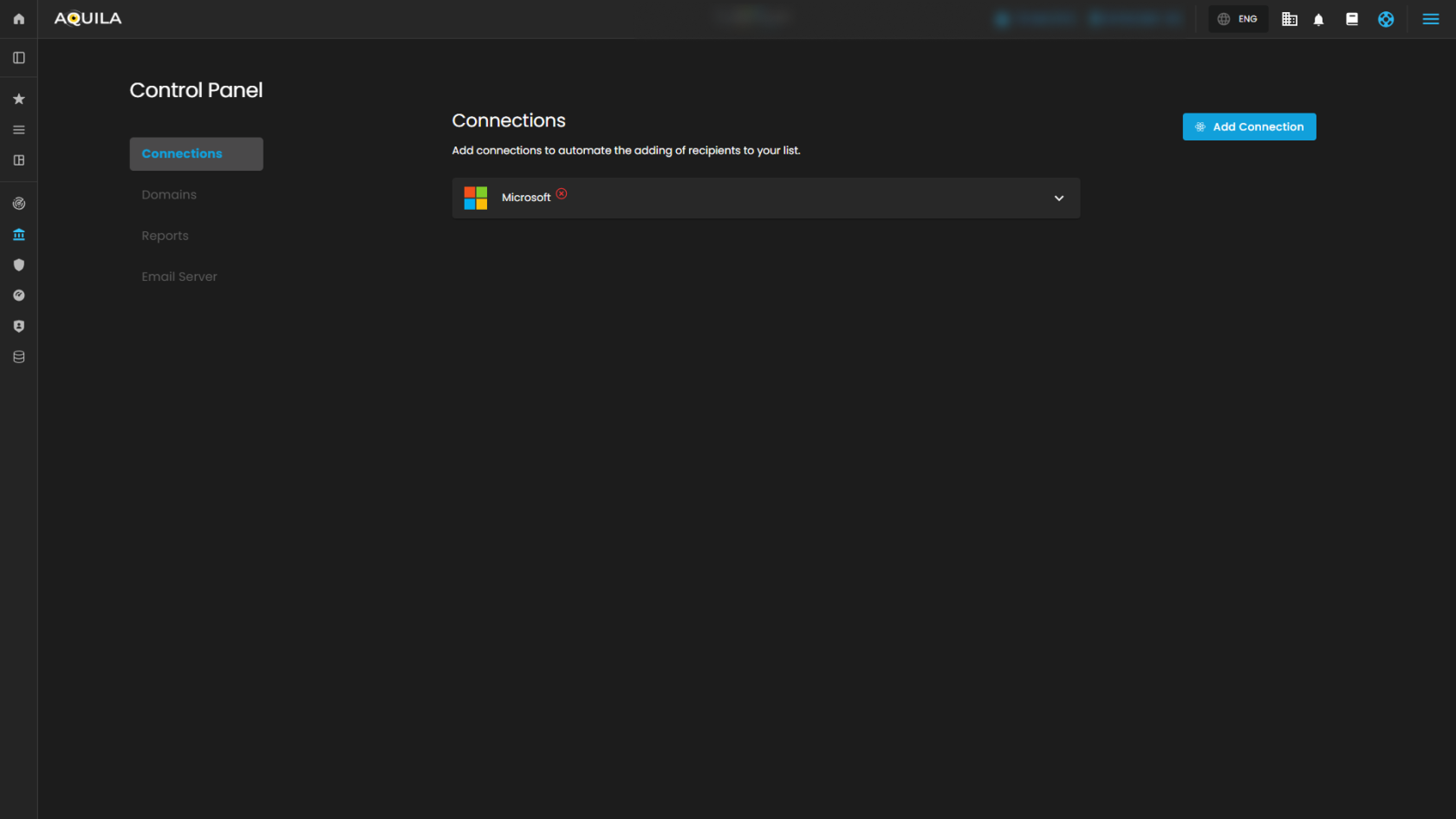
This page is part of the Control Panel where you can manage system connections. It allows you to link external services, like Microsoft, to automate tasks such as adding recipients to your list. This ensures smoother integration and reduces the need for manual setup.
[](https://cytechint-docs-bookstack.s3.amazonaws.com/uploads/images/gallery/2025-10/24HD2pRDKUf2vi38-test-6.png)
*Figure 9 Control Panel*
**Connections Menu –** This menu highlights the “Connections” option under the Control Panel. From here, you can view, add, or manage all the available connections that the system supports.
**Connections**
[](https://cytechint-docs-bookstack.s3.amazonaws.com/uploads/images/gallery/2025-10/tFfMYwjpDqxpuZH5-test-7.png)
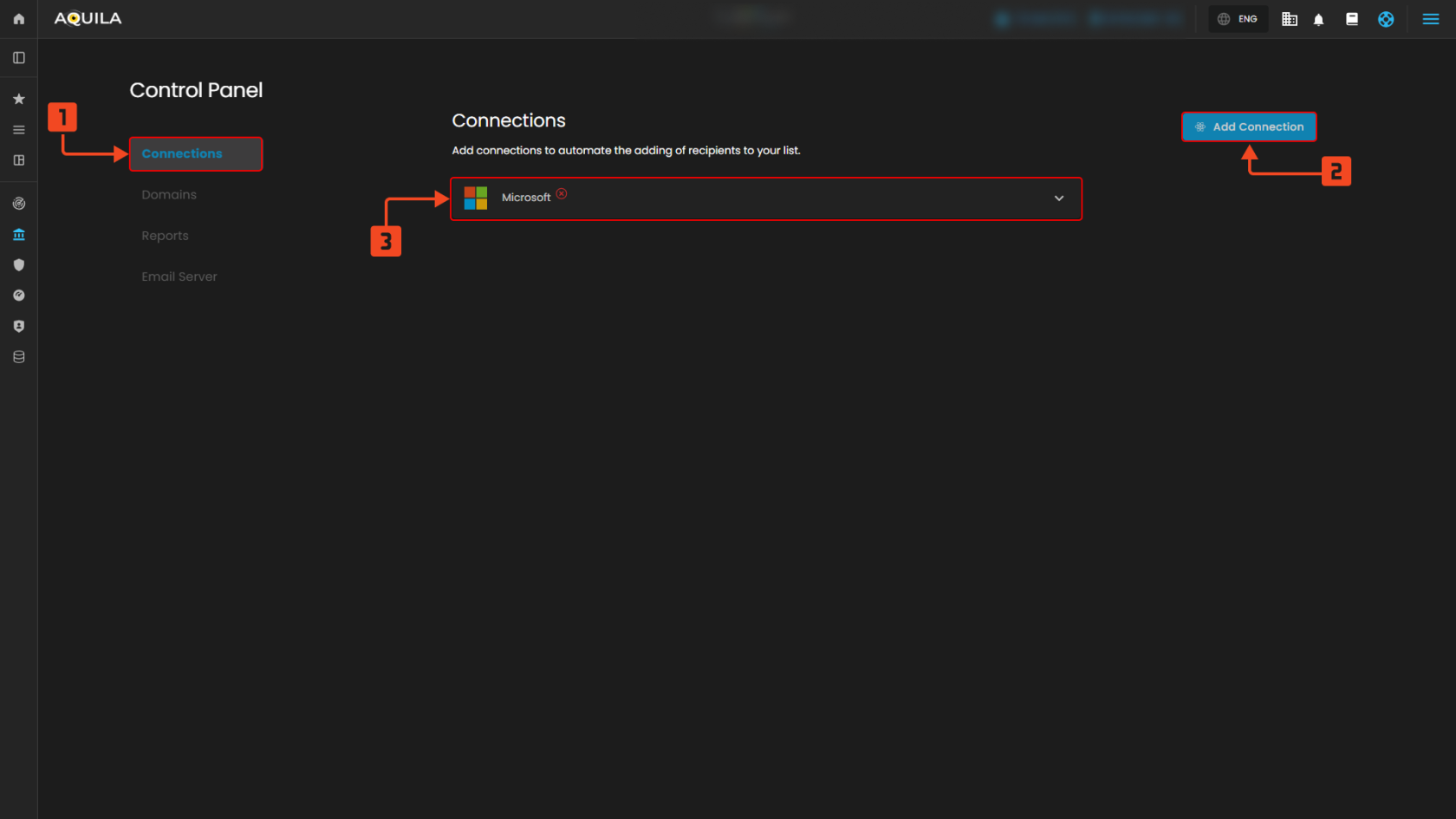
*Figure 9.1 Connections*
**1. Connections Tab**
- This button lets you access the Connections section, where you can manage integrations with third-party services like Microsoft. It ensures recipients can be automatically added for training.
**2. Existing Connection**
- This shows your current active connection (e.g., Microsoft). It confirms what service is already linked to your platform.
**3. Add Connection Button**
- This allows you to create a new connection with another service provider. It makes integrating additional accounts quick and simple.
**Add Connection**
[](https://cytechint-docs-bookstack.s3.amazonaws.com/uploads/images/gallery/2025-10/m2GYwe8rLIoMOBR6-test-8.png)
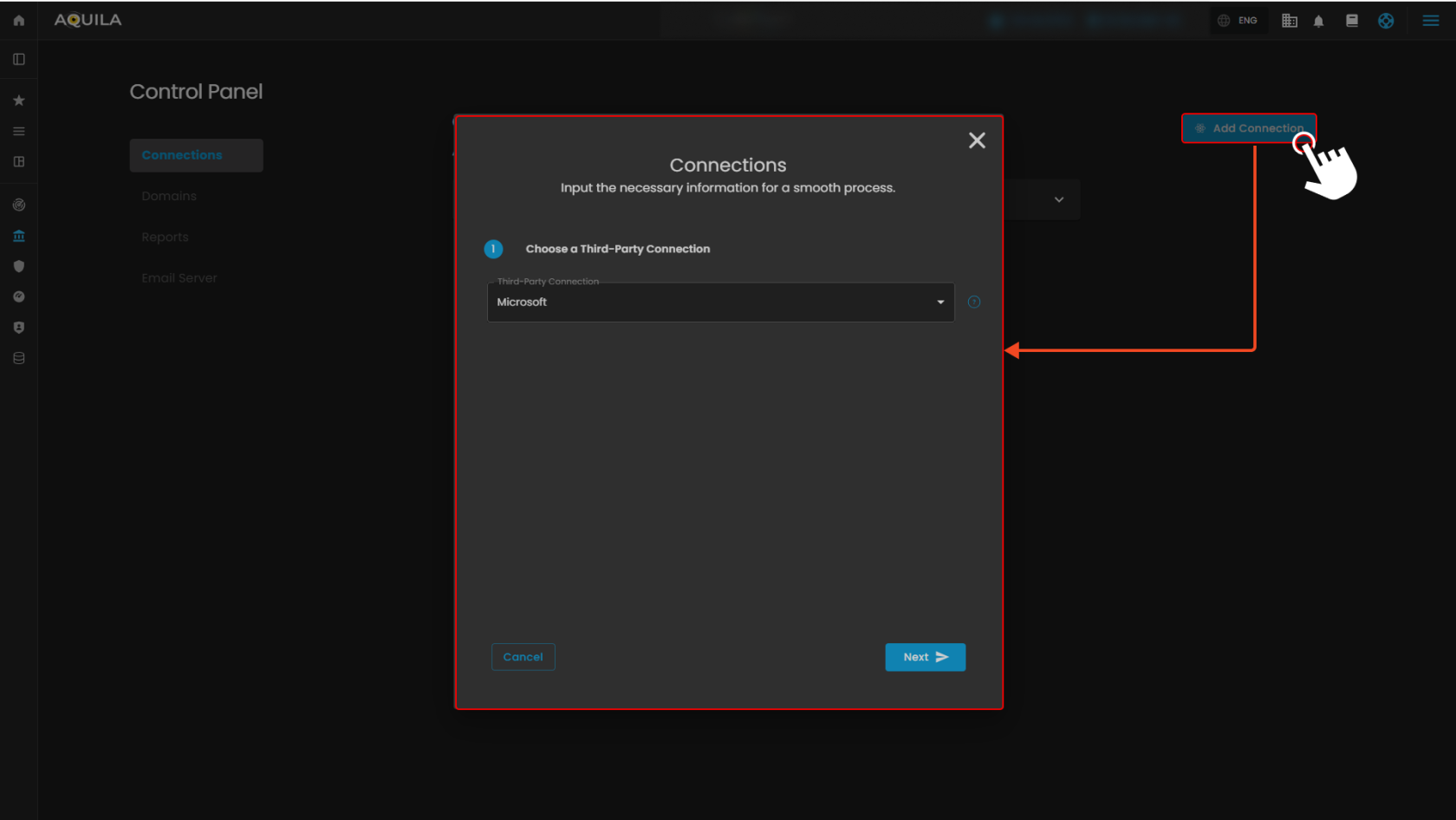
*Figure 9.1 Connections*
**1. Third-Party Connection Dropdown**
- This dropdown allows you to select which service (e.g., Microsoft) you want to connect to AQUILA. It ensures the system knows which provider to integrate with.
**2. Next Button**
- This button moves you to the next step of the setup process. It ensures the connection process continues smoothly once you’ve chosen the service.
**Domains**
[](https://cytechint-docs-bookstack.s3.amazonaws.com/uploads/images/gallery/2025-10/c5sGMCny0r6ib8bi-test-9.png)
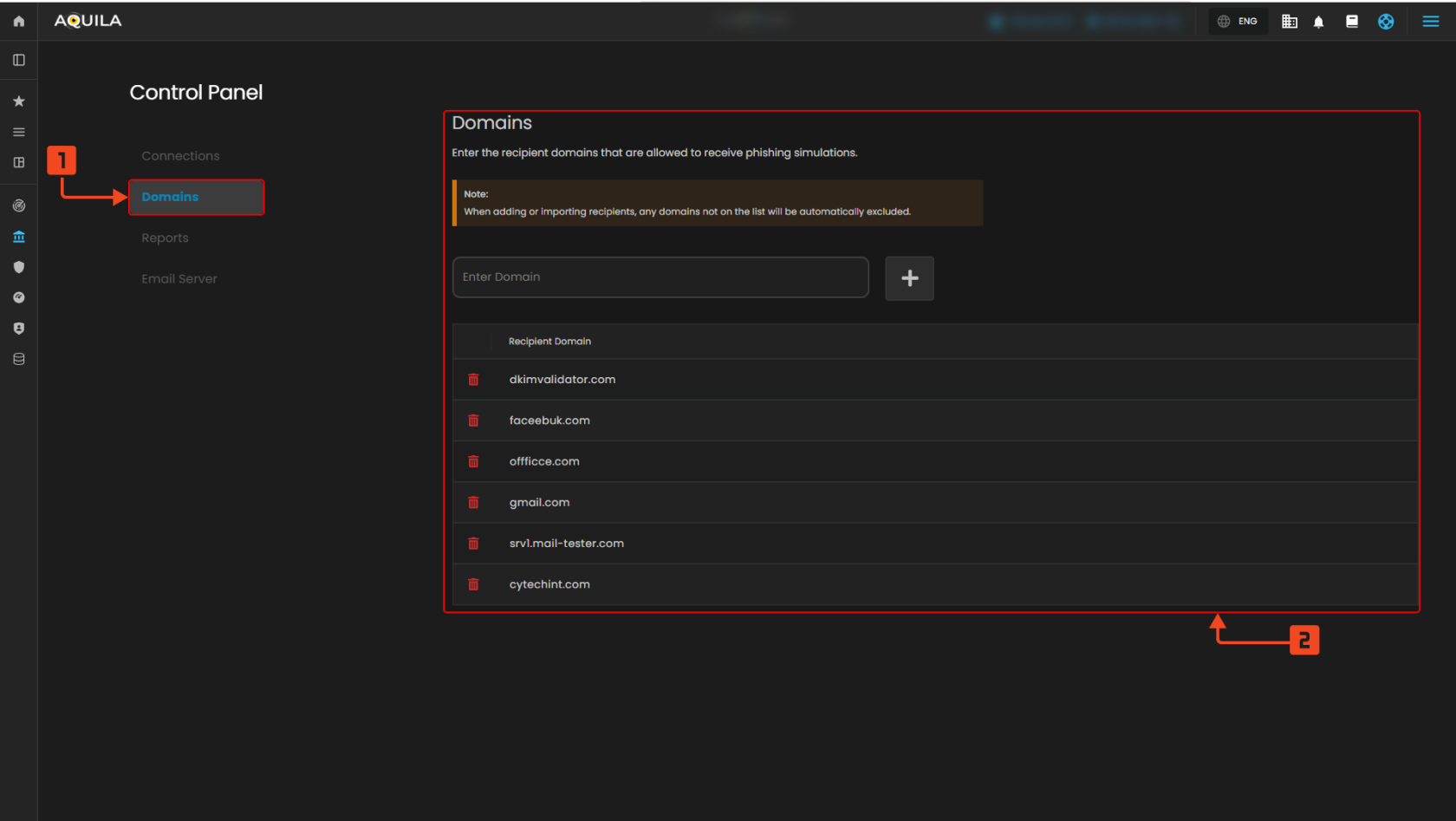
*Figure 9.2 Domains*
**1. Domains Tab**
- This tab shows where you can manage approved recipient domains. Only these domains can receive phishing simulation emails.
**2. Domain List Section**
- This section displays the list of allowed domains. You can add or remove domains here to control where simulation emails are delivered.
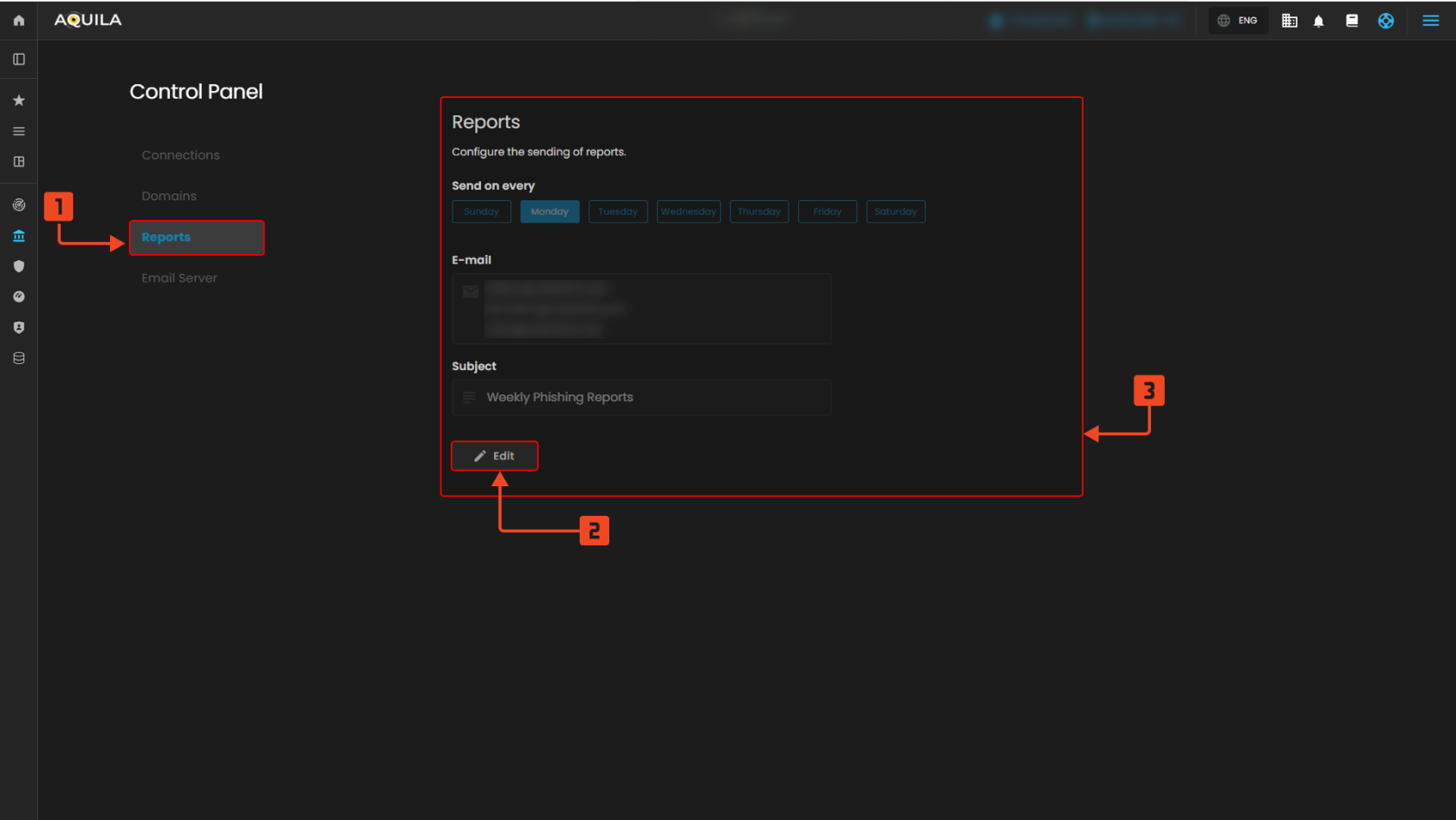
**Reports**
[](https://cytechint-docs-bookstack.s3.amazonaws.com/uploads/images/gallery/2025-10/3uXdwt5N6xWrx3sk-test-11.png)
*Figure 9.3 Reports*
**1. Reports Tab**
- This tab lets you configure how and when reports are generated and sent. It helps automate phishing awareness progress tracking.
**2. Report Settings Section**
- This shows the current reporting configuration, including delivery days, recipient email addresses, and subject line. It ensures reports are sent regularly to the right people.
**3. Edit Button**
- This allows you to modify the reporting schedule or recipient details. It provides flexibility to update reports as needed.
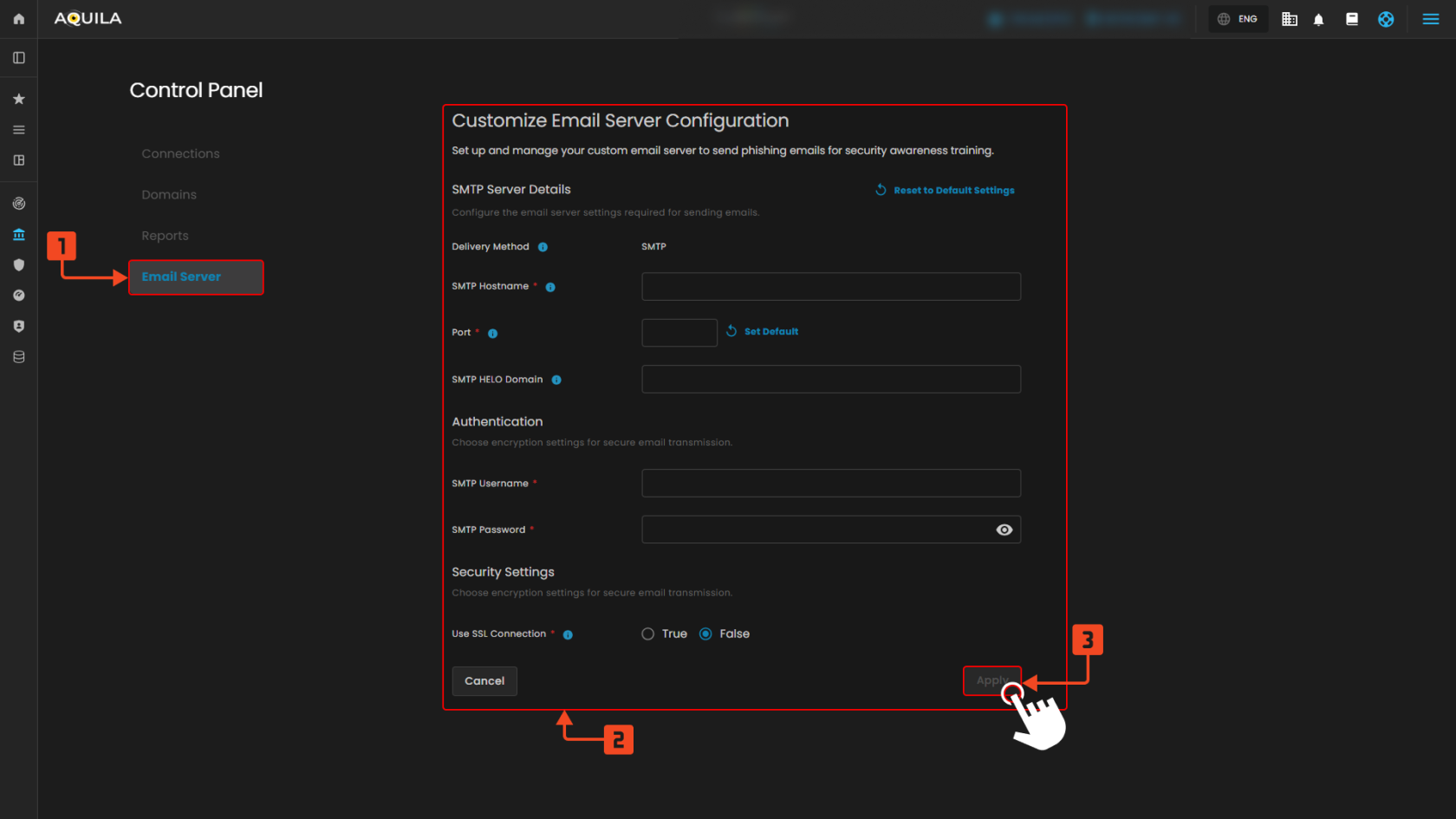
**Email Server**
[](https://cytechint-docs-bookstack.s3.amazonaws.com/uploads/images/gallery/2025-10/evM825YTZ0rW4xvn-test-12.png)
*Figure 9.4 Email Server*
**1. Email Server Tab**
- This section allows you to configure a custom SMTP server for sending phishing simulation emails. It ensures delivery control and compliance with your organization’s email system.
**2. Email Server Configuration Section**
- Here you input SMTP details like hostname, port, domain, username, and password. This setup allows the system to send training emails using your preferred email server.
**3. Apply Button**
- This saves and applies your email server settings. It ensures that your configuration takes effect for future email delivery.
*If you need further assistance, kindly contact our support at **[support@cytechint.com](mailto:info@cytechint.com)** for prompt assistance and guidance.*
# Charters, Policies, and Procedures
##### **Overview:**
The **Charters, Policies, and Procedures Dashboard** offer a centralized platform for managing and tracking the lifecycle of all organizational charters, policies, and procedures. It allows users to efficiently monitor the status, progress, and approval of various policies, ensuring alignment with compliance and governance objectives. This dashboard helps streamline the management process, from draft creation to policy approval, and ensures timely policy execution.
##### **Key Features:**
- **Policy Overview** provides a snapshot of policy status, such as **Pending Approval**, **In Draft**, or **Published**.
- **Acknowledgement Tracker** monitors recipient acknowledgments, highlighting pending or overdue items.
- **Recipient Acknowledgement Tracker** lists acknowledgment statuses for each recipient.
- **Quick Actions** allow for easy policy uploads, creation from templates, and template generation.
- **Activity Feed** logs all actions related to policy creation and modifications.
**To navigate to Charters, Policies, and Procedures please follow the instructions below:**
**Step 1: Log in to CyTech - AQUILA.** *click here -->* **[usdc.cytechint.io](https://usdc.cytechint.io/)**
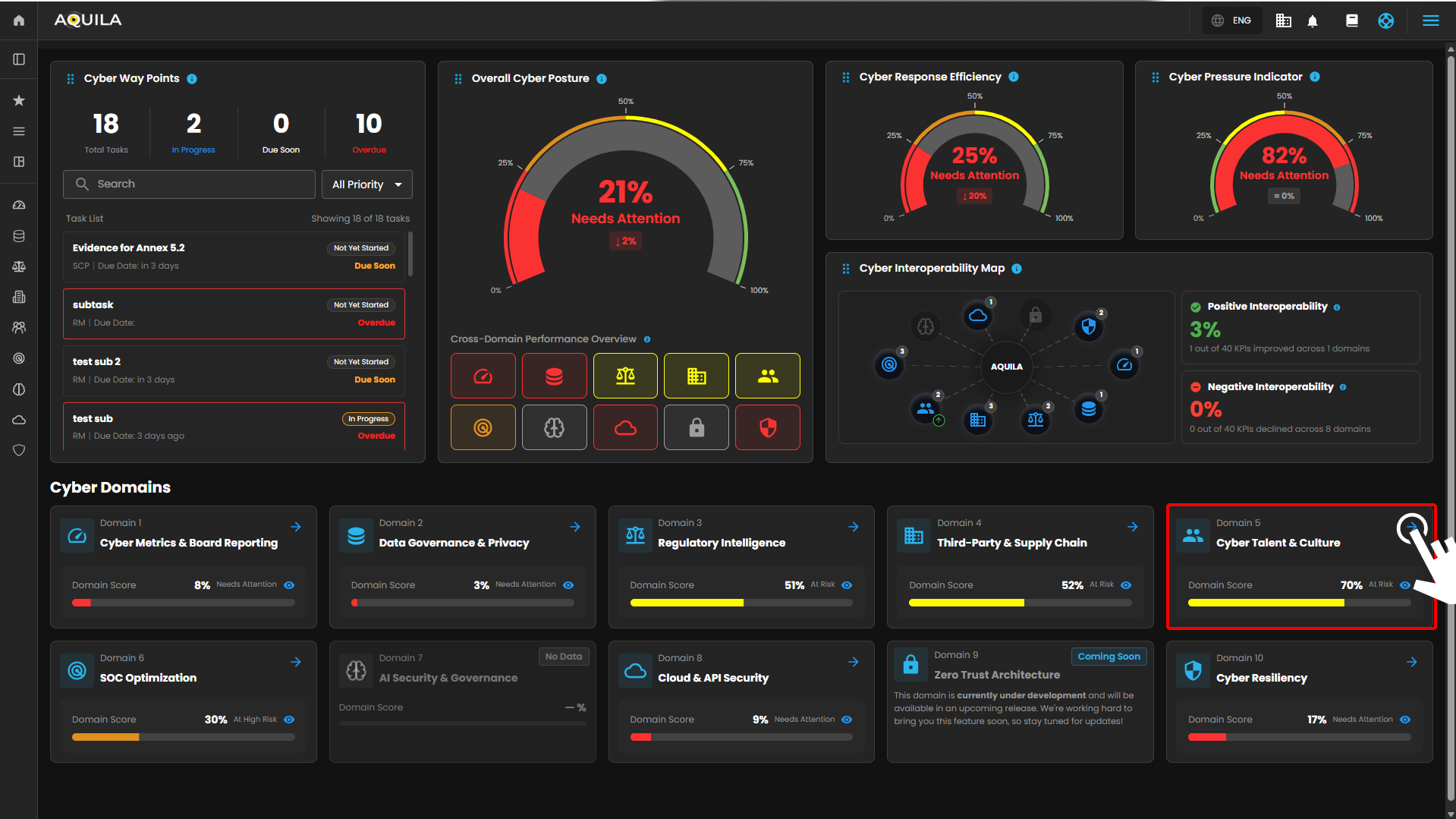
**Step 2: Click on Cyber Talent & Culture.**
[](https://cytechint-docs-bookstack.s3.amazonaws.com/uploads/images/gallery/2026-04/xXcTtdOdHsH61lV3-hehe-2-6.png)
*Figure 1. Overview*
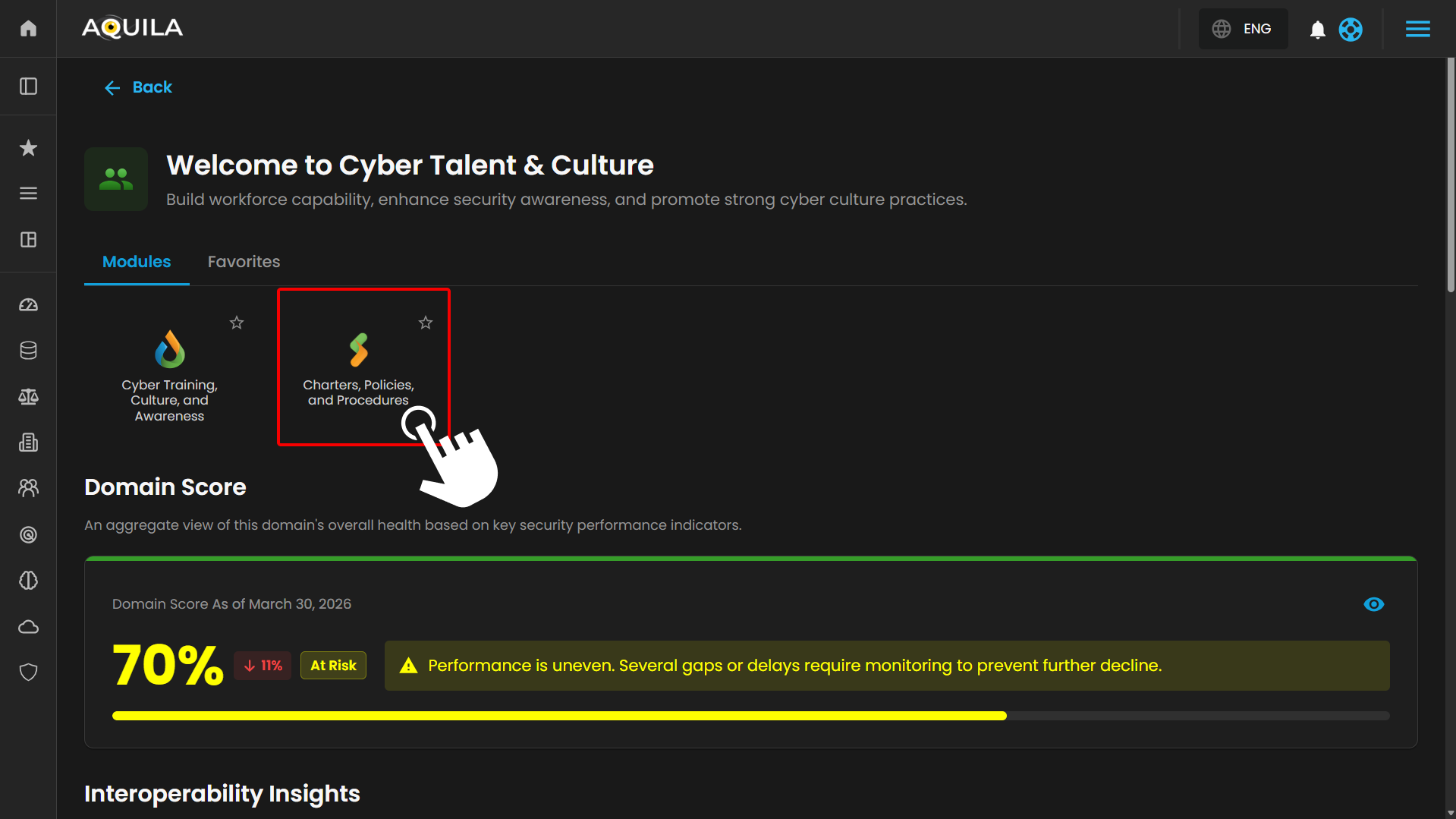
**Step 3: Choose Charters, Policies, and Procedures**
[](https://cytechint-docs-bookstack.s3.amazonaws.com/uploads/images/gallery/2026-04/KwM13OlKVjvR91Xl-hehe-19.png)
*Figure 1.1 Cyber Governance Dashboard*
**Step 4: Hover into leftmost panel to view all the Cyber Talent & Culture sections. This Process is applicable in all navigating into a Module.**
[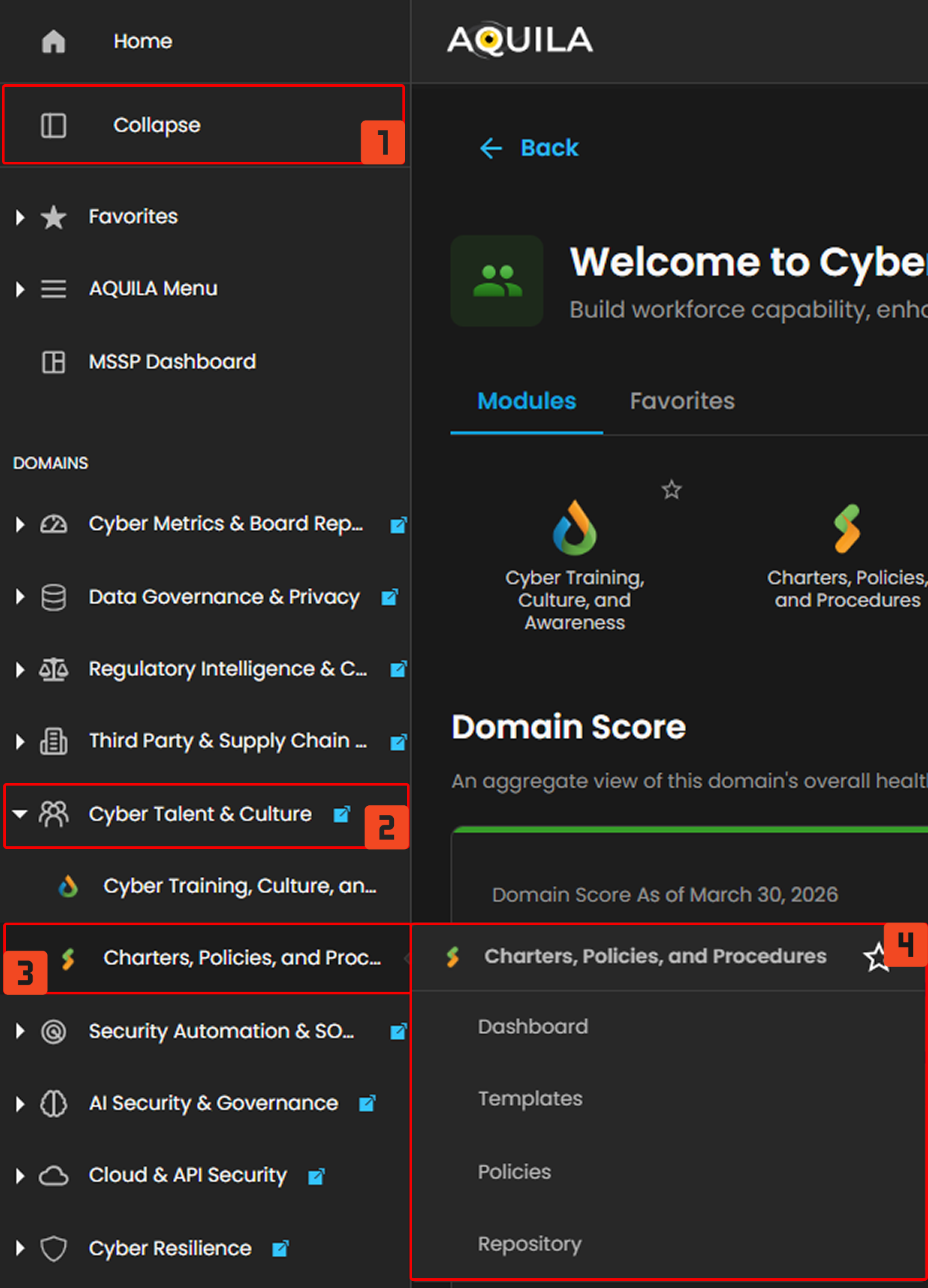](https://cytechint-docs-bookstack.s3.amazonaws.com/uploads/images/gallery/2026-04/Pj2LyETsChgGSN2h-hello-9.png)
*Figure 1.2 Cyber Governance Navigation*
#### **Charters, Policies, and Procedures**
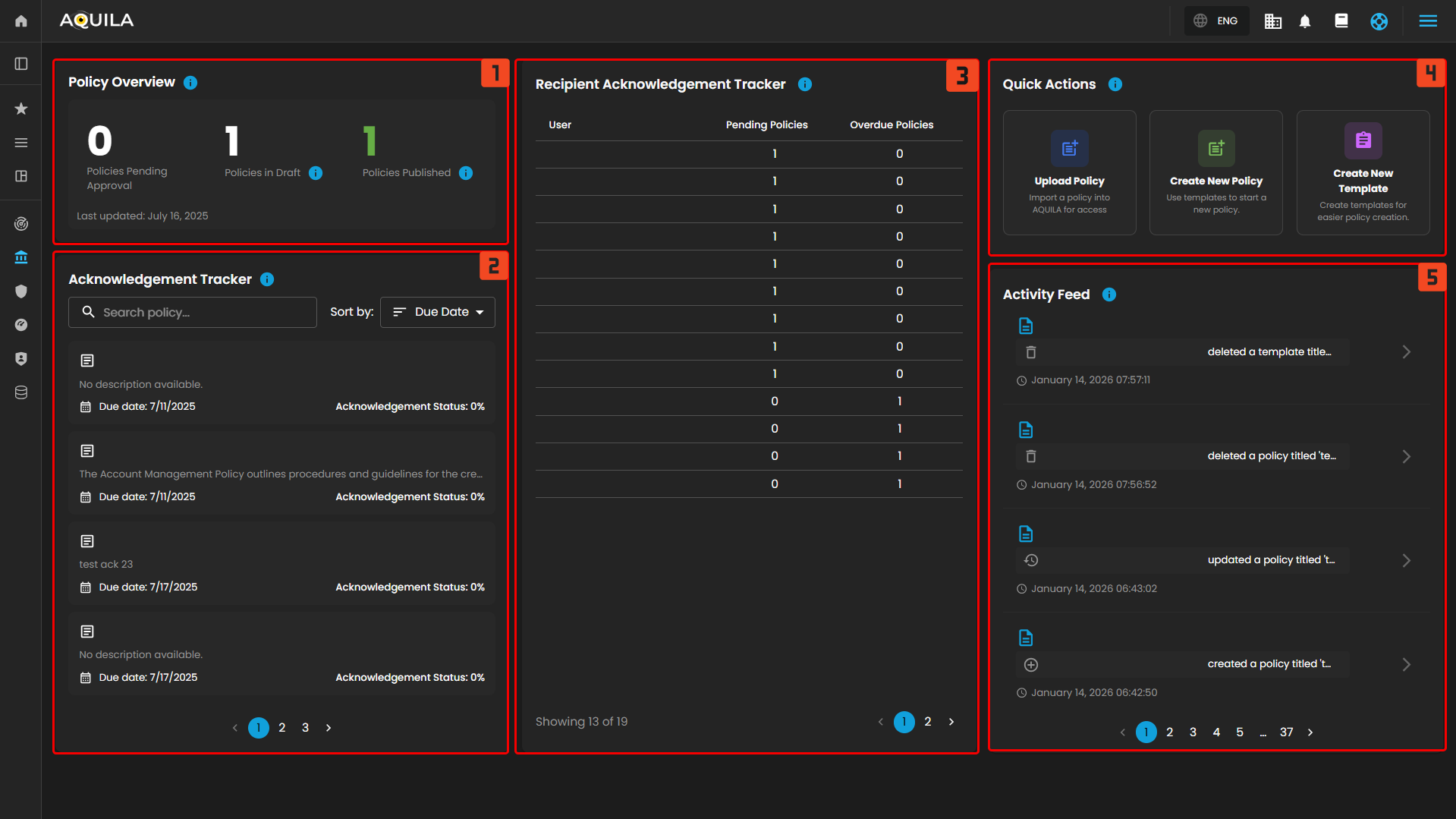
In the **Charters, Policies, and Procedures Dashboard**, you can track and manage ongoing tasks and projects related to cybersecurity and compliance initiatives. The dashboard includes multiple sections that provide a comprehensive view of policy status, acknowledgements, and recent activities.
[](https://cytechint-docs-bookstack.s3.amazonaws.com/uploads/images/gallery/2026-02/NEa75pKZihcHgTsR-hehe-47.png)
*Figure 2. Charters, Policies, and Procedures Dashboard.*
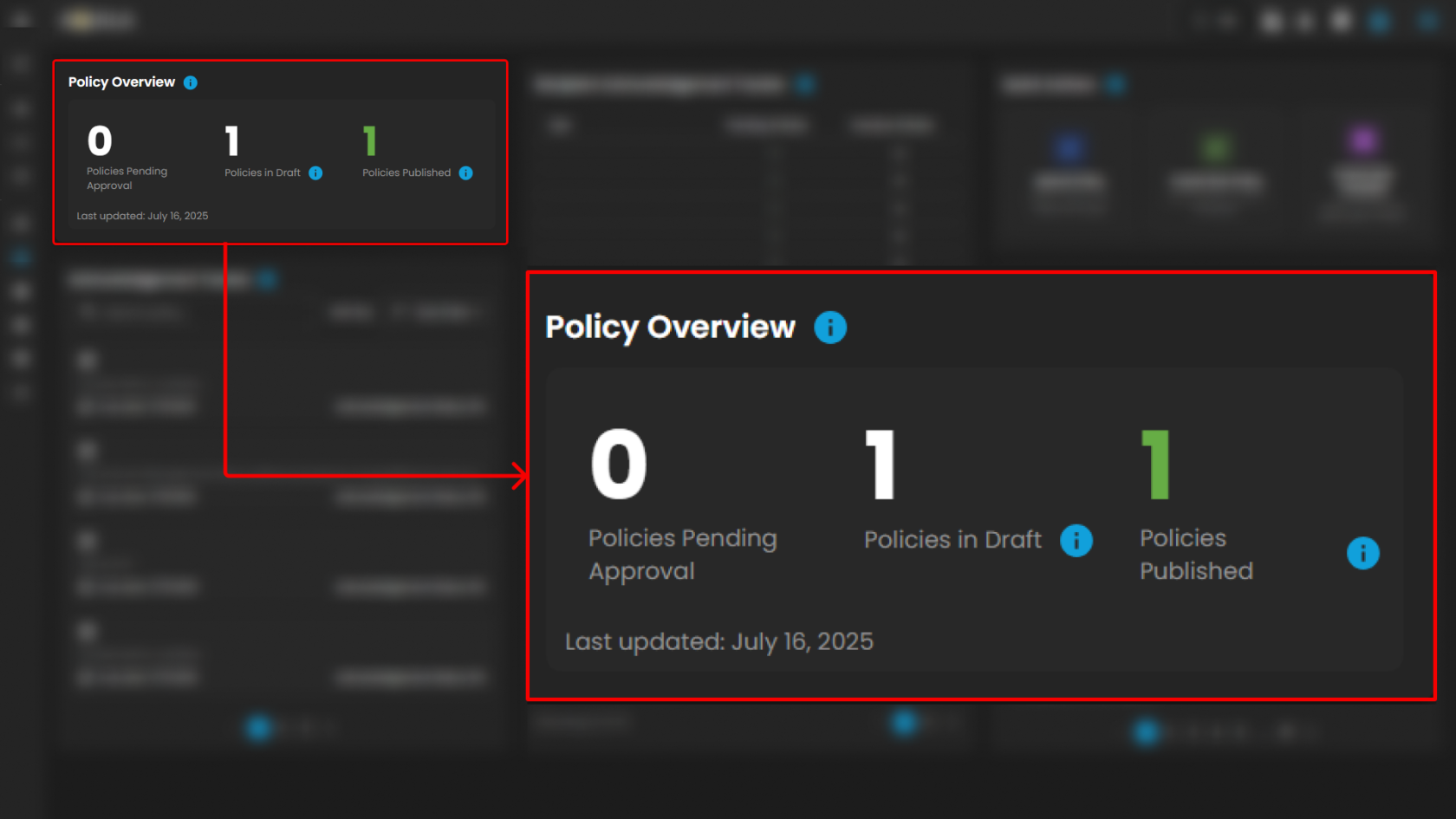
**1. Policy Overview**
- The **Policy Overview** section provides a snapshot of the current status of policies in the system. It shows the number of policies that are pending approval, in draft, and published. This section is a quick way to understand the overall policy management status at a glance.
[](https://cytechint-docs-bookstack.s3.amazonaws.com/uploads/images/gallery/2026-02/039EtPJZlaWbfxbG-hehe-48.png)
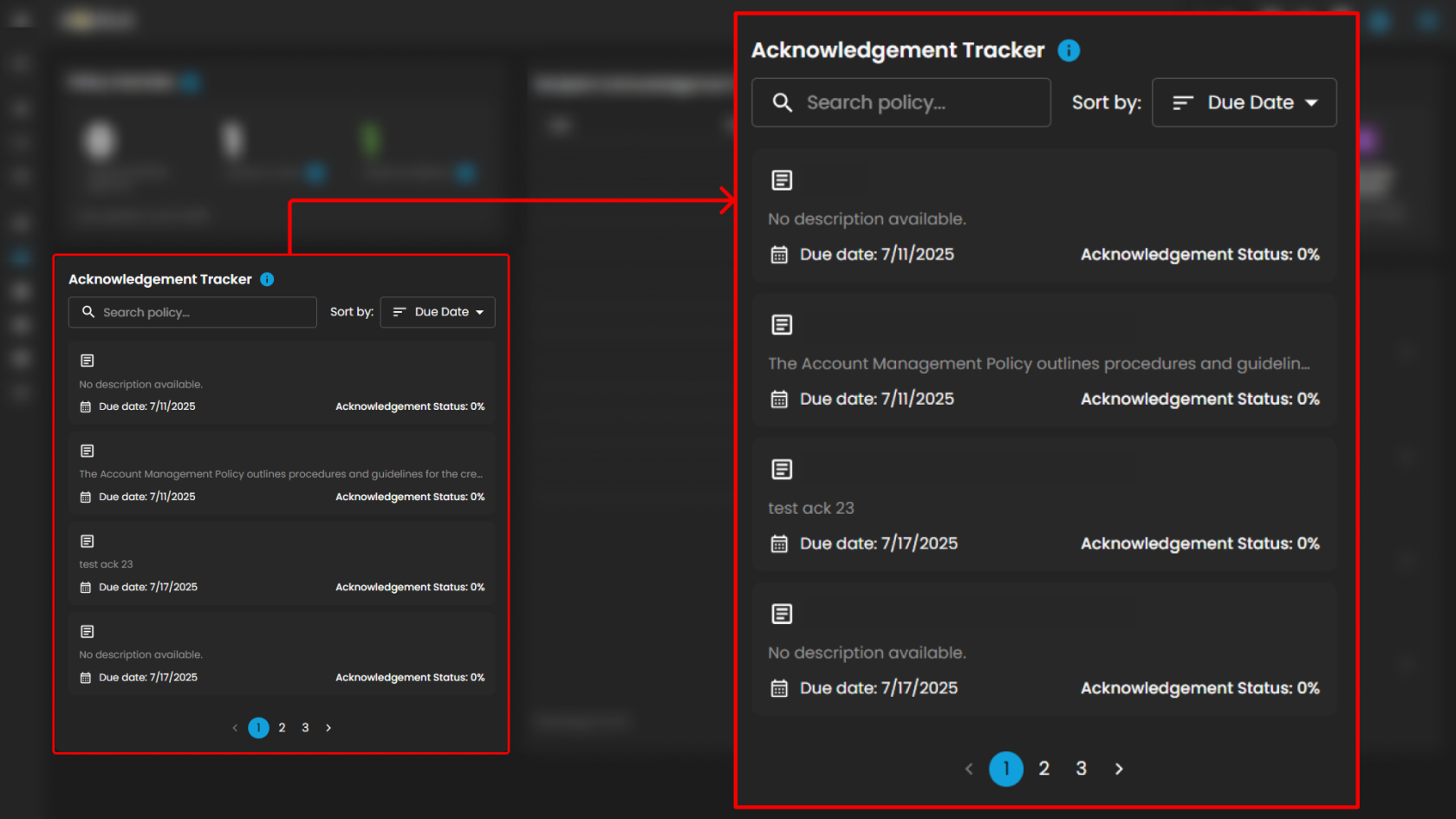
**2. Acknowledgement Tracker**
- The **Acknowledgement Tracker** section allows users to view the status of policy acknowledgements. It displays the list of policies with their due dates and the current acknowledgement status for each policy. Users can search for specific policies and sort them by due date, helping to manage the acknowledgement process efficiently.
[](https://cytechint-docs-bookstack.s3.amazonaws.com/uploads/images/gallery/2026-02/b26rWSfRYHhXI1ra-hehe-49.png)
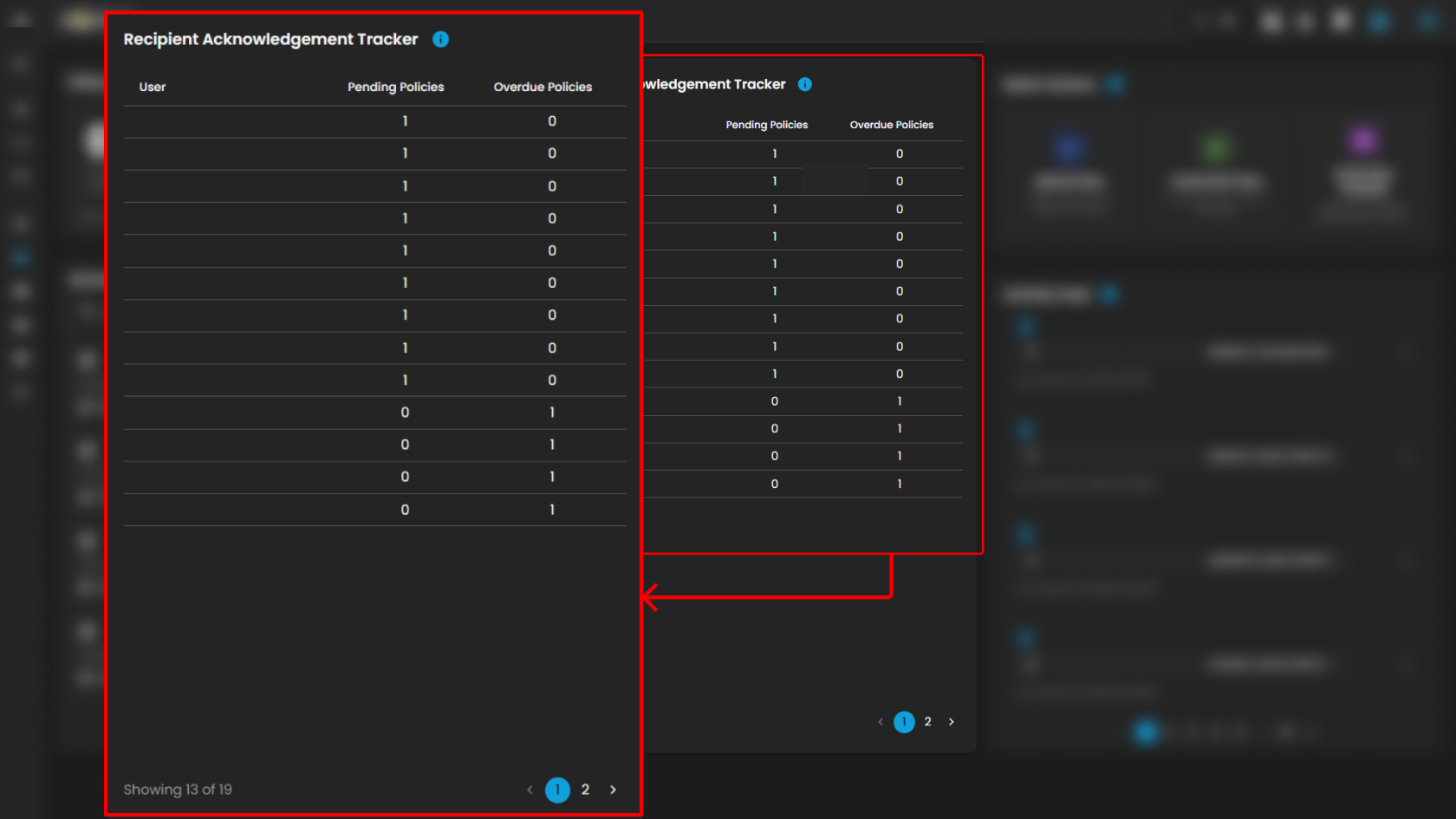
**3. Recipient Acknowledgement Tracker**
- The **Recipient Acknowledgement Tracker** section lists all recipients and their respective acknowledgement statuses. It shows the number of policies pending or overdue for each user, making it easy to track individual progress and ensure timely policy review.
[](https://cytechint-docs-bookstack.s3.amazonaws.com/uploads/images/gallery/2026-02/1Zn8eKLd7nPcvDDi-hehe-50.png)
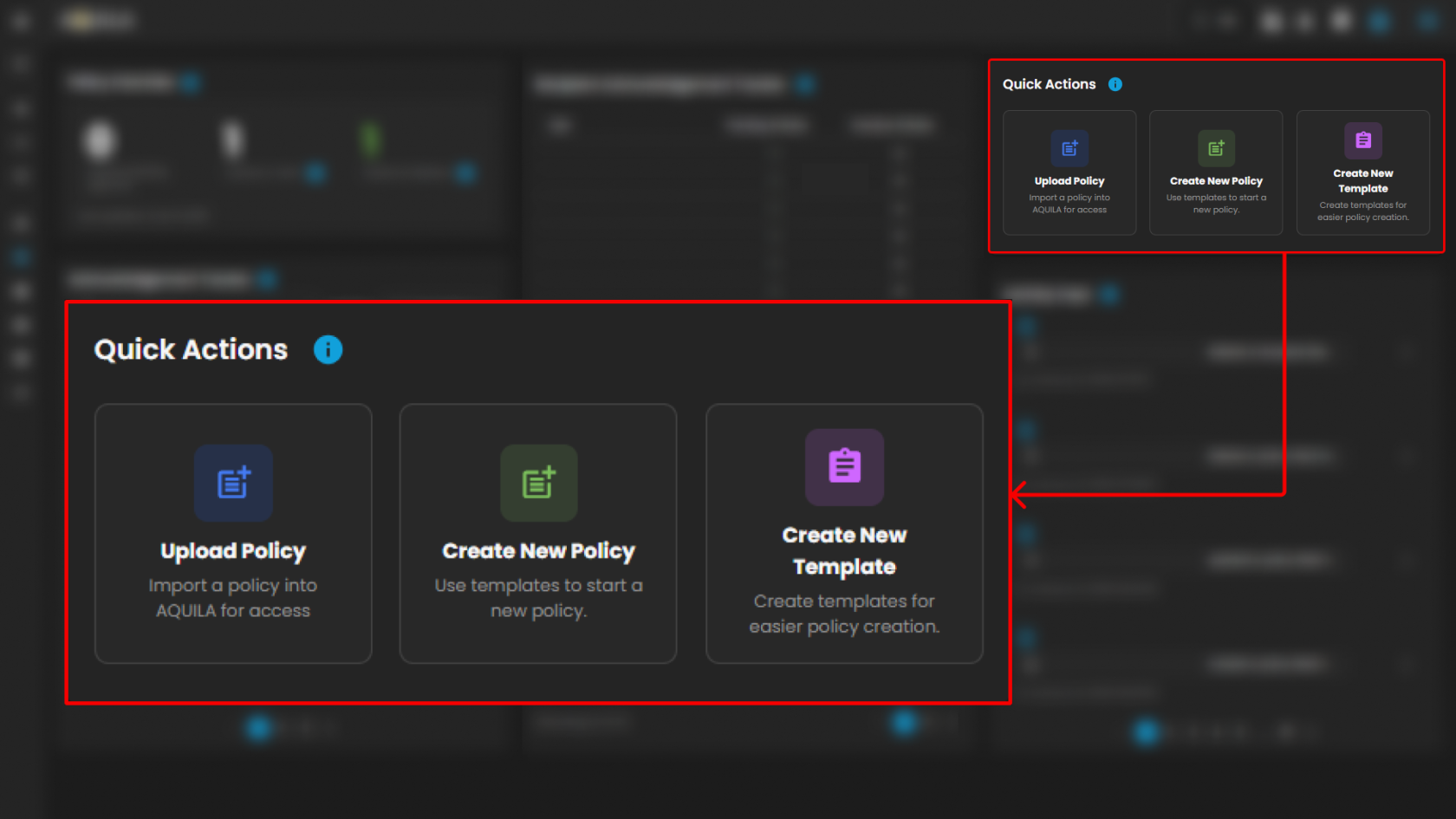
**4. Quick Actions**
- The **Quick Actions** section provides easy access to key functions. Here, you can upload new policies, create new policies using templates, or create new templates for easier policy creation. This section streamlines the process of managing and creating policies.
[](https://cytechint-docs-bookstack.s3.amazonaws.com/uploads/images/gallery/2026-02/1kgwEEG8ciqiusah-hehe-51.png)
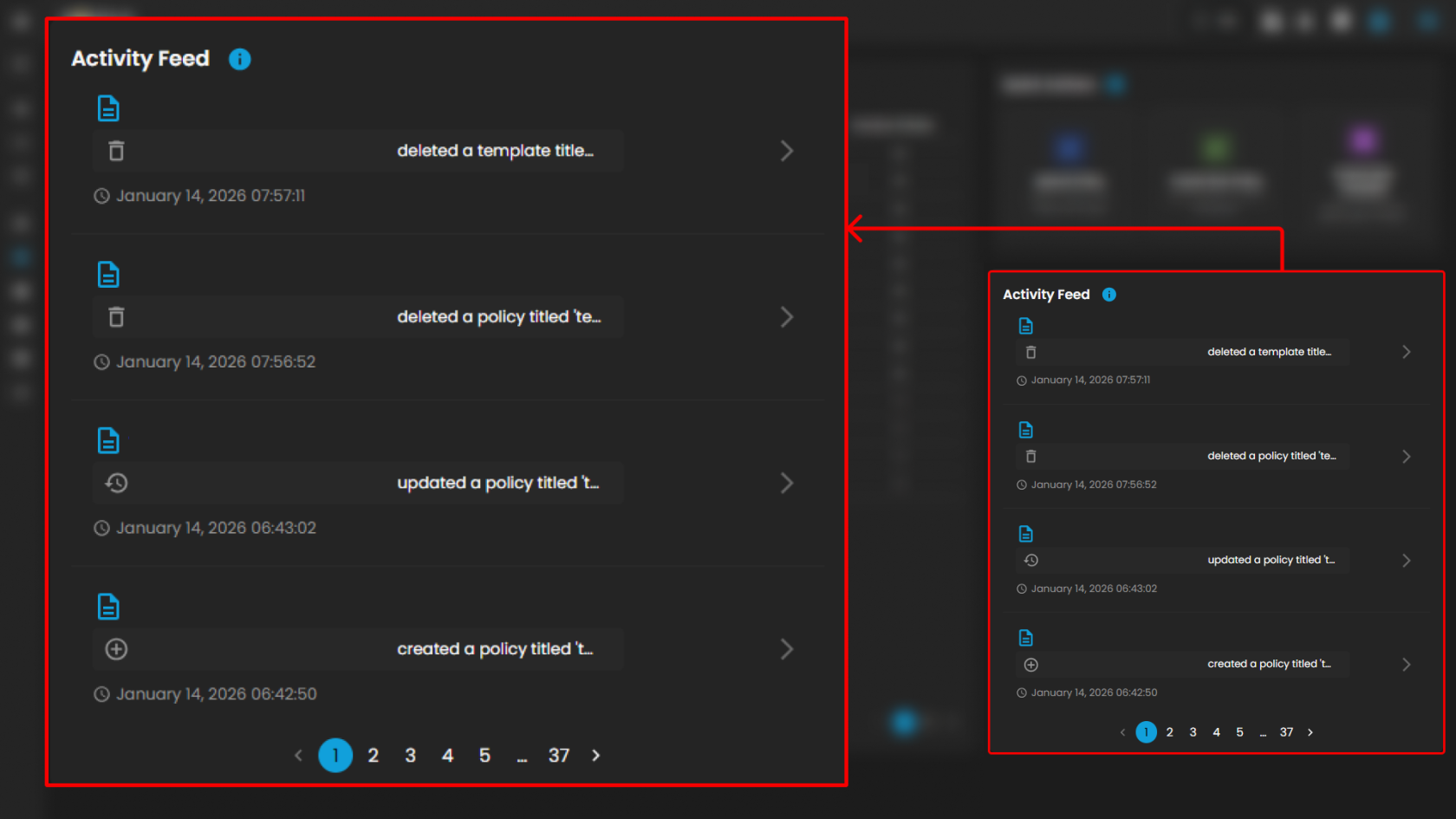
**5. Activity Feed**
- The **Activity Feed** shows recent actions and changes related to policy and template management. It keeps track of events like when a template is created or deleted, allowing users to stay updated on the latest activities within the system.
[](https://cytechint-docs-bookstack.s3.amazonaws.com/uploads/images/gallery/2026-02/e08VEA3RdQKo919X-hehe-52.png)
#### **Templates**
**Approved Templates**
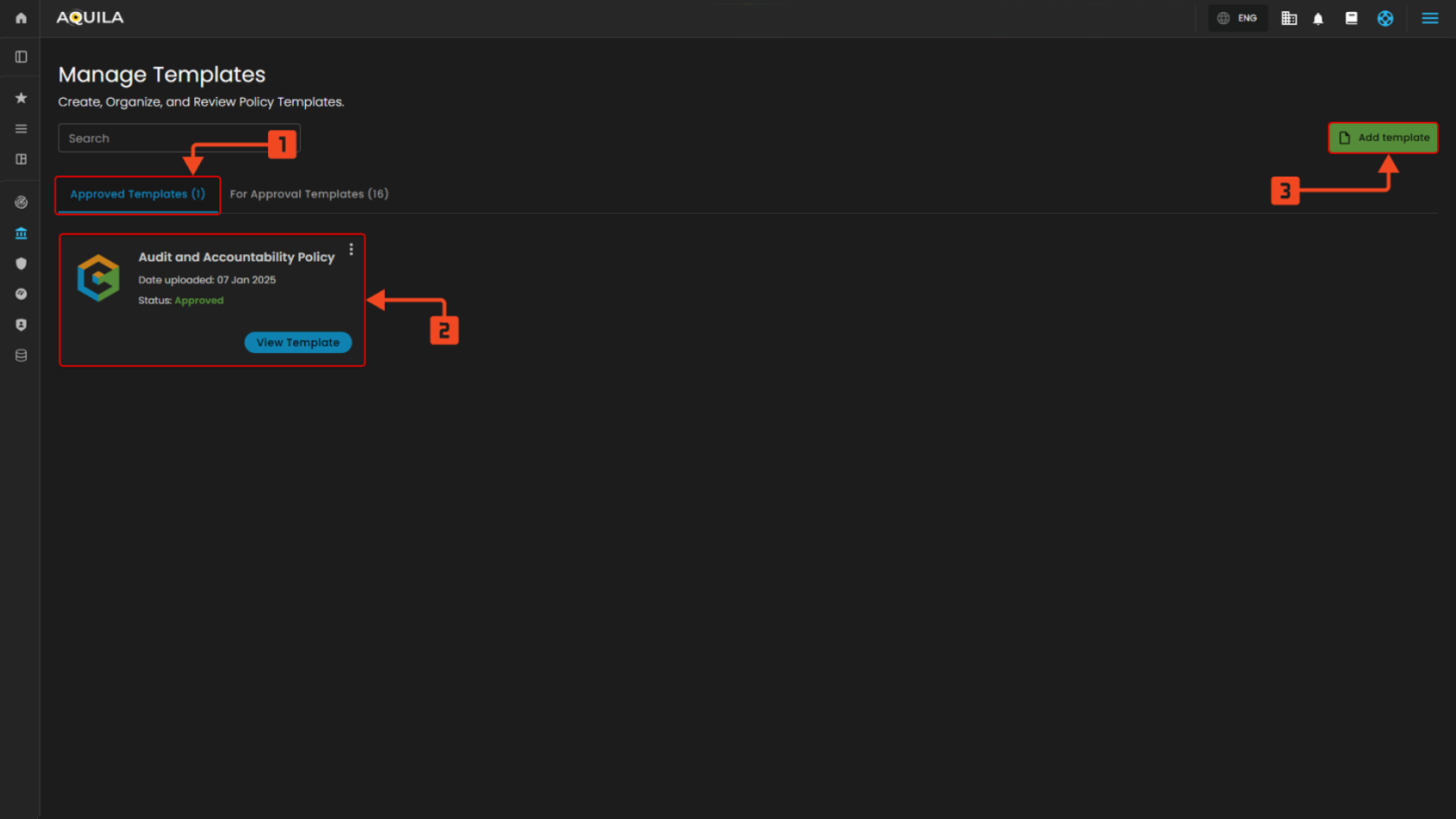
**1. Approved Templates**
- The **Approved Templates** section displays a list of templates that have been reviewed and approved. It provides users with an overview of the available templates for use, helping to manage and organize templates that are ready for implementation.
[](https://cytechint-docs-bookstack.s3.amazonaws.com/uploads/images/gallery/2026-02/4Eq6eQD1vsfpw6DR-hehe-54.png)
*Figure 3.0 Approved Templates*
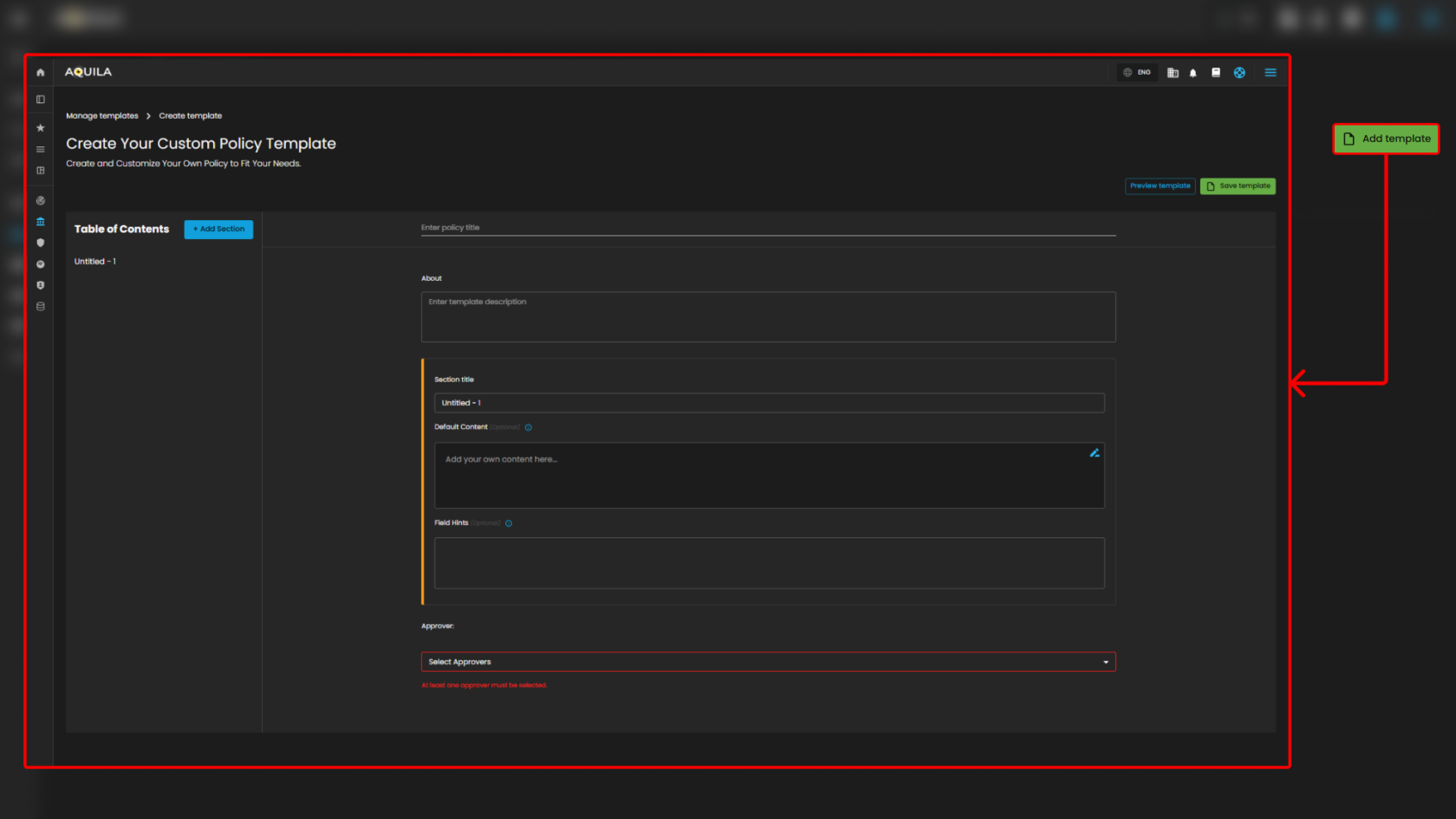
**2. Add Template**
- The **Add Template** button allows users to create and upload new templates. By clicking on this button, users can initiate the process of adding a new policy template to the system, streamlining the template creation process.
[](https://cytechint-docs-bookstack.s3.amazonaws.com/uploads/images/gallery/2026-02/4yEq3PfMg8qdcsKE-hehe-55.png)
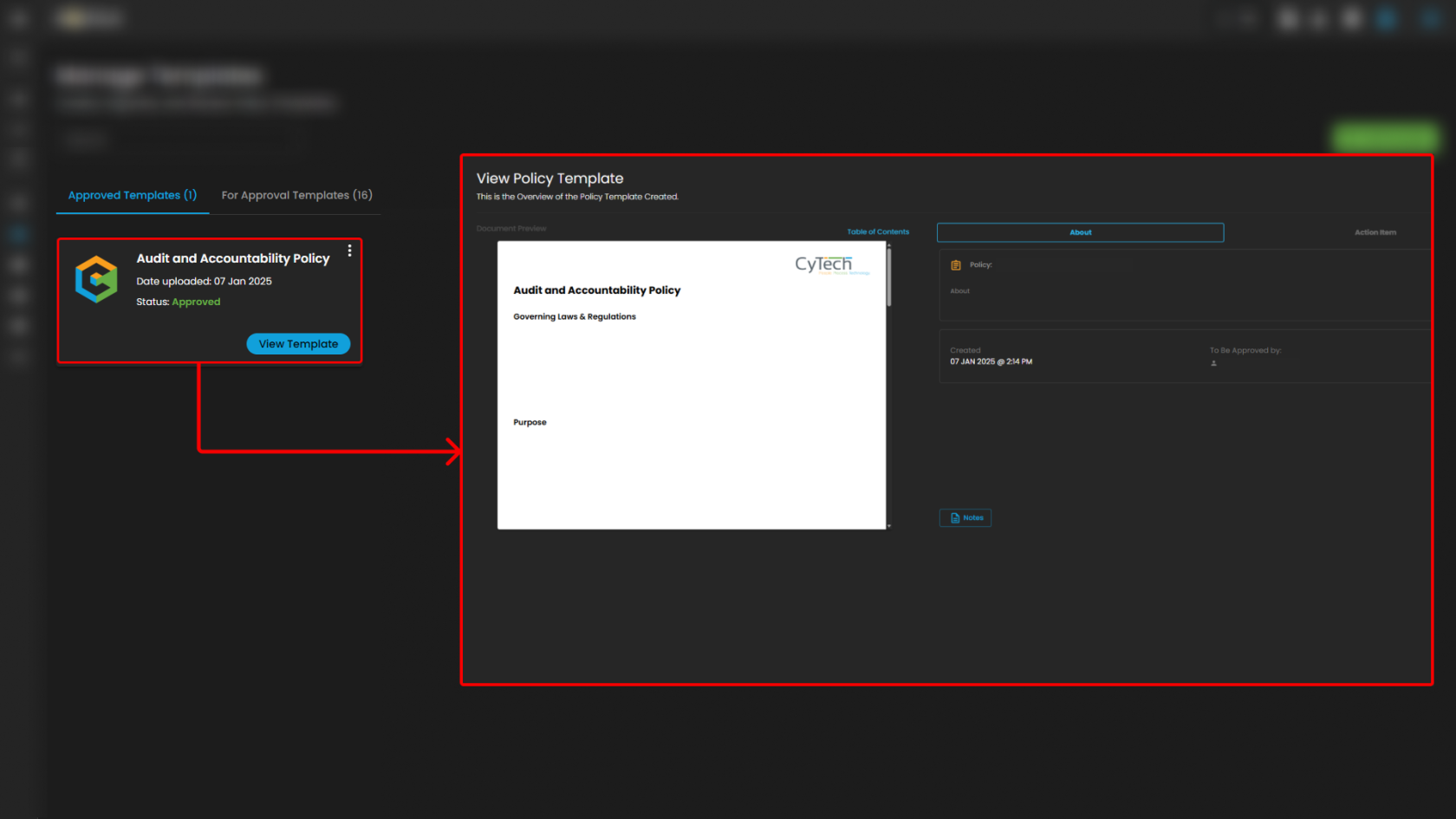
**3. Template Details**
- Each template listed in the **Approved Templates** section, such as the **Audit and Accountability Policy**, provides key information, including the upload date and approval status. Users can view more details about the template by clicking the **View Template** button. This section allows users to manage and review templates before applying them to policies.
[](https://cytechint-docs-bookstack.s3.amazonaws.com/uploads/images/gallery/2026-02/vTy54pBWc0o0mDu5-hehe-56.png)
**Add Template**
**4. Add Section**
- The **Add Section** button allows users to add new sections to the template. This feature is crucial for breaking down the template into multiple parts, enabling more detailed and organized policy creation. By clicking on this button, users can create sections within the template, which can be further customized to suit the policy requirements. [](https://cytechint-docs-bookstack.s3.amazonaws.com/uploads/images/gallery/2026-02/PZSaf7kgcfdQXWC9-image.png)
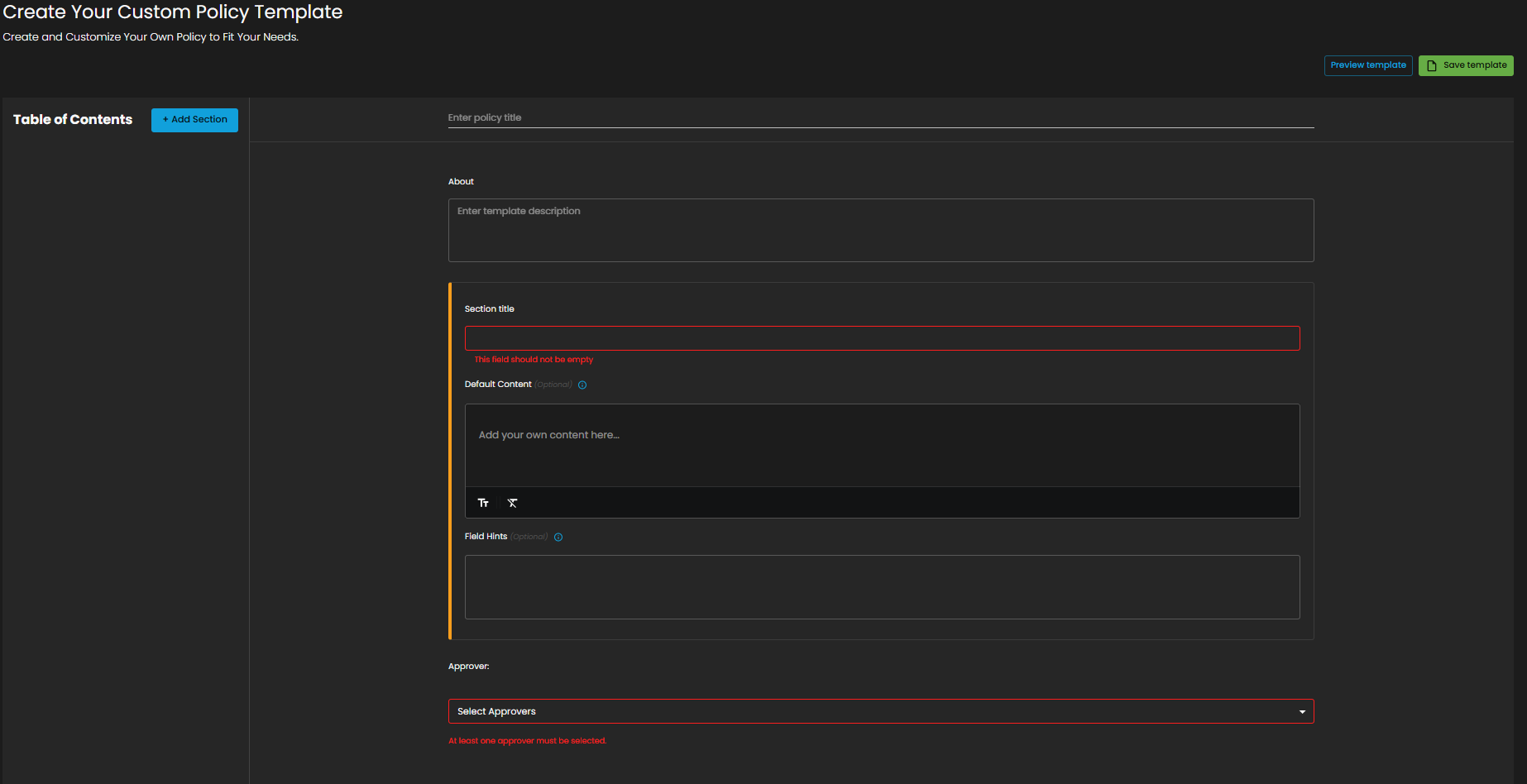
**5. Create Custom Policy Template**
- The **Create Custom Policy Template** section allows users to design and customize their own policies. It provides a user-friendly interface where you can enter a policy title, description, and content. The template can be structured with different sections, and each section can include titles, default content, and field hints. This section also enables the selection of approvers for the policy, ensuring proper review and approval workflows.
[](https://cytechint-docs-bookstack.s3.amazonaws.com/uploads/images/gallery/2026-02/jXiEqFiqBVeDH2qs-image.png)
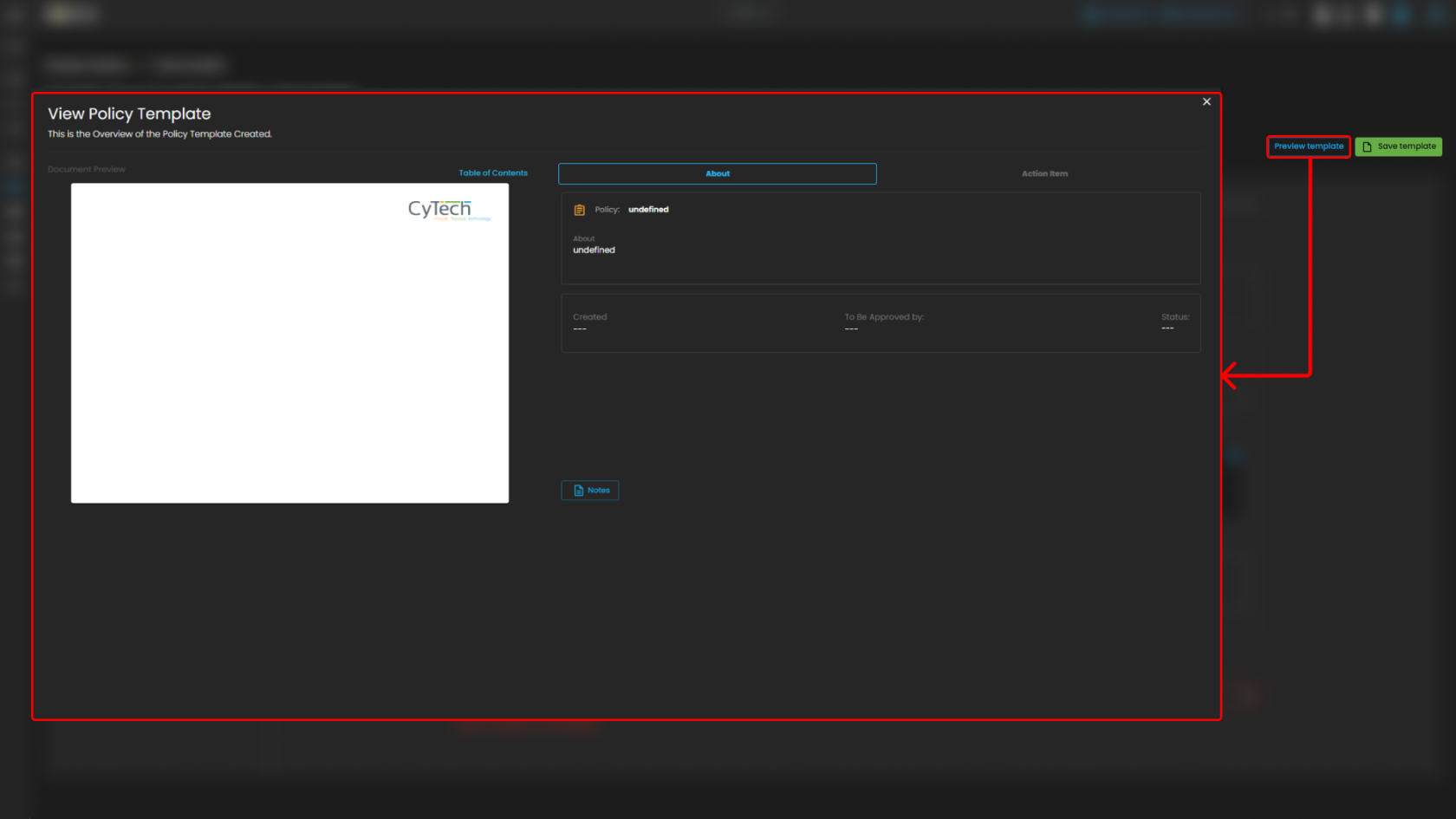
**6. Template Preview and Save**
- The **Preview Template** button allows users to review the template before saving it, providing a final chance to see how the policy will appear once completed. The **Save Template** button allows users to save their progress, ensuring that the template is saved for future use or further editing. This functionality streamlines the process of creating and managing custom policies.
[](https://cytechint-docs-bookstack.s3.amazonaws.com/uploads/images/gallery/2026-02/U2yNoUG9UHOzOfvD-hehe-57.png)
**For Approval Templates**
[](https://cytechint-docs-bookstack.s3.amazonaws.com/uploads/images/gallery/2026-02/bxLA3iU5G5S95j4o-hehe-58.png)
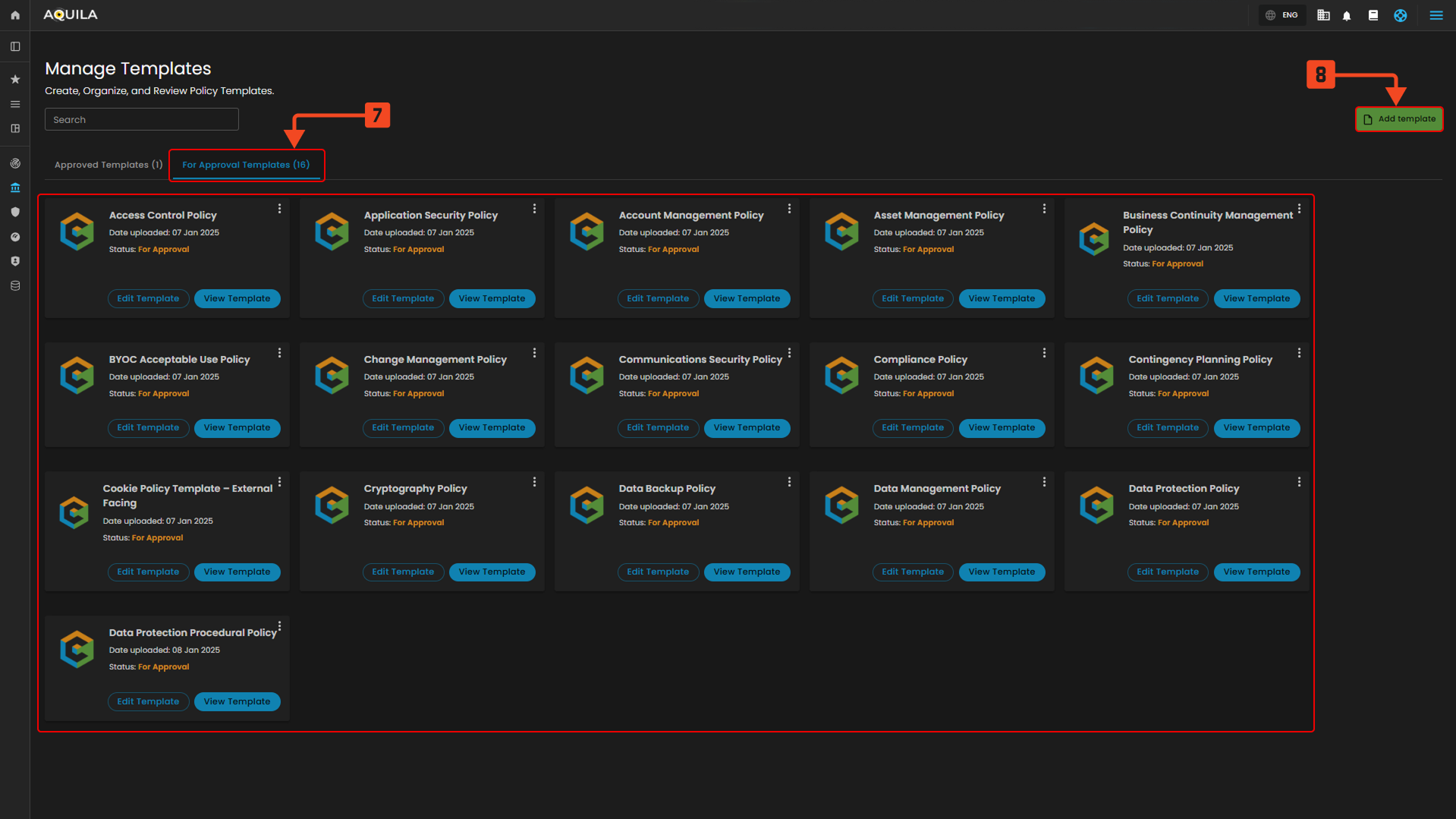
*Figure 3.1 For Approval Templates*
**7. For Approval Templates**
- This section shows the templates that are currently awaiting approval. These templates have been uploaded but need to be reviewed and approved before they can be used or moved to the "Approved Templates" section.
**8. Add Template**
- The **Add Template** button allows users to upload a new policy template. Clicking this button initiates the process of adding a fresh template to the system for review and approval.
**View Template**
[](https://cytechint-docs-bookstack.s3.amazonaws.com/uploads/images/gallery/2026-02/CDpDpRCK3cU1BomR-hehe-60.png)
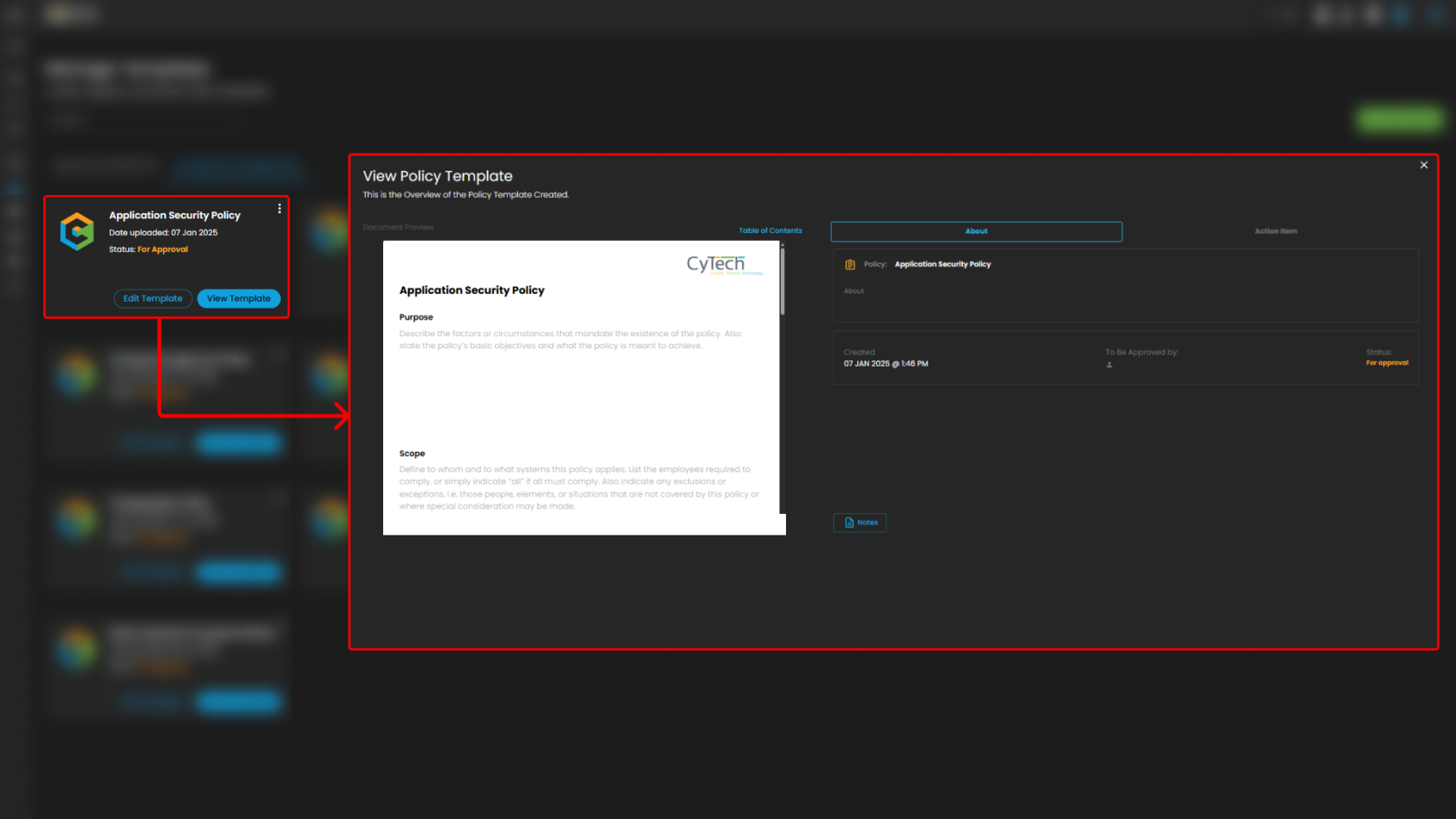
*Figure 3.1.1 View Templates*
**9. Template**
- The **Template** section displays the full content of the policy template, allowing users to review all sections of the document, including governing laws, guidelines, and purpose. It provides a comprehensive view of the template to ensure its alignment with organizational standards before use.
**10. About**
- The **About** section provides key metadata about the policy template, including its creation date, approval status, and the individual responsible for approval. This section offers a quick reference to understand the template’s background and current status.
#### **Policies**
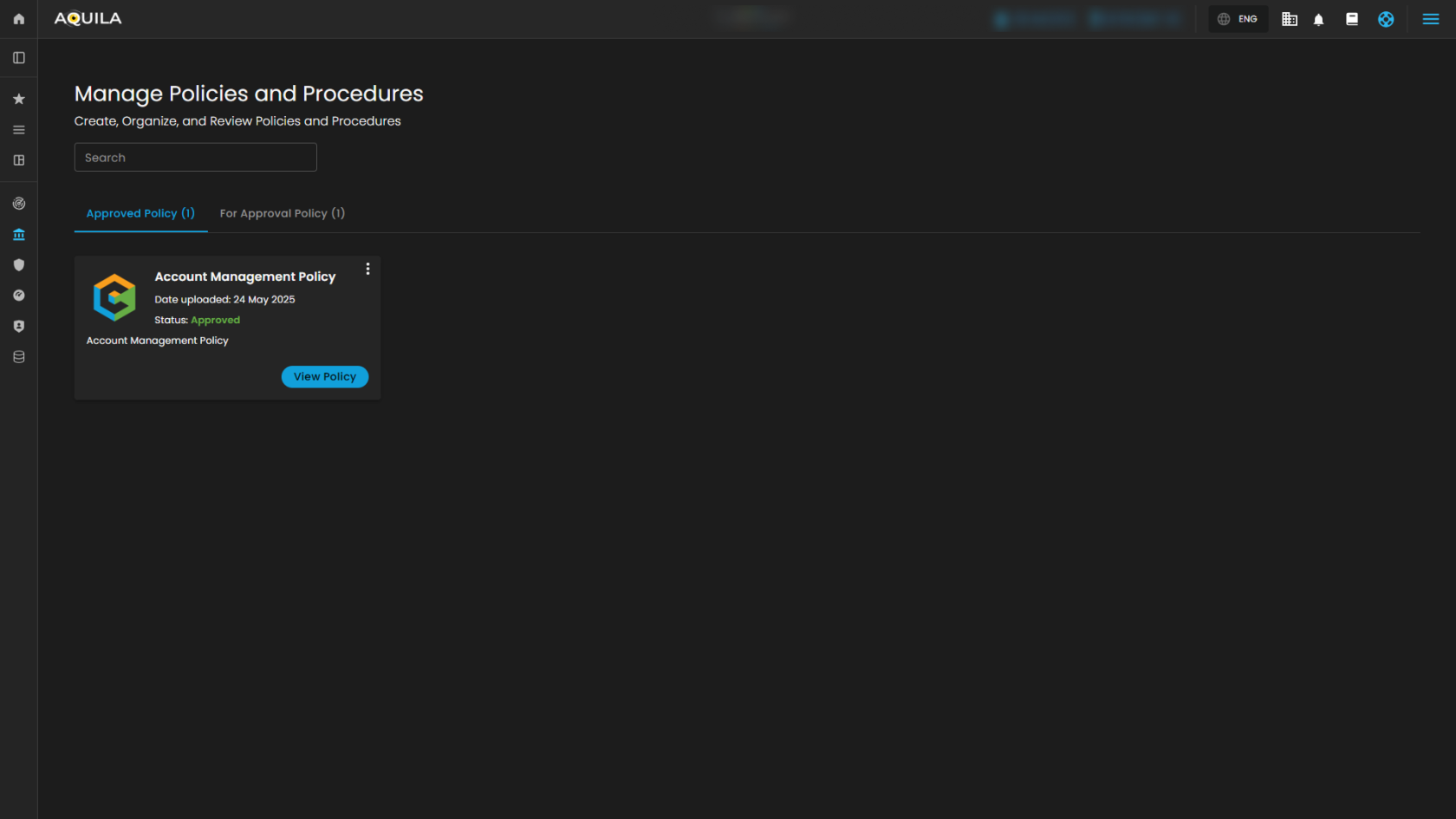
**In the Manage Policies and Procedures Page, you can view and manage the organization’s policies.** This includes managing approved policies and policies that are awaiting approval. You can interact with policies based on their current status and manage them accordingly.
[](https://cytechint-docs-bookstack.s3.amazonaws.com/uploads/images/gallery/2025-10/ojGnIyRYqvCwbBHs-test-11.png)
*Figure 4. Policies*
**Manage Policies and Procedures**
[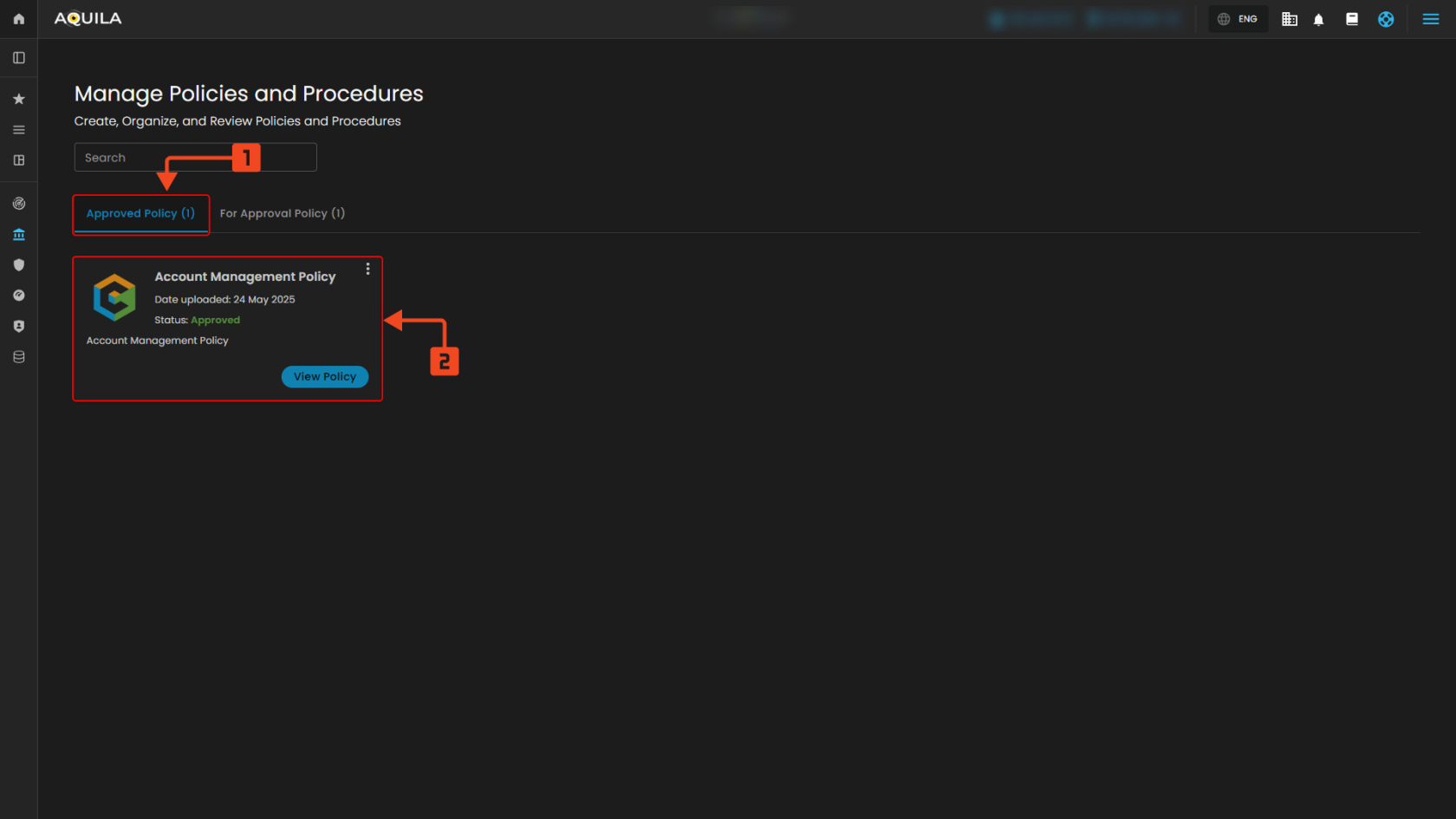](https://cytechint-docs-bookstack.s3.amazonaws.com/uploads/images/gallery/2025-10/bCZ81QgE0Jg4GLAR-test-12.png)
*Figure 4.1 Manage Policies and Procedures*
**1. Approved Policy**
- This section allows you to access and manage all policies that have been approved. It enables easy navigation to view the status and other relevant details of the approved policies. You can also take actions based on the approval status to ensure compliance and organization-wide visibility.
**2. Policy Details**
- This section allows you to view detailed information about each policy. You can quickly access additional insights on the policy’s status, upload date, and related actions. The functionality allows you to review policies in detail and make necessary adjustments or actions such as viewing, editing, or managing their status.
**For Approval Policy**
[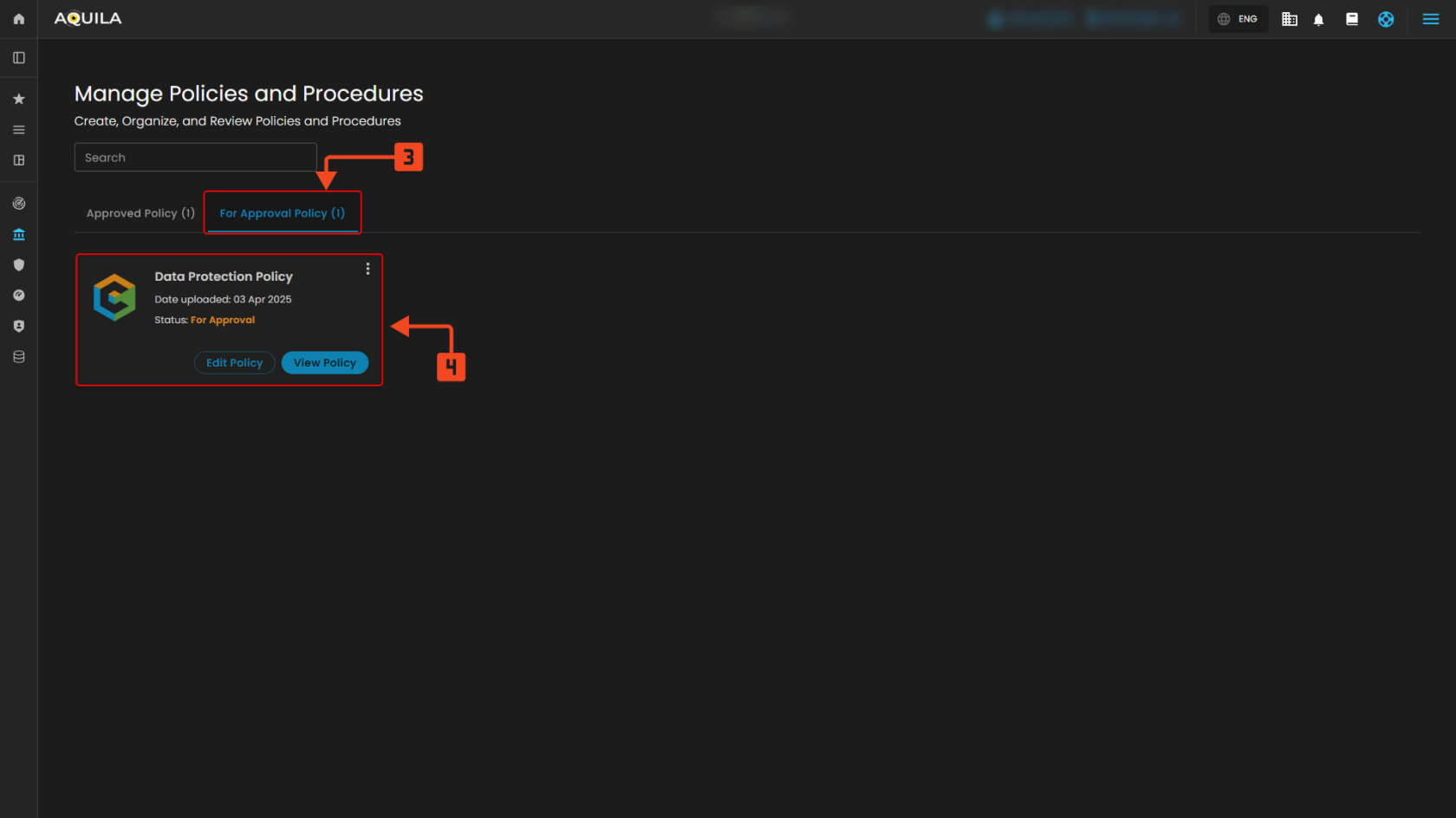](https://cytechint-docs-bookstack.s3.amazonaws.com/uploads/images/gallery/2025-10/S1PfMX7gvxoqEz5w-test-13.png)
*Figure 4.2 For Approval Policy*
**3. For Approval Policy**
- This section allows you to view and manage policies that are pending approval. You can access details about these policies, including their current status, upload date, and take actions to approve or review them as necessary. This section ensures that pending policies are monitored until they receive final approval.
**4. Policy Details**
- The Policy Details section provides an in-depth view of policies pending approval. Here, you can review the specific policy’s status, including whether it is awaiting approval. Additionally, you can take actions such as editing or viewing the policy to ensure it meets the necessary requirements before approval.
**View Policy**
[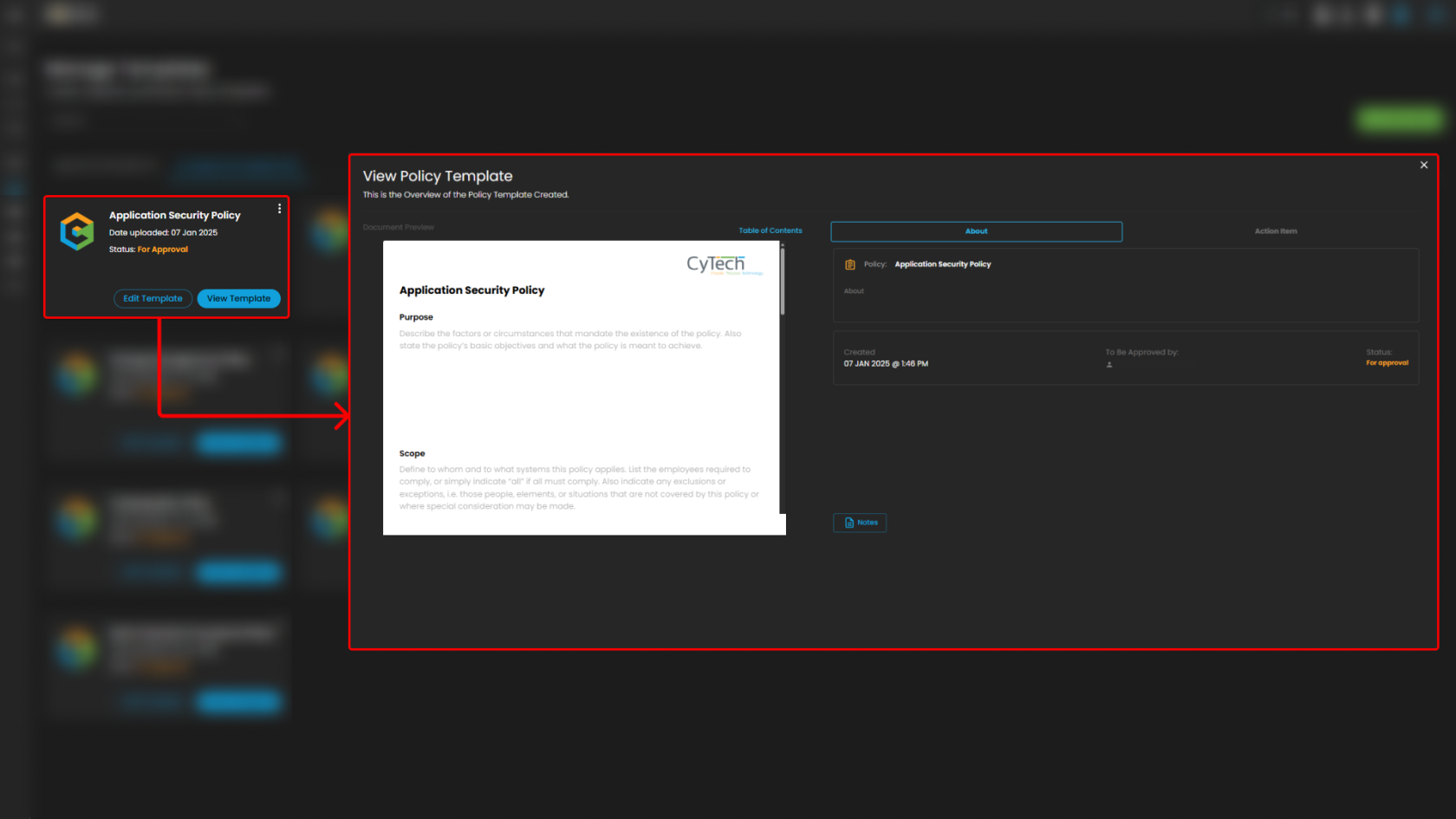](https://cytechint-docs-bookstack.s3.amazonaws.com/uploads/images/gallery/2026-02/d0hnRq0yelvCZH5H-hehe-60.png)
*Figure 4.2.1 View Policy*
**5. Document Preview (Left Section)**
- This section displays the content of the policy document, allowing users to review the text. It shows sections such as the Purpose and Scope of the policy, which can be important for understanding the document’s objectives and scope. Users can scroll through the document to read or edit the policy. It's primarily for viewing and reviewing the content.
**6. Right Panel**
- This section is a summary area that provides important metadata about the document. It also shows action items related to the document’s review and approval process. Shows the document's metadata, including the title, creation date, and the person who needs to approve the document. Displays any pending actions, such as approval or comments, that need to be completed for the document to progress.
**Edit Policy**
[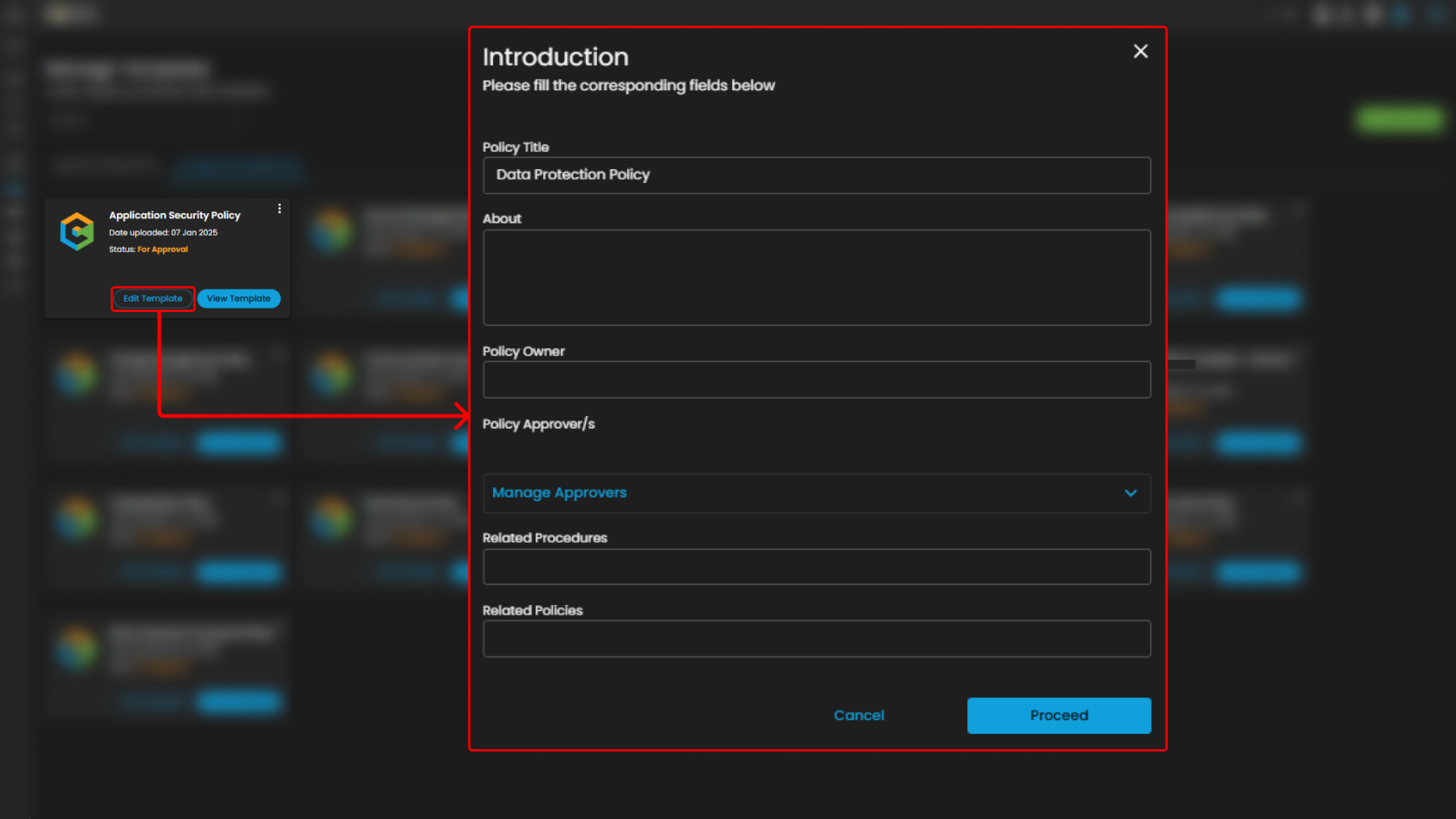](https://cytechint-docs-bookstack.s3.amazonaws.com/uploads/images/gallery/2026-02/hu39xG8P38Bq0wCJ-hehe-61.png)
*Figure 4.2.2 Edit Policy*
**7. Introduction Form**
- This section contains fields for the user to fill out important details about the policy, including the title, description, owner, approvers, related procedures, and related policies. It allows users to provide necessary information to set up or update a policy before proceeding further in the workflow.
#### **Repository**
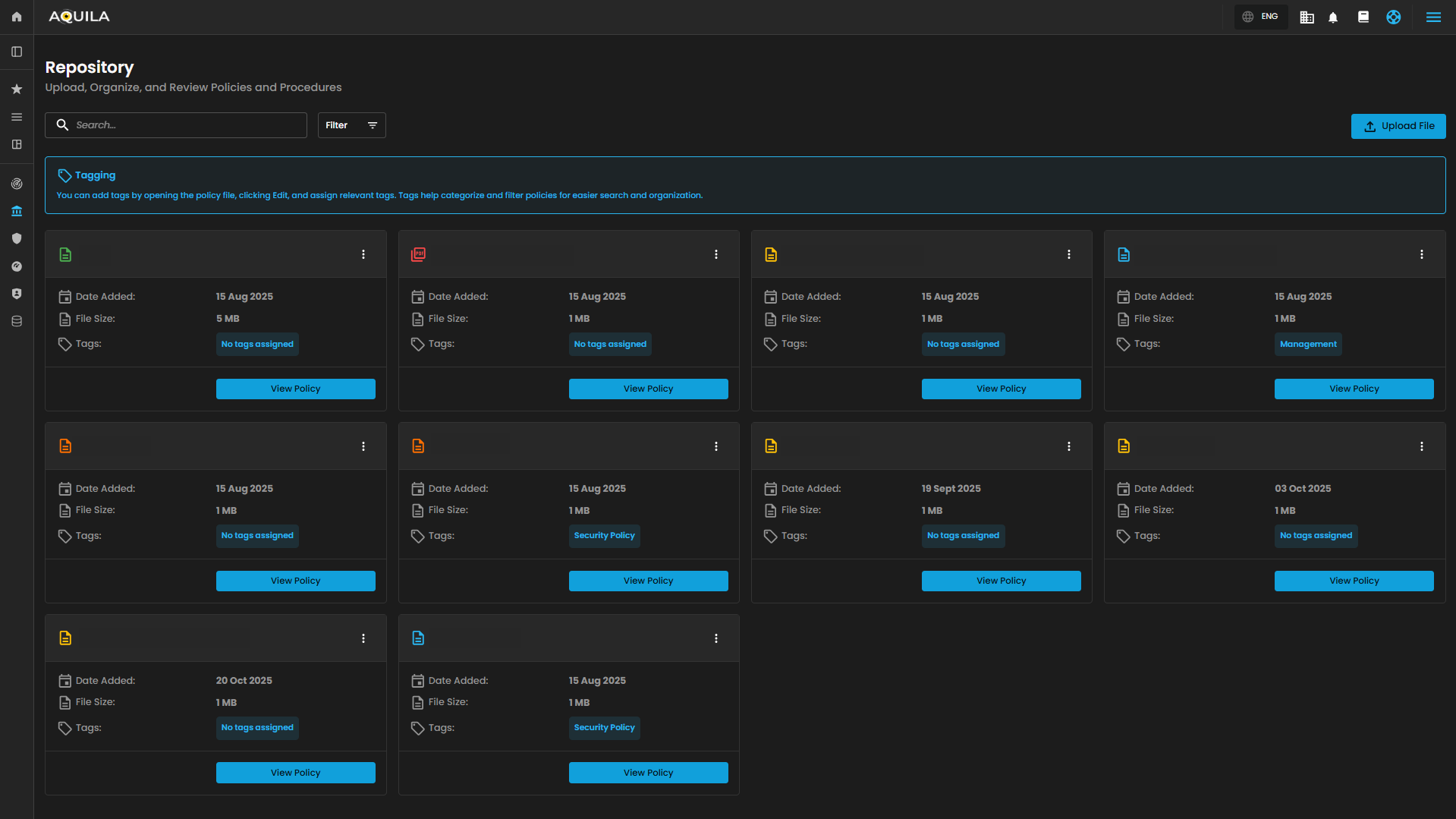
**Repository** is storage system designed for uploading, organizing, managing, and reviewing policies and procedures. It serves as a digital library where all relevant documents are stored and can be easily accessed, updated, and tracked by authorized users.
[](https://cytechint-docs-bookstack.s3.amazonaws.com/uploads/images/gallery/2026-02/szBUJHxnrPqZ39aw-hehe-62.png)
*Figure 5. Repository*
1\. **Search and Filter**
- Allows users to search for specific policies or documents within the repository. The filter option helps narrow down results based on specific criteria, enabling users to easily find relevant files.
[](https://cytechint-docs-bookstack.s3.amazonaws.com/uploads/images/gallery/2026-02/8r1H9DEZLFFi4GUU-image.png)
2\. **Upload File**
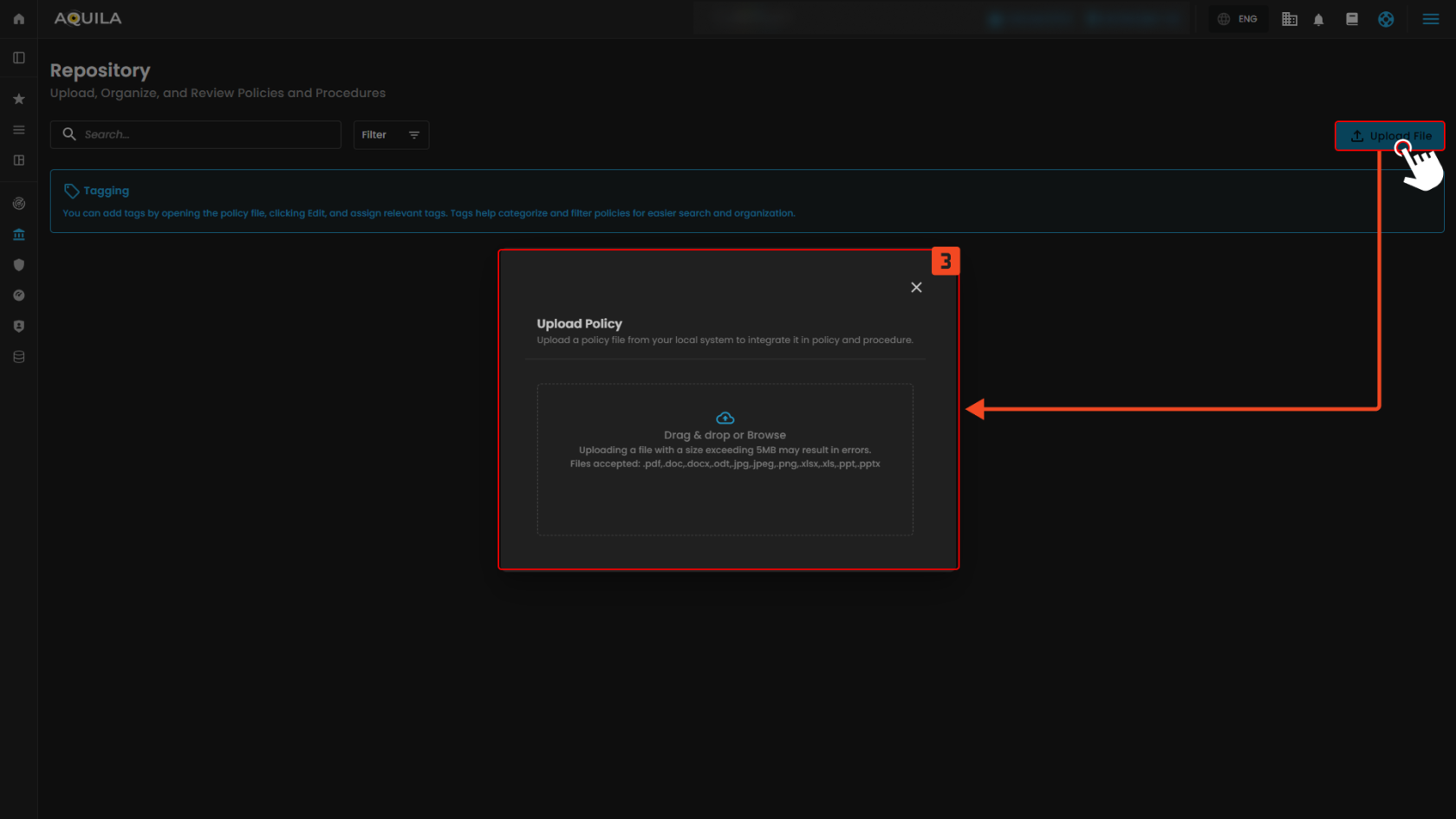
- Provides a button for users to upload new files to the repository. This action allows users to add new policies or documents for organization and review within the system.
[](https://cytechint-docs-bookstack.s3.amazonaws.com/uploads/images/gallery/2026-02/48J0RPR93nufinkI-hehe-63.png)
**Upload File**
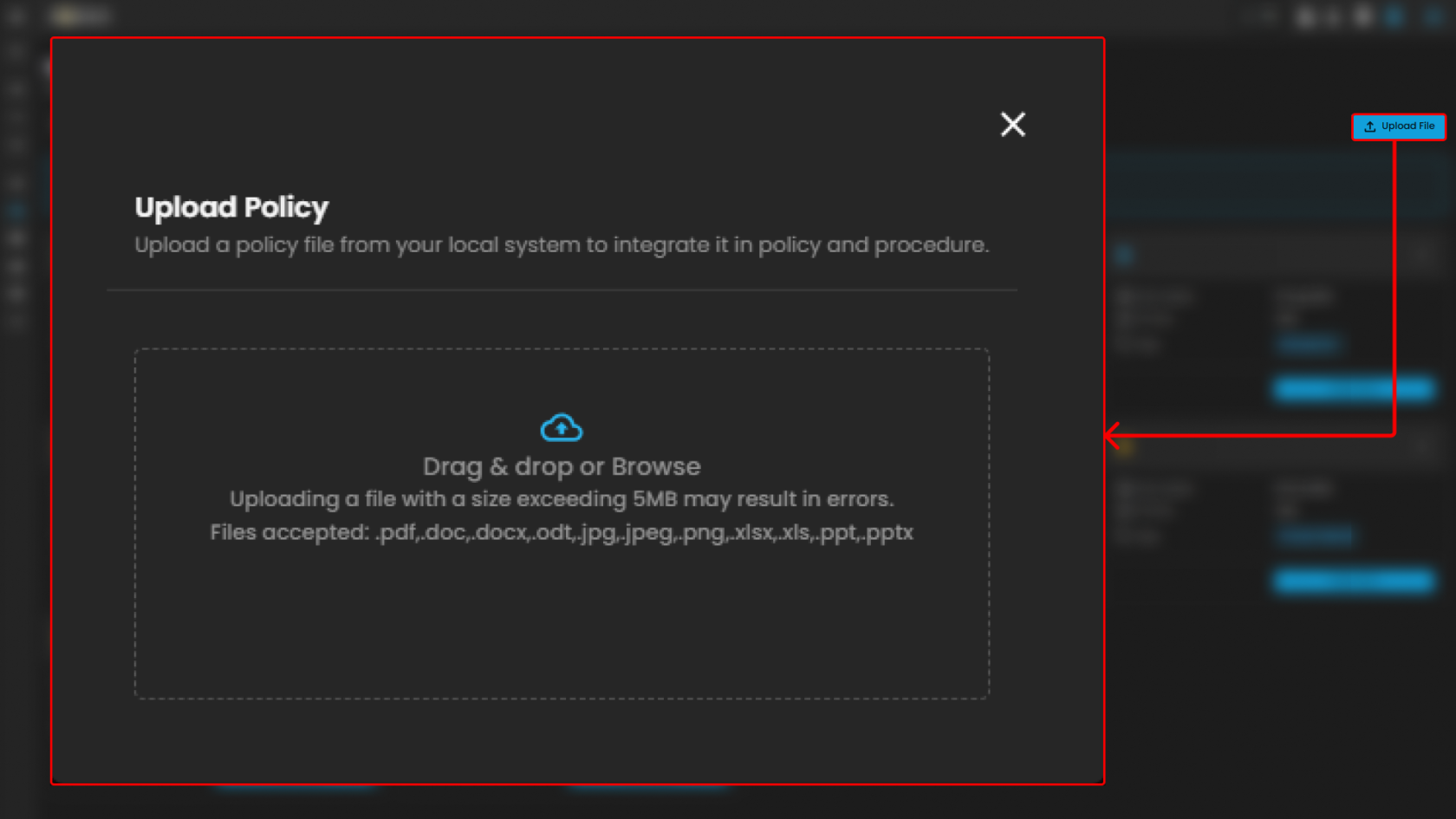
**3. Upload Policy**
- The **Upload Policy** section allows users to add policy files from their local system into the policy and procedure management system. Here's an overview of the functionality. **Drag & Drop or Browse**, Users can either drag and drop the file directly into the upload area or click a "Browse" button to select the file from their file explorer. This gives flexibility in how users choose to upload documents.
[](https://cytechint-docs-bookstack.s3.amazonaws.com/uploads/images/gallery/2025-10/TdcIc8yXSsWh4k4D-test-20.png)
*Figure 5.1 Upload File*
*If you need further assistance, kindly contact our support at **[support@cytechint.com](mailto:info@cytechint.com)** for prompt assistance and guidance.*